How modern farming may be distorting our analysis of ancient human migration

c e beb cf
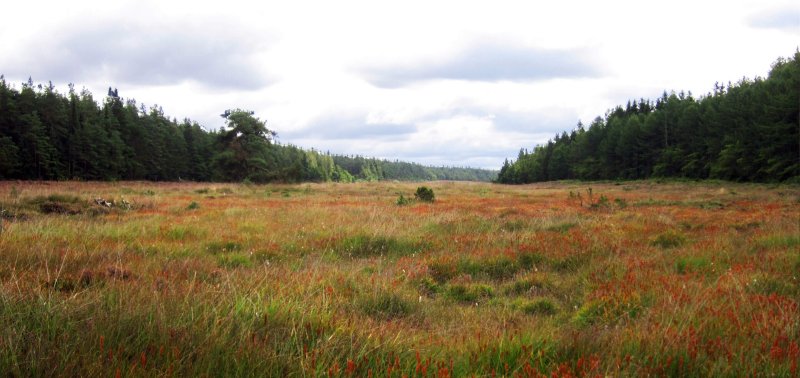
Vallerbaek valley during fieldwork. Image: Tine Rasmussen

One of the most widely used tools archaeologists have at their disposal to decipher where prehistoric humans lived and traveled is the element strontium. Because strontium isotope levels in remains match the concentrations in the surrounding landscape, scientists can track migrations. While the technique itself is sound, the baseline levels of strontium in different geographies may not reliably reflect ancient times as scientists have assumed.

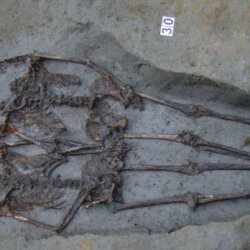
Researchers from Aarhus University in Denmark published a report in Science Advances [March 13] showing that the data on strontium levels in soil and water used for these archaeological studies are not always accurate. With their new analysis, the team found that two Bronze Age human remains, Egtved Girl and the Skrydstrup Woman, who both died and were buried in Denmark, were not necessarily the international travelers that prior studies have suggested.

…
It turns out that limestone contains a lot of strontium and is used heavily in modern day farming, which increases the amount of strontium in surface waters such as lakes. This means that strontium levels from farmed regions are higher than they were in prehistoric times, creating a potential mismatch between ancient remains and modern soil samples.

Read full, original post: Modern Human Activities Muddle Analyses of Prehistoric Migrations

Related Articles

Infographic: Global regulatory and health research agencies on whether glyphosate causes cancer

Infographic: Global regulatory and health research agencies on whether glyphosate causes cancer

Does glyphosate—the world's most heavily-used herbicide—pose serious harm to humans? Is it carcinogenic? Those issues are of both legal and ...

Most Popular

ChatGPT-Image-Mar-10-2026-01_39_01-PM
Viewpoint—“Miracle molecule” debunked: Why acemannan supplements don’t work
Screenshot-2026-09-17-at-1.07.08-PM
'We are dangerously addicted to antidepressants': Should we heed RFK Jr.’s sobering warning?
Screenshot-2026-09-03-at-10.51.20-AM
Viewpoint: Why do online health lies outlive the evidence that debunks them? Read "Everyone Else Is Lying to You"
ChatGPT-Image-Sep-2-2026-02_03_32-PM
How much of a problem is AI’s water use?
ChatGPT-Image-Sep-23-2026-01_52_03-PM
Viewpoint: 4 very real AI doomsday scenarios
ChatGPT-Image-Aug-26-2026-12_46_16-PM
Viewpoint: The fake controversy over whether combining childhood vaccines is dangerous— a debate science resolved 25 years ago
ChatGPT-Image-Sep-22-2026-10_32_46-AM
There has been a slew of recent reports of food recalls and foodborne outbreaks. Do we face an escalating problem?
Screenshot-2026-09-23-at-11.55.01-AM
How can we know if social media bans actually help teens?
Screenshot-2026-09-22-at-11.40.28-AM
After Idaho criminalized abortion providers in 2022, one-third of obstetricians fled. Health care advocates are making rural health the case for repealing the ban
Screenshot-2026-09-23-at-3.15.09-PM
Anti-GMO activists in Pakistan rev up their campaign of dire warnings
Screenshot-2026-09-17-at-12.00.30-PM
Investigative group ProPublica finds links between ectopic pregnancy deaths and abortion bans
ChatGPT-Image-Sep-17-2026-12_28_43-PM
Vitamin D, omega-3 fish oil and glucosamine supplements could cause brain damage 
glp menu logo outlined

Get news on human & agricultural genetics and biotechnology delivered to your inbox.