


Daily Human Digest

Risky business: Your brain may be wired to take chances
Using brain scans, a new study has observed a link between connections in the brain and the ability of the person to tolerate ...
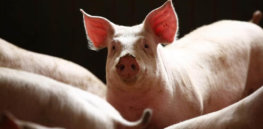
Japan considers allowing human organs to be grown inside animals
A ban on creating human organs inside the bodies of animals will likely be lifted as early as this autumn, ...

About phosphorous and why extraterrestrial life may be a long shot
Phosphorus is an essential element for life — but that there was enough of it for life to start on ...

Humans produce new neurons affecting learning, memory and emotion throughout our lives
Humans continue to produce new neurons in a part of their brain involved in learning, memory and emotion throughout adulthood, ...

Implantable ‘neural lace’: How we may be able to stimulate our brain to regain youthful functions
[Elon] Musk stated publicly that given the current rate of A.I. advancement, humans could ultimately expect to be left behind—cognitively, ...

The story behind the looming $30-billion-a-year synthetic DNA data storage market
[Emily] Leproust is cofounder and CEO of Twist Bioscience, a five-year-old startup that is, by some estimates, the world’s largest ...

Futurist Jamie Metzl: Through gene editing ‘we will increasingly direct our own evolutionary process’
In this talk from last month's South by Southwest (SXSW), an annual conglomerate of film, interactive media, and music festivals, futurist Jamie ...

Stanford biologist Drew Endy: We need transparency when synthesizing humans
Perhaps more than anyone else working in synthetic biology, [researcher Drew] Endy has tried to hold the community to account ...

CRISPR 2.0: Tweaking gene editing tool to revolutionize precision medicine
CRISPR has been hailed as one of the most promising gene editing technologies and promises to revolutionize precision medicine and ...
Estonia becomes first nation to provide state-sponsored DNA testing
Estonia, a former Soviet territory nestled in the Baltic region between Latvia and Russia, has become the first nation to ...

Video: Innovative brain-mapping techniques could unlock neuroscience secrets
What [neuroscientist Tony] Zador showed me was a map of 50,000 neurons in the cerebral cortex of a mouse. It ...
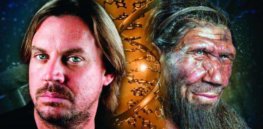
Why humans and Neanderthals look so different
Compared to modern humans, Neanderthals had heavy eyebrows, huge noses, and large, long faces that bulged forward. Using 3D computer ...

Video: How genetics is revolutionizing medicine and disease research
This three-part series of documentary shorts, produced by Retro Report in partnership with STAT, looks back at the roots of three of ...

Podcast: Geneticist George Church on the future of synthetic biology
George Church's Harvard lab is one of the most celebrated fonts of innovation in the world of life sciences. George's ...

Estonia launches genetic-testing program for 8% of its population
The Estonian government is to collect the DNA of 100,000 citizens to provide them with personalised health and lifestyle advice ...

Male birth control? Here are 3 methods headed our way
While a pill for men certainly isn’t coming to the pharmacy anytime soon, unfortunately, there is reason for (muted) hope ...
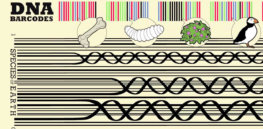
CRISPR paired with DNA barcoding could track cancer growth
Stanford scientists have found a way to modify pairs of cancer-related genes in the lungs of mice and then precisely ...
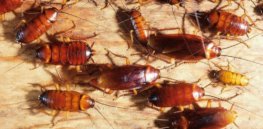
Why the cockroach is hard to kill—and what its genetics teaches us about adapting to environments
The second-largest genome ever sequenced belongs to a small but fascinating creature. Called “xiao qiang” or “little mighty” in China, ...

Pursuing ‘organic gene therapy’ for sickle cell anemia and beta thalassemia
Scientists in Australia have solved a 50-year-old mystery that could lead to the development of new gene therapies for blood ...

How Rev. Thomas Bayes’ faith helped us understand how the brain works
It all began in 1748, when the philosopher David Hume published An Enquiry Concerning Human Understanding, calling into question, among ...

Precision education: DNA test for intelligence could be on the horizon
Ready for a world in which a $50 DNA test can predict your odds of earning a PhD or forecast ...

Recording brain activity gets easier with novel device
An improved method for recording brain activity could prove a major asset to neuroscience, according to a Nature paper just out: Moving magnetoencephalography ...

Permanent cure? CRISPR combined with deactivated virus could solve ‘short-lived fix’ problem
Gene therapy has shown promise in treating inherited genetic diseases, but a major issue that has frustrated scientists remains: Replacing ...
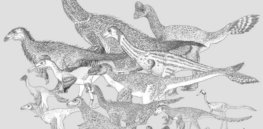
Review: Is evolution ‘God’s Word or Human Reason?’
Is there a contradiction between religion and an evolutionary, Old Earth view of the natural world? While this varies from ...

Tracking the role of tau protein in Alzheimer’s
Jhon Kennedy’s relatives understood the illness they faced. For more than three decades, researchers there have been tracking a genetic ...

Viewpoint: 10 things everyone should know about autism
I offer 10 things I wish everyone knew about autism. I'm a developmental and behavioral pediatrician specializing in autism spectrum ...

Faulty wiring? Tracing damaged circuits linked to autism, schizophrenia
Neuroscientists today know a lot about how individual neurons operate but remarkably little about how large numbers of them work ...
