


Daily Human Digest

Rewriting life’s code: Researchers want to synthesize the entire human genome
[Researcher George] Church is one of the leaders of an initiative called the Genome Project-Write, or GP-Write, which is organizing ...

Should we use gene editing to save obscure tree ‘with no commercial value’?
The growing forest health crisis is forcing scientists, conservationists, and the public to answer some of conservation biology’s thorniest questions ...

Viewpoint: Ignoring genetics threatens to make racial discussions ‘more extreme and divisive’
[A controversial op-ed] by David Reich, a professor of genetics at Harvard, [...] carefully advanced the case that there are genetic ...
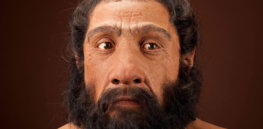
Revising human history: Asian paleoanthropology reveals human, Neanderthal relationships
[T]he first analyses of Neanderthal DNA seemed to indicate that Neanderthals and modern humans did not interbreed. But this popular ...

‘Star cluster’ genetic analysis illuminates history’s social inequalities
In humans, the profound biological differences that exist between the sexes mean that a single male is physically capable of ...

Viewpoint: ‘Circumventing evolution’ with genetically modified trees puts ecosystems at risk
That many forests in the United States are suffering health crises is not in question. Much of this troubling condition, ...

Synthetic biology ‘control circuits’ could regulate cells like a thermostat
Synthetic biology offers a vision for the future of medicine, where cells could be re-engineered to fight diseases such as ...

Tearing down the ‘myth’ of dopamine as the ‘pleasure chemical’
Dopamine is one of the most hyped brain chemicals, supposedly linked to everything from sex to gambling. It’s common to read, as Business Insider claimed ...

Habits and choices: How does our brain differentiate between the two?
Habitual behavior is routine and automatic, frequently initiated by a cue or change in a situation.Sometimes, habits don't hold up, ...

Earth’s first life forms were incredibly resilient to dramatic environmental changes
Life on Earth could have originated in cold conditions near the surface, before spreading to warmer environments, according to research ...

Direct-to-consumer genetic test results 40 percent wrong in small study
At-home DNA tests are “not intended for medical use,” meaning that the data they give you shouldn’t be used as ...

What would happen if we suddenly stopped dreaming?
Rowan Hooper, the managing editor at New Scientist, reports that chronic dream deprivation is damaging our waking hours in numerous ways. … This ...

Life on Earth: How aliens might go about discovering us
[L]ight-years from our solar system, other intelligent beings on a similar planetary oasis might be gazing in our direction and ...

Improved ‘brains’ grant robots dexterity that could soon rival humans
It might not look that special, but the robot above is, according to a new measure, the most dexterous one ...

Autistic children and their siblings less likely to be vaccinated
Children with autism spectrum disorder are significantly less likely to be fully vaccinated than children unaffected by autism, new research ...

Calling for a ‘richer’ global conversation about CRISPR, gene editing
Over the past three years, leading scientists have called for global deliberation on the possible effects of gene editing on ...

Viewpoint: Population declines are a greater crisis than extinctions
Forget extinctions. Population decline is a much greater crisis. ... We watch for extinctions like those with the thought that, ...

Viewpoint: Consumers gain little from 23andMe’s screening for BRCA cancer genes
This month [March], the FDA granted the genetics company 23andMe permission to offer direct-to-consumer testing for three of the more than 1,000 ...

Popular fluoroquinolones antibiotic can go haywire in rare cases, causing irreversible nerve damage
Miriam van Staveren went on holiday to the Canary Islands and caught an infection. Her ear and sinuses throbbed, so ...
Understanding genetic mutations: Why do some cause disease while others don’t?
Why do some mutations lead to disease while others seemingly overcome injury without harm? How do some cells pinch hit ...

Ars Technica decision to reject reporting on latest cellphone scare study illustrates how journalists apply science literacy
[Recently], a fellow editor emailed me a link to yet another study purporting to show that cellphone use could be ...

Could LSD treat schizophrenia and depression?
A small new study published in the Journal of Neuroscience seems to offer some insight into what’s happening in the brain while we’re on ...

Controversial CRISPR paper claiming widespread ‘off-target mutations’ retracted by Nature Methods journal
Nature Methods has retracted a 2017 paper suggesting a common gene editing technique may cause widespread collateral damage to the ...

Viewpoint: Why you shouldn’t clone your dog: Costs ‘go far beyond money’
If you spend enough time reading about pet cloning, you’ll see that adjective come up over and over again: beloved ...

Viewpoint: Consumer genetic tests may reinforce ‘fiction’ of race concept
After what feels like a decade of hype and underwhelming sales, direct-to-consumer (DTC) genetic testing seems to be taking off, for ...

Battling ‘fatty liver’ disease obesity by identifying and gene-silencing mutations
The search for mutations that conjure medical superpowers has turned up people who are resistant to liver disease, even if ...

Colds and other infections may trigger mutation that causes Parkinson’s
Scientists report that the most common Parkinson's gene mutation may change how immune cells react to generic infections like colds, ...
