…
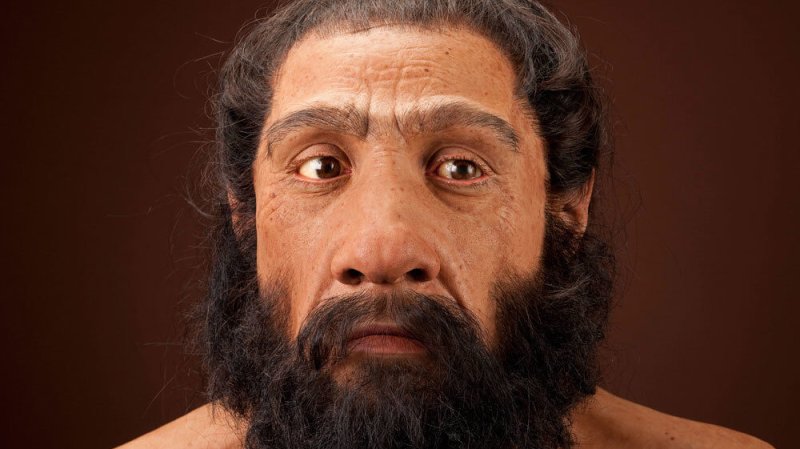
What happened when different hominin populations in Asia actually met? We can glean some clues through genetics, archaeology, and the fossils themselves. Several recent studies show conclusively that modern humans, Neanderthals and Denisovans regularly interbred, and that a ghost lineage (maybe H erectus) might have also contributed DNA too. Generally the percentage of Neanderthal DNA in modern humans is fairly low, in the range of 1-4 per cent, which seems to suggest that humans and Neanderthals interbred as far back as 270,000 years ago
…
What else might be exchanged besides genes when different hominin populations meet? Here is where the archaeological record might be able to contribute. Symbolic behaviour appears through ochre pigments, perforated shells, stones, pendants and much else besides – they are signs that hominins were using and manipulating symbols. It’s long been thought that these are solely the products of modern humans, and are not a core part of other hominins’ behavioural repertoire.

…
There is still a tremendous amount of research to do in Asian palaeoanthropology. The increasing number of contributions coming out of Asia is forcing scholars to rethink how they view various modern human origin models.
Editor’s note: Christopher Bae is a professor of anthropology at the University of Hawai’i at Mānoa
Read full, original post: In to Asia