


Science Literacy Project Daily Digest

Believing shipment was GMO crops, anti-technology organization ‘Extinction Rebellion’ illegally dumps 1,5000 tons of conventional wheat intended to feed poultry in countries hard hit by Ukrainian war
The image is distressing: an entire train stopped in the middle of the track, its ripped sides spilling 1,500 tons of ...
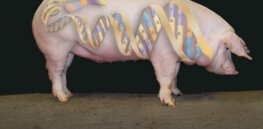
Infographic: Are genetically modified pigs the future of organ transplants?
So how close are we to using pigs for a limitless supply of organs to solve the global shortage? Using ...

Revolt builds against dodgy psych journal which published paper claiming masturbation and gay sex reflect mental illness
Several psychiatry researchers have been unsuccessfully seeking distance from a dodgy journal with which they’re affiliated – and which has ...

Could the war in Ukraine spark a global food crisis?
A crucial portion of the world’s wheat, corn and barley is trapped in Russia and Ukraine because of the war, while ...

Video: What would a world without herbicides look like? Purdue’s Jayson Lusk addresses how biotechnology can address climate change and reduce food insecurity
Pesticide shortages, increased labor costs, and transportation bottlenecks are raising the cost of food across the EU. With war roiling ...

Genetics research boosts response to disease plaguing Hawaii’s coffee crop
As the only state that produces coffee, including the iconic Kona variety, Hawaii growers and agricultural officials were alarmed when ...

Bioinformatics bonanza: The curious case of shrunken 2600-year old brain
Neurologist Axel Petzold was listening to the radio, nursing a hangover from the previous night’s lab party, when he first ...

Can science explain love?
Love defies a neat definition because it is a mix of the objective and the subjective, of the biological and ...
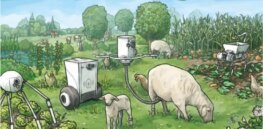
Future farming to feed 10 billion: Moving from chemical to biological era of agriculture
”We cannot feed 10 billion people in a sustainable way using the current production systems. We can’t. We need to ...
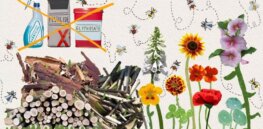
Viewpoint: Why we should think twice about reflexively banning agricultural pesticides
Is banning pesticides in the public’s best interest? The answer is an emphatic yes when the science indicates that exposures ...
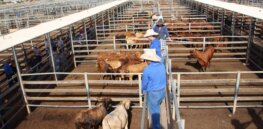
Viewpoint: Beef farmers, under fire from sustainability critics, make their case
Around the world, the beef industry is the subject of a growing ethical debate. Many people seem to think that ...
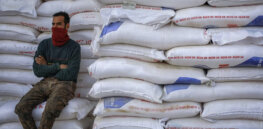
How the Russian invasion of Ukraine is stirring global food insecurity
Consumers around the world will feel the “enormous impact” of Russia’s war on Ukraine through sharply higher food prices and ...

‘Why are there still apes?’ Trump-endorsed Georgia Senate candidate Herschel Walker’s ignorant statements about human evolution
Donald Trump’s and Mitch McConnell’s candidate for the U.S. Senate from Georgia, football legend Herschel Walker, doesn’t have much of ...

From cloning to de-extinction: Scientists encounter limits on using CRISPR to resurrect animal species
With the advent of gene-editing technology such as CRISPR, scientists have shifted from cloning to genetic engineering as the most ...

Self perception: Most of us have a distorted sense of what we actually look like
Most of us are incredibly familiar with the sight of our own faces. But that doesn’t stop us from making ...

‘We’re in a race for solutions’: Why do these two Amazon tribes have such low dementia rates?
Two groups of indigenous people in the Bolivian Amazon have some of the world's lowest dementia rates, and that may ...

Viewpoint: Is cell-based meat science or a billion-dollar con?
Almost a decade since the unveiling of the first lab-grown burger, no business has been able to make it commercially ...

Ukraine conflict spurs food concerns in China, renews push to embrace crop genetic engineering and other yield boosting tools
Food security and self-sufficiency have long been high on the agenda of Chinese policy makers. Russia’s invasion of Ukraine gives Beijing ...

Post nuclear disaster: What species might dominate the world if humans went extinct?
Grim news showers us every day from the war in Ukraine, and given the real possibility of an extensive nuclear ...

Slowing Alzheimer’s with a drug? Scientists want to find out if that’s possible
Every two weeks, a nurse visits 43-year-old Marty Reiswig in Denver, Colorado, and injects him with an experimental drug called ...

How artificial intelligence and genome research are unlocking archaeological secrets of our distant past
DNA sequencing has opened the door to archaeogenetics, or biomolecular archaeology, the study of ancient DNA, recovered primarily from fossilized ...
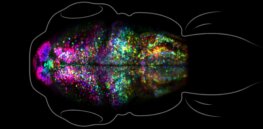
How does memory form? See what a fearful recollection looks like in the brain of a zebrafish
In a new study published in January in the Proceedings of the National Academy of Sciences, a team at the ...

Ukraine crisis prompts Europe to rethink Green Deal Farm to Fork policy, move away from organics to achieve sustainability goals
According to the "Green Deal",with which the European Union wants to become climate-neutral by 2050, only half as many pesticides and ...
‘The Insect Crisis’ book review: From climate change to habitat loss to chemicals, what’s behind the die off of insect populations?
When was the last time you had to clean bug splatter from your windshield? This ritual was once an inevitable ...

6 best foods to improve brain functioning? Here’s one Harvard scientist’s list
Based on my work with hundreds of patients, below are the best brain-boosting foods that people aren’t eating enough of ...

Facing onslaught of anti-trans legislation, transgender rights groups gird for multi-state battles
In August 2019, six weeks after Rodrigo Heng-Lehtinen joined the National Center for Transgender Equality (NCTE) as deputy executive director, ...
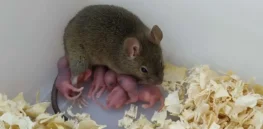
Virgin birth? Scientists induce parthoneogenesis in mice to study congenital diseases
The bible is no longer the only place where you’ll read testimonies about a virgin birth. In a new study ...
