


Science Literacy Project Daily Digest

These 8 distinct traits are shared by famous psychopaths
What is psychopathy? For a concept that gets endless attention, there’s surprisingly little agreement. Various models have been put forward ...

How humans evolved to play music
One bone became particularly useful as a hearing device, the hyomandibular bone, a strut that, in fish, controls the gills ...

Regenerative agriculture: How a Canadian farm repurposes food waste to combat climate change
Jocelyn Molyneux has an army of around a million red wiggler worms at her Caledon, Ont.-based Wastenot farms, diverting the organic ...

Sustainable seafood? This company believes it can make tasty vegan fish from plants and cultivated cells
One-third of the world’s tuna stocks are now fished at unsustainable levels, according to the most recent State of the ...

Japanese journalist explains why he flipped from anti-GMO campaigner to embracing agricultural biotechnology revolution
Masami Kojima, a reporter for the Mainichi Shimbun... initially took a negative position on GM crops, but now he is ...
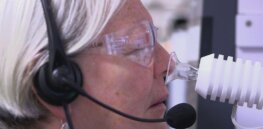
Sniffing out Parkinson’s early? Chinese scientists have developed disease-detecting e-nose
A study published in ACS Omega, by Chen Xing and Liu Jun at Zhejiang University, in China, describes an invention ...

Will there ever be a cure for addiction? Scientists weigh in
Up top we should note that there are many different kinds of addiction, and many different kinds of people, and ...

Winners and losers in plant evolution: How humans are driving hundreds of species to extinction
A new analysis spanning more than 86,000 plant species from John Kress, botany curator emeritus at the Smithsonian’s National Museum of ...

Viewpoint: Politicians are making a mess of regulating agricultural pesticides
In January, the New Jersey legislature enacted restrictions on most uses of neonicotinoids. The bill effectively bans about 70 percent of neonic ...
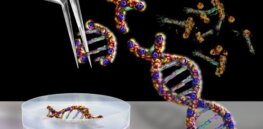
Viewpoint: How can we deliver on agricultural gene editing’s sustainability promise?
The pace of research in the field of genome editing — understanding, modifying and altering gene function — has quickly ...

CRISPR critics say gene editing results in ‘unknowable mistakes’. Here’s how scientists are addressing that challenge
One of the grand challenges with using CRISPR-based gene editing on humans is that the molecular machinery sometimes makes changes ...

When it comes to improving sleep, resistance training may be better than aerobic workouts
Resistance training — weight machines, free weights, cables, etc. — may be better at generating quality sleep than aerobic exercise, ...

Menopause before 40? It could pose an added risk of dementia
Entering menopause before age 40 is linked to a 35% higher risk of developing dementia later in life, a preliminary ...

EPA poised to extend use of four neonicotinoid pesticides, rebuffing environmentalist claims they endanger bees
The US Environmental Protection Agency is poised to allow the use of four of the most devastating chemicals to bees, ...

Increasing yields without genetic modification? A bio-spray that silences plant genes is in the works
The use of bioactive molecules has shown the capability to infiltrate into plant leaves and into the cells themselves with ...

Viewpoint: The messy details of how lab-grown meat is made
Lab meat—flesh grown in massive tanks instead of in the bodies of sentient animals—offers the promise of having our steak ...
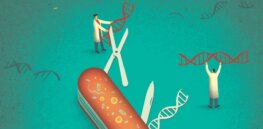
Infographic: Gene editing FAQ
Gene editing is when a scientist makes a tiny, controlled change in the DNA of a seed or animal, including ...

NFL ordered to dump ‘race-based’ formula for determining concussion damage, opening door for millions in settlements for retired Black players
The federal judge overseeing the N.F.L. concussion settlement formally removed the use of a race-based method to evaluate dementia tests ...

Psychedelics as therapeutics? Here is the rarely discussed downside
Psychedelics are generally safe drugs: The “classic” psychedelics, like psilocybin or LSD, have been shown to be low risk for ...

Anti-evolution state legislation has a notorious history – and it continues today
In a famous 1958 address commemorating the hundredth anniversary of the publication of Charles Darwin’s and Alfred Russel Wallace’s essays ...

More than 50 hard-to-detect genetic disorders can now be diagnosed with a revolutionary DNA test
A new DNA test, developed by researchers at the Garvan Institute of Medical Research in Sydney and collaborators from Australia, ...
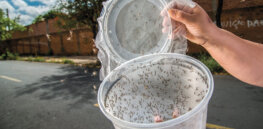
2.5 billion gene altered mosquitoes — designed to end spread of Zika, dengue and malaria — to be released in two-year experiment in California and Florida, EPA decides
Genetically modified mosquitoes might soon be whining on both U.S. coasts. The U.S. Environmental Protection Agency has approved two more years of ...

Future bakery: Genetically edited grains, artificial intelligence and novel ingredients poised to bring sustainable practices and healthier tastier, foods
Novel ingredients, genetically edited grains and artificial intelligence could play an integral role in the future of the baking industry, ...

Viewpoint: Food activists lobbied for an organic-only, no synthetic pesticide model in Sri Lanka. Here’s why it went so catastrophically wrong
Sri Lankan President Gotabaya Rajapaksa promised in his 2019 election campaign to transition the country’s farmers to organic agriculture over a period of years. The ...

There’s a nationwide shortage of Black sperm donors. Here’s why
There has been a shortage of Black sperm donors and all donors of color for years, industry experts said. The ...

300,000 Americans contract Lyme disease each year. A gene editing solution could reduce that dramatically
Reducing tick-borne diseases, such as Lyme disease, may now be possible thanks to two new gene editing methods developed by ...

Viewpoint: Human activity and modern agriculture are threatening pollinators
The arrival of the Anthropocene has brought with it considerable challenges for wild bees. In particular, the spread of industrial ...
