


Science Literacy Project Daily Digest

Are DNA from at-home ancestry tests private? Not always, and some states are cracking down
If you’ve ever spit into a plastic tube or swabbed your cheek and mailed your saliva away to learn about ...
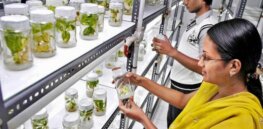
Viewpoint: Global climate talks could expand agricultural research and genetic innovation to better address warming concerns
The worst-case consequences of rising temperatures and drought played out this year in Madagascar with the first famine induced by ...
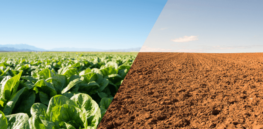
Viewpoint on COP26: ‘Agriculture is a solution to climate crisis, not the main problem’
Among the many documents on the table [at the COP26 climate talks] will be the latest climate report from the ...

From ‘anti-cancer’ bread to vitamin-infused veggies, health-boosting gene-edited foods are on the way
While the UK is still very much in the experimental stage of creating gene-edited foods, elsewhere in the world they ...
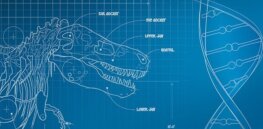
Skepticism grows over dinosaur DNA discovery claims
A team has extracted what could be DNA molecules from a 125-million-year-old fossil dinosaur, according to a study published [September ...
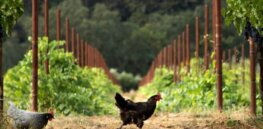
Regenerative agriculture catching on in Sonoma wine country
To Lauren and Alex Benward, sixth-generation owners of the Beltane Ranch vineyard in Glen Ellen, Calif., the word “sustainability” does ...

Viewpoint: Can pseudoscience feed us? — Indian sustainability expert challenges anti-ag biotechnology activists
The internet is swamped with myths, misconceptions, half-truth, and baseless claims propagated by several entities (unqualified individuals in the guise ...

Growing crops in space? Biotechnology could make that a reality
If humankind is ever to undertake long-term space missions and colonization, establishing an efficient space farming system would be essential ...

Viewpoint: ‘Fashionable nonsense’ — The deadly impact of ‘kowtowing to academia’s political zeitgeist’ in biomedicine
In August 2018, The Lancet published a curious paper, reminiscent of America’s long-forgotten Prohibition Era. The research came to a ...

Video: Carbon capture is key to reducing greenhouse gases. Iceland’s new CO2-fixing facility is a tiny step toward that goal
As the world prepares for another UN Climate Change Conference, scientists are still searching for a cheap and easy way ...

Breastfeeding protects against maternal cognitive decline later in life
A new study led by researchers at UCLA Health has found that women over the age of 50 who had ...

Natural GMOs: Is it dangerous, as critics claim, to ‘transfer’ genes from other species? Nature doesn’t think so
Grass crops are able to bend the rules of evolution by borrowing genes from their neighbours, giving them a competitive ...

Agribusiness giant Bayer introduces new focus on organic seeds
An international company perhaps best known in agriculture for its conventional crop protection products is making its first foray into ...

Eco-friendly diets often call for banning animal products — but sustainability is not that simple for many people around the world
Sustainability discussions breed controversy, often pitting animal products and meat alternatives against each other. However, this dichotomous framing may impede ...
Mexican biologist outlines multiple benefits of crop biotechnology to a skeptical nation
According to the molecular biologist Francisco G. Bolívar Zapata, one of the measures that must be taken urgently is the ...

Seed Speaks Video: GMO labels are mandatory beginning 2022. What will they tell us?
It’s the eve of mandatory GMO labeling in the U.S. As of the start of 2022, manufacturers will be required ...

Viewpoint: ‘We’ve made a mess of our planet with our meddling.’ Should we engineer animal species to set things right?
We’ve made a mess of the planet with our meddling. Now, thanks to biotechnology, we have tools… to repair it ...
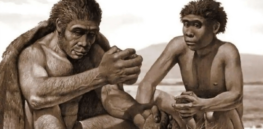
Homo bodoensis: New ancient human species might have been identified — but not all experts agree
A new species of extinct human has been named: Homo bodoensis. The species hasn’t been identified based on new fossils, ...

Atlas of cognition: Comprehensive inventory of brain cells in development
Looking for brain parts is driven by more than curiosity. Before the generations-long endeavor of deciphering the brain can proceed, ...
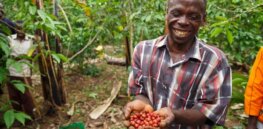
Ugandan scientists developing drought tolerant coffee varieties to save valuable cash crop
After releasing coffee varieties resistant to wilt disease, Ugandan agricultural scientists have begun developing Robusta varieties that are drought-tolerant as ...
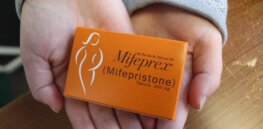
Infographic: What are medical abortions — and how accessible are they?
Medication abortion, also known as medical abortion or abortion with pills, is an FDA approved pregnancy termination protocol that involves ...

DNA confirms legendary Lakota leader Sitting Bull has a living descendant
A man’s claim to be the great-grandson of legendary Native American leader Sitting Bull has been confirmed using DNA extracted ...

3,000 years ago, human brains shrunk — but as a species, we got smarter. How did that happen?
It is well documented that human brains have increased in size over the course of our evolutionary history. Less appreciated ...

How early failures dogged gene therapy — and why the future looks so much brighter now
Jesse Gelsinger was 18 years old in 1999, when he joined one of the first clinical trials of gene therapy ...

From mixing urine in wine to peeing on barley: A history of pregnancy tests
Trying to figure out if you’re pregnant is probably as old as humanity itself. People had some pretty weird methods, ...
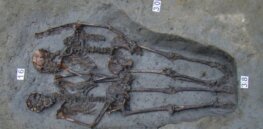
How should scientists handle DNA extracted from ancient sites? Researchers have now crafted guidelines
As ancient DNA research sweeps the globe, ballooning from zero genomes sequenced as of 2009 to more than 6,000 as ...

Can humans hibernate like squirrels while traveling in deep space?
Books and movies have long conveyed the image of people slumbering in transparent pods as they hurtle through space. That ...
