


Science Literacy Project Daily Digest

Are our brains wired for numbers?
[Cognitive neuroscientist Brian] Butterworth is one of several researchers who believe that the human brain can be thought of as ...

Vertical farming and sustainability: We can now grow fruits and vegetables in urban areas without soil or sunlight
Most vertical farms share a few attributes. One is a lack of soil. Their stacked rows of crops are grown ...

Are women biologically programmed to be more sensitive to cold than men?
Israeli scientists think they know why men and women are constantly squabbling over the heating control or the air conditioning ...
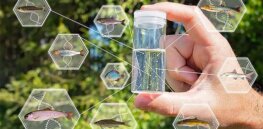
How monitoring environmental DNA (eDNA) can help us conserve forests, rivers and other ecosystems
Today, about 1 in 4 freshwater creatures face extinction. Wetlands are disappearing three times faster than forests. Across the globe, ...
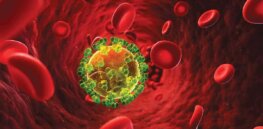
One-and-done intravenous gene editing infusion might eventually be able to cure HIV
In 2014, Temple University researchers proved they could use state-of-the-art molecular scissors to cut out dormant HIV hiding in human ...

‘Eye contact does not elicit synchrony; it disrupts it’: Prolonged eye contact during conversations can block connection
Making eye contact has long been conceived as acting like a cohesive glue, connecting an individual to the person with ...

Viewpoint: Industry consolidation — Large meat and dairy companies dominate nascent plant-based and cellular meat industry
Nearly every week a major media outlet publishes a headline announcing that a giant meat or dairy processor has acquired ...
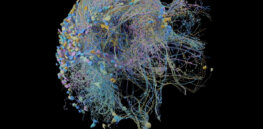
What can explain humans’ complex cognitive capacity? Brain maps might give us answers
Imagine looking at Earth from space and being able to listen in on what individuals are saying to each other ...

Risk vs. hazard: Current regulatory structures rely on outdated and flawed Precautionary Principle to assess potential dangers of chemicals
There has been a long running controversy about the relative merits of hazard-based versus risk-based approaches in managing the potential ...

Philippines greenlights Golden Rice, opening floodgates for other nutritionally-enhanced biotech crops
Golden rice, enriched with vitamin A and designed to end suffering among the world's poorest children, has been approved in ...

Simulating nature: South African biorefinery modeled after four-stomach system found in cows
For billions of years, nature has perfected ways of dealing with the recycling of materials. Like a good housekeeper who ...

No more coffee or chocolate? Climate change could turn many everyday foods into rare luxuries
While historically certain foods such as coffee, chocolate and spices were luxury items, today these foods are supermarket staples in ...

Precision fermentation: How humans harness microbe-based biochemistry to make food more delicious
Humans have been harnessing microbe-based biochemistry for food preservation since before history began. Without lactic-acid fermentation a bumper crop of ...
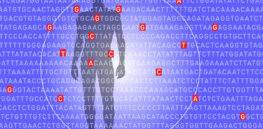
The first child selected as an embryo on the basis of its ‘polygenic risk score’ is now 16 months old
The first child acknowledged to have been selected as an embryo on the basis of its “polygenic risk score” is ...

‘There will be no robo-apocalypse’: Why AI is no match for human creativity and ingenuity
Improvements in machine intelligence will not lead to runaway machine-led revolutions. They may change the kind of jobs that people ...
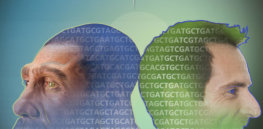
Ancient DNA confirms our African roots — and reveals how Neanderthals, Denisovans and humans ‘continually mixed’
This year is the 20th anniversary of sequencing the human genome. In honor of this event, a research team led by ...

Treating manic depression and mental illness is the ‘final frontier’ of CRISPR gene therapy
Since the 1980s, scientists have been searching for the genetic root of manic-depression, to better understand it and treat it, ...

Unlocking the mystery of why we sleep
We spend approximately a third of our life sleeping, yet we don’t know why we need to. And if we ...

Powerful argument for lab-grown meat: Although low- and middle-income countries contain only 40% of the world population, they make up 75% of deaths from food-borne illnesses
The Global Alliance for Improved Nutrition found that low- and middle-income countries make up 75% of the deaths from food-borne ...

Breakthrough Indian gene editing experiment restores vision to legally blind people
In a groundbreaking scientific victory, scientists were recently able to restore vision in legally blind patients through a gene-editing experiment ...

Can biotechnology extend your life? A Russian-born billionaire is betting he can make it happen
[Yuri] Milner is a Russian-born billionaire who made a fortune on Facebook and Mail.ru and previously started the glitzy black-tie ...

Why are so many people resistant to daydreaming?
Thinking is a funny thing because research has shown that we’re the only species that can do it aimlessly. While ...

Why don’t humans have tails like other hominids? It could be an accident of evolutionary history
For half a billion years or so, our ancestors sprouted tails. As fish, they used their tails to swim through ...
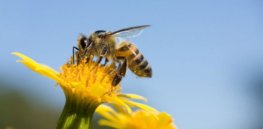
Infographic: US honeybee population reverses declines, shows sharp 8% increase over past decade, documents USDA
Over the last 20 years, the U.S. beekeeping industry has experienced significant changes that have included fluctuating honey bee colony ...

Appealing to ‘scientific consensus’ can correct GMO misconceptions — but is not effective against climate change denial, study finds
Despite mountains of evidence that genetically modified foods are safe and climate change is real, many people still doubt these ...

When will we reach a future in which meat no longer requires animal slaughter? There are still some barriers to that goal
Nearly 100 firms are vying to be the first to bring cultured meat to market. Select locations—including a private club ...
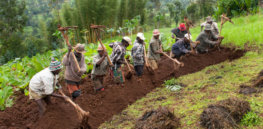
Viewpoint: Public Affairs professor advocates for agroecology systems, claiming technology-centric agricultural programs promoted by Gates Foundation has failed in Africa
Agroecology applies ecology and social science to the creation and management of sustainable food systems and involves 10 or more ...
