


Science Literacy Project Daily Digest
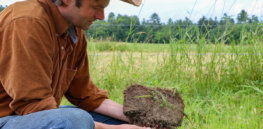
Viewpoint: Regenerative agriculture—a marketing ‘buzzword’ for sustainable practices many farmers have used for decades
Canadian farmers [have been using sustainable farming practices] long before “regenerative” became a buzzword; indeed, long before wealthy people were ...

‘Friendship, family and culture’: Surprising evolution-based attributes that dolphins share with humans
Scientists like Dr Blake Morton, a Lecturer of Psychology from the University of Hull, suggest that [personality similarities across species] ...

Cancer dates back millions of years. Now we are cracking its evolutionary code
Cancer cells are on a continual evolutionary journey of mutation and proliferation, creating a genetically diverse population with a range ...

Facing stiff GM crop restrictions, Mexican cotton farmers may import illegal biotech seeds
During 2020, cotton production fell [in Mexico, as only] one million bales were produced, 500 thousand less than in other ...

We could face a global food crisis by 2050. Is synthetic biology the solution?
Synthetic biology has the potential to reshape our agriculture systems and to usher in a new era equitable and of ...

‘Green’ politics and consumer uncertainty keep GM crops outlawed in Europe. Will gene editing change the legal landscape?
Agronomy grad student Frederik Vilhelm Larsen, at the University of Copenhagen in Denmark, wants to explore all the science that ...

How CRISPR can create more ethical eggs
Over the past couple of decades, Western consumers have shown an increasing appetite for more ethical eggs. The European Union and ...

Why did humans survive while our Denisovan and Neanderthal cousins died out? Just one gene could have made all the difference
Stem cells, the self-renewing precursors of other cell types, can be used to build brain organoids [or] "mini brains" in ...

Evolution of literacy: How Protestantism and the Bible rewired Medieval brains
Of course, writing systems are thousands of years old, found in ancient Sumer, China, and Egypt, but in most literate ...

Do you thrive in cold weather? 20% of people have a genetic mutation that keeps skeletal muscles warmer
Skeletal muscle comprises fast-twitch (white) fibers that fatigue quickly and slow-twitch (red) fibers that are more resistant to fatigue. The ...

Europe’s ‘most cherished’ grape varieties threatened by deadly diseases. CRISPR can help save them
How the latest breeding techniques are saving the taste of our most cherished grape vine varieties. European Seed (ES): Could ...

New South Wales, Australia poised to lift GM crop cultivation ban in July, sparking debate between farmers and environmentalists
[New South Wales Agriculture Minister Adam] Marshall said [lifting the state’s GM crop ban on July 1 will open] the ...

Soils around the world are in trouble, threatening food production. Here’s how we can save the ground beneath our feet
Soil is critical for the food everyone eats. Healthy soils matter not just for producing 95% of global food supplies, ...

Viewpoint: ‘No added hormones’? How food labels can be technically accurate but still misleading
Terms like 'GMO-free' and 'raised without hormones or antibiotics' are just some of the labels used on food products, and ...

Infographic: History’s 11 deadliest plagues, from the Antonine epidemic in ancient Rome to COVID-19
The novel coronavirus took just a few months to sweep the globe. More than 2.5 million people around the world ...

Navigating advertising landmines on the path to egg freezing
More women in the UK than ever before are considering freezing their eggs, with the sharp rise in inquiries at ...

A complicated legacy: Reassessing Darwin‘s views on race and gender 150 years after the ‘The Descent of Man’
Darwin was a liberal, and an abolitionist, perhaps influenced by his taxidermy tutor in Edinburgh, a Guyanese man called John ...

How are genetically engineered crops regulated around the world?
By employing precise, efficient, yet affordable genome editing techniques, new genome edited crops are entering country regulatory schemes for commercialization. ...
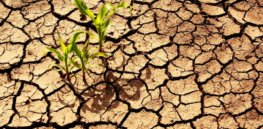
Climate-proofing our food supply: Here’s how CRISPR will help us adapt to global warming
Biotechnologist Dr. Karen Massel from UQ's Centre for Crop Science has published a review of gene editing technologies such as ...

Viewpoint: Gene-edited crop developers need to win public trust. Transparency is how they can do it
In 2009, the genome editing tool CRISPR was introduced, which allows scientists to edit the DNA of organisms such as ...

Kenyan farmers clamor for GMO maize seed after visiting demonstration site
Impressed by the high yields realized in open field trials, Kenyan farmers are urging their government to speed up the ...

‘Dark angels of evolution, terrific and terrible’: How viruses have shaped evolution, for better or for worse
[Many] viruses bring adaptive benefits, not harms, to life on Earth, including ours. We couldn’t continue without them. We wouldn’t ...

20 year anniversary of the mapping of the human genome: What does the future hold?
The coalescence of bioinformatics and computational biology around algorithms has... given rise to new institutional forms and new markets for ...

Taking Vitamin C or zinc to fight a cold or COVID? New study shows they have no effect
Over the years, scientific studies have not conclusively shown that [zinc or vitamin C] can help overcome illnesses such as ...
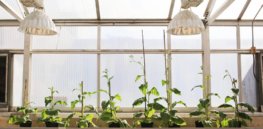
GM plants with bigger roots could suck more carbon out of the atmosphere, mitigating climate change
[S]cientists like Wolfgang Busch, Salk Institute for Biological Studies professor, are trying to harness the carbon-sucking power of plants to ...

How animals perceive time
[Are animals] entirely free from the temporal plane? Do they perceive it in any way? Do some species perceive it ...
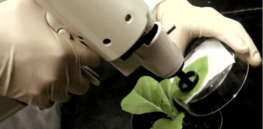
Gene gun: The tool that revolutionized plant breeding and brought GMOs into agriculture
A plywood-mounted transformer, a voltmeter-equipped wand and a pair of bulbous vacuum tubes might appear to be just a random ...
