


Science Literacy Project Daily Digest

Genetically engineered biofuels might be able to compete with gasoline ‘within reach’
Berkeley Laboratory scientists designed simulations to determine how much biofuel is needed for the whole bioproduct extraction process to be ...

‘Failures aren’t for lack of trying’: The quest to find a drug for Alzheimer’s
In February, pharmaceutical companies Roche and Eli Lilly announced that two experimental drugs they had developed for Alzheimer’s disease had ...

Soil fungus could suppress soybean cyst nematodemore—cause of over $1 billion in yield losses every year
The soybean cyst nematode sucks the nutrients out of soybean roots, causing more than $1 billion in soybean yield losses ...

Lessons learned from the past: Why rushing a coronavirus vaccine could be dangerous
Annual flu shots don’t need to go through clinical trials every time they are adjusted for each year’s flu strain, ...

Farm workers fear coronavirus infection as they labor to keep US fed during COVID-19 pandemic
While millions of Americans shelter in place to prevent the spread of COVID-19, farmworkers on California’s cool central coast move ...

What the rest of the world can learn from Iceland’s mass coronavirus testing project
Big data can come from small places. Iceland’s isolated location and sparse population mean that some vital information about the ...

Woman charged for allegedly selling illegal pesticides on eBay she claimed would kill coronavirus
A Georgia woman made her initial appearance on federal charges of illegally importing and selling an unregistered pesticide, Toamit Virus ...

Searching for signs of Earth’s earliest life more than ‘a needle-in-the-haystack’ problem
The search for signs of Earth’s earliest forms of life isn’t quite like looking for dinosaur bones protruding out from ...

Synthetic biology will help us feed ourselves with drought-tolerant crops as climate change accelerates
Drought stress has been a long-time limitation to crop production that is being exacerbated by climate change and associated reductions ...

How would a coronavirus antibody test work?
The hunt is on for a coronavirus antibody test that tells people whether they have had COVID-19 and are immune ...

With consumers still fearful of synthetic chemicals, biotech firms spend billions on biopesticide development
Major players like Bayer and start-up companies are spending billions to identify fungi, bacteria and organic compounds in plants that ...

How vaccines, antivirals and antibodies could help fight the coronavirus
There has been a lot of confusion in regard to possible treatments for COVID-19 and the timeline for the development ...

How America is neglecting its growing elderly autistic population
[E]merging research suggests that autistic adults are at high risk of a broad array of physical and mental health conditions, ...

Don’t fear white bread. It’s more nutritious today than it was 200 years ago, new analysis shows
A study comparing historic and modern wheat varieties grown side by side has shown an increase in dietary fiber and ...

Native Australian plant may help develop disease-resistant crops—and a COVID-19 vaccine
A team from the Queensland University of Technology (QUT) spearheaded the genome sequencing of an ancient Australian plant years before ...

Bringing ‘medical lore’ to life: Century-old practice of plasma infusions could be used against coronavirus
An old idea for fighting infections — an approach most physicians know about only from medical lore — is being ...

When will experimental coronavirus drugs will be ready for the clinic?
Is there hope that something will be available soon to help us fight this virus, known as SARS-CoV-2? Here’s a ...
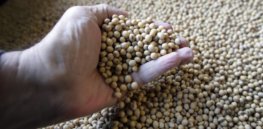
CRISPR could yield herbicide-resistant, non-GMO soybeans to help combat stubborn weeds
It is often said that a soybean’s maximum yield potential is when it is still in the bag .... [E]verything ...

Video: These ‘micro-machines’ could repair our bodies and clean our oceans
Measuring less than a millimeter wide, these micro-machines are programmable lifeforms that researchers from the University of Vermont and Tufts ...

Pesticide-spraying drones accelerate sustainable farming as governments relax regulations
Move over dogs – drones are a farmer’s new best friend! In just a few years there’s been a huge ...

Temperature-sensing plant molecule could help breed food crops optimized for changing climate
In a paper published in Nature Communications, a group of cell biologists .... reveal the phytochrome B molecule has unexpected ...

First wave over? Several European nations set to relax coronavirus lockdowns
Europe is getting ready to reopen, slowly. Italy, Austria and Denmark are among the first countries to plot the gradual ...

Was it a bat? A lab leak? A bioweapon? Virus hunters battle cornovarius origin speculation
A vacuum of knowledge about the origins of the new coronavirus ravaging the world has provided fertile ground for all ...

Rising food prices amid coronavirus pandemic stress already fragile economies in developing world
As the coronavirus pandemic penetrates more deeply into global supply chains, prices for key staples are starting to soar in ...

Video: World has lots of food, but COVID-19 trade restrictions hamper supermarket restocking efforts
The food industry is struggling to cope with the impact of the Covid-19 pandemic. Restrictions on transportation links that move ...

‘Anecdote and feeling over science and fact’: Exploring President Trump’s embrace of controversial anti-malarial drug
As he stares down a pandemic, economic collapse and a political crisis of his own, President Trump thinks he may ...

GMO and organic crops can coexist with minimal risk of contamination, multiple studies confirm
In 2020, the world accommodates nearly 7.8 billion people. By 2050, world population is expected to reach 9.8 billion. With ...
