


Science Literacy Project Daily Digest

Are we about to raise the cap on human life expectancy?
Ray Kurzweil, Google’s chief futurist, says that if you can just hang on until 2029, medical advances will start to ...

With a simple tweak, CRISPR’s genetic scissors get an accuracy boost
Without ensuring high levels of accuracy, any proposed CRISPR gene therapy becomes a genetic crapshoot. Now, a team from Duke ...

Video: John Innes Centre battles nutrient deficiency with iron-fortified biotech wheat
Iron is an important micro-nutrient, boosting haemoglobin levels in the blood. Many populations and particularly women and children are currently ...

Newly identified type of dementia could be ‘more common than Alzheimer’s’
Doctors have newly outlined a type of dementia that could be more common than Alzheimer's among the oldest adults, according ...

Viewpoint: Europe’s ‘de facto’ GMO crop ban, mandatory labeling scheme ‘hinder innovation’
An excellent new paper from a trio of Danish researchers, two of whom are based out of the University of Copenhagen, argues that the European ...

Steep prices push lab-grown meat makers to pitch products as ‘humane luxuries’
[M]akers of cultured meat, such as Memphis Meats, New Age Meats and Aleph Farms, face several barriers to bringing their ...

Will weed-killing robots replace controversial herbicides on the farm?
Weeds are the bane of a farmer’s existence—the “most important of all crop pests,” as one scientist put it. They ...

Indian farmers grow illegal insect-resistant Bt eggplant to control destructive pests, as government lags on approval
Farmers in Haryana and experts fear widespread contamination of genetically modified (GM) brinjal or eggplant in the state with a ...

Video: Even if you’ve never taken a DNA test ‘your genetic privacy might already be compromised’
The rise of direct-to-consumer DNA tests comes with a host of thorny problems, including how to interpret the data and major questions about genetic privacy ...

Viewpoint: ‘Political populism’ dictates Europe’s bureaucratic anti-GMO crop rules
As individuals, we’re able to decide whether a single action is acceptable to us, or deemed to be too risky ...

Gene mutation could explain why children with autism have trouble falling asleep
Up to 80 percent of children with autism spectrum disorder (ASD) experience sleep problems. The source of these problems has ...
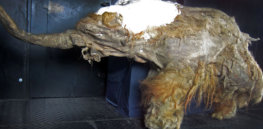
De-extinction? Why the woolly mammoth and other lost animals really are gone forever
This information undoubtedly will disappoint “Jurassic Park” fans, but it comes from an expert—Beth Shapiro, the UGA alumna and evolutionary biologist ...

Kenya reconsidering GMO crop ban to support food security
Kenya is reconsidering its 2012 import ban on genetically modified maize as more than 1 million of its citizens require urgent humanitarian ...
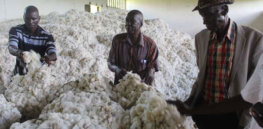
‘Exotic’ genes from obsolete cotton varieties could boost crop yields without sacrificing fiber quality
Cotton breeders face a "Catch-22." Yield from cotton crops is inversely related to fiber quality. In general, as yield improves, ...

Searching for a ‘fountain of youth’ in our genes
Explorers have dreamt for centuries of a Fountain of Youth, with healing waters that rejuvenate the old and extend life ...
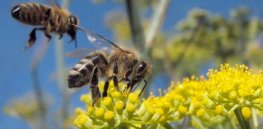
Podcast: ‘Are we all going to die?’ Entomologist breaks down the ‘bee-pocalypse’ that ‘threatens the global food supply’
Bees are important crop pollinators and reduced bee numbers have been described by farmers overseas as a bee crisis. Global ...
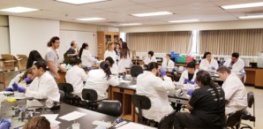
Pushing for greater diversity in genetic databases by ending ‘cycle of disengagement’
For the past 30 years, human genomics has made exciting advances in reconstructing population history and identifying which genes make ...

Can virtual reality treat depression symptoms through ‘pleasant scenarios’?
Michelle Craske is asking patients to dive into coral reefs, ride on bullet trains rushing past pine trees, and cheer ...

Viewpoint: Caster Semenya ruling demonstrates our ‘myopic’ view of athletes and gender
In the intricate and emotional case of Caster Semenya, there is no such thing as fair. Her situation vexes traditional ...

Could we be designing babies from a menu of genetic options in 2045?
The year is 2045. The genomes of four billion humans have been sequenced, creating a huge pool of genetic information ...

USDA endorses G-20 commitment to science-based policy, sustainable farming technology
USDA officials signed on to a G-20 statement backing the development of climate-smart technology and promoting science-based decision-making. Top USDA ...

‘Ancient lion’: Meet the largest carnivore we’ve ever discovered
Twenty-three million years ago, a giant carnivore larger than any modern-day lion or polar bear stalked sub-Saharan Africa, according to ...
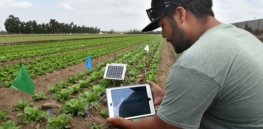
IBM, Yara International announce digital platform to optimize crop production for individual farms
Yara International, a leader in crop nutrition, and IBM announced [April 26] an agreement to build the world’s leading digital ...
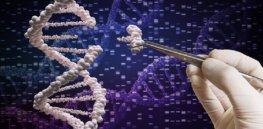
Off-target RNA mutations: Why this ‘more precise genome-editing’ technique needs improvement
Base editors designed to convert one DNA nucleotide to another may also perform large numbers of unwanted edits to RNA, ...

Omega-3 oil from GMO plants equivalent to fish oil, human clinical study shows
Research .... has shown that key omega-3 fatty acids within GM plant oils are taken up and processed by the ...

Why loss of sleep is ‘having a catastrophic impact on our health’
According to neuroscientist Matthew Walker, I'm doing serious damage to my health—and life—by not sleeping enough. "The decimation of sleep ...
Turning brain signals into speech using artificial intelligence moves closer to reality
In an effort to provide a voice for people who can’t speak, neuroscientists have designed a device that can transform ...
