


Science Literacy Project Daily Digest

Stonehenge mystery solved! DNA analysis tells us where builders came from
The ancestors of the people who built Stonehenge travelled west across the Mediterranean before reaching Britain, a study has shown ...

Can genetics help explain why some people make more money than others?
The UK Biobank is the single largest public genetic repository in the world... . But when David Hill, a statistical ...

Attempts to CRISPR gene edited cassava plants to fight off viruses resulted in mutated viruses, study finds, raising concerns
Using gene-editing technology to create virus-resistant cassava plants could have serious negative ramifications, according to new research by plant biologists ...

Viewpoint: GMO crops could reduce, even eliminate, dangerous allergens in common foods
My brother was in his mid-20s when he developed a food allergy....[H]e discovered that his unpleasant side effects occurred whenever ...

Families plagued by inherited diseases push back against ban on gene-edited embryos
In 2012, scientists showed that CRISPR, an ancient bacterial immune system, can edit DNA. ... Barely three years after, leaders in ...

Were the Denisovans a collection of 3 different species?
A new study using genetic data is offering an intriguing new look into the history of the Denisovans, revealing them as a ...
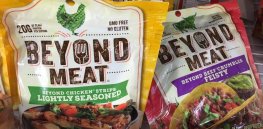
Tyson Foods ends investment in plant-based protein startup Beyond Meat
Tyson Foods, the US meat producer, has exited its investment in Beyond Meat, the alternative protein company which is due ...
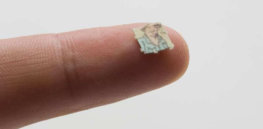
Does LSD microdosing change how people see the world?
You’ve probably heard about microdosing, the “productivity hack” popular among Silicon Valley engineers and business leaders. Microdosers take regular small doses of LSD ...

Activists, scientists spar over effort to restore American chestnut tree with genetic engineering
The American chestnut tree once sustained a way of life. Pioneers used the tall, straight, and fast-growing tree for fences, ...
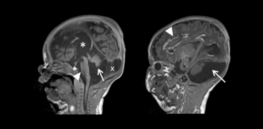
‘Stranger than doctors could have imagined’: Boy born without one type of brain cells
Even before he was born, it was clear that the boy’s brain was unusual—so much so that his expecting parents ...

Infographic: 1.3 billion tons of food end up in the trash. Here’s how biotech crops can help
Each year the world wastes 1.3 billion tons of food—1/3 of global production. The US throws away approximately 40 percent ...

Is resurrecting the woolly mammoth an ‘unnecessary show of scientific hubris’?
Bringing an extinct species back to life was once firmly in the realm of science fiction, but as genetic engineering ...

Video: Where did the infamous needle-in-a-tomato anti-GMO image come from?
It’s become something of a personal quest: find the original “syringe-in-the-plant” image. For the last 5 years, I’ve been communicating ...

Viewpoint: He Jiankui’s CRISPR babies experiment was ‘even worse than I first thought’
When He Jiankui announced the birth of twin girls whose DNA he had modified when they were embryos using the CRISPR ...

Viewpoint: EU precautionary pesticide bans threaten sustainable agriculture
Don’t blame it on sunshine or moonlight … Don’t blame it on good times (remember them?) … Don’t even blame ...

When culture clashes with science: Teaching evolution to Tibetan monks
“We believe that we came into existence when an ogress mated with a monkey. Is that possible?” The question comes ...

New data, novel research approaches help tackle declining monarch butterfly mystery
Monarch butterflies are an icon of nature: spectacular in form, known for their unfathomable annual migration, and frequent visitors in ...

Can ‘golden child’ anti-aging drugs rescue Alzheimer’s memories?
Alzheimer’s disease defeated another promising near-market drug that tried to prevent or remove amyloid deposits, adding to the disease’s therapeutic “graveyard of ...

Genetic genealogy leads to arrest in 1972 Washington killing
Thanks to the same DNA technology that caught the Golden State Killer suspect, authorities in Washington state arrested a 77-year-old ...

Bayer asks appellate court to toss $78 million glyphosate-cancer verdict
Bayer AG on [April 24] asked a California appellate court to throw out a $78 million judgment it was ordered ...

Making the case for lifting the US ban on 3-parent babies
A Greek woman with a history of multiple in vitro fertilization failures gave birth to a healthy baby with DNA ...

‘Crisis-level precautions’: How hospitals fight new era of superbugs
[Superbug Candida auris can] survive for weeks outside a patient—on sinks and mattresses, door knobs and bedside tables. To eradicate ...

Center for Science in the Public Interest calls for national registry for CRISPR-edited crops to address consumer biotech concerns
I am often asked which genetically engineered (GM) crops have entered the U.S. food supply. The question can be answered ...

This nutritionist doesn’t buy organic—and says you shouldn’t bother either
When I tell people that I’m a dietitian, the first questions I get are always, “Do you eat super healthy?” ...

Can genetics predict a baby’s risk of becoming an obese adult?
There’s a new way to predict whether a baby will grow into an obese adult. Combining the effect of more ...

Viewpoint: 5 popular Netflix documentaries serve up pseudoscience about agriculture, chemicals and nutrition
Netflix brought in $15.8 billion in revenue in 2018 in part because the streaming service floods subscribers with a deluge ...

Glyphosate exposure causes ‘transgenerational inheritance of disease’ in rats, study claims, but scientists question data
Washington State University researchers have found a variety of diseases and other health problems in the second- and third-generation offspring ...
