


Science Literacy Project Daily Digest

US government pushes precision medicine research with Fitbit giveaway
In his 2015 State of the Union, President Obama announced the Precision Medicine Initiative — a massive research project designed ...

Neonicotinoid, chlorpyrifos insecticides impact bird migration, study finds
"Studies on the risks of neonicotinoids have often focused on bees that have been experiencing population declines. However, it is ...

Brazil farmers group asks court to cancel Monsanto GMO soybean seed patent
Soybean growers in Mato Grosso, Brazil’s largest producing state, have asked a court to cancel Monsanto’s Intacta RR2 PRO patent ...

Naming genetic diseases: There’s more to it than you might think
An effort is underway to streamline the way we name genetic diseases, with an emphasis on imparting useful medical information, ...

The quest to make CRISPR gene editing as easy as a smartphone app
[Biohacker Josiah Zayner] lives and works in Oakland, California, where he's converted a house into a scientific lab. Here, he ...
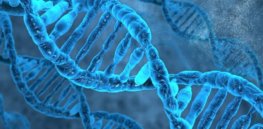
New error-free DNA sequencing method could diagnose rare diseases
A virtually error-free new method of DNA sequencing could one day be used to diagnose extremely rare cancers and hereditary ...

Challenging the RNA origin of life theory
The current consensus holds that life emerged from an ‘RNA-world’, first named by Nobel Laureate Walter Gilbert in 1986. This ...

FDA lightens up on ‘outrageous’ direct-to-consumer genetic information ban
Food and Drug Administration (FDA) head Scott Gottlieb is reeling in his agency's outrageous four-year ban on direct-to-consumer genetic testing. Under the ...

Innovation meets precaution: NGO delay tactics hinder gene-editing revolution in Europe
Does today’s fear of potential risks caused by GMO make us unable to carry out necessary actions for a better ...

UK backs complete EU ban of neonicotinoid insecticides, citing harm to pollinators
The UK will back a total ban on insect-harming pesticides in fields across Europe, the environment secretary, Michael Gove, has ...

Getting behind the genetics of high-altitude adjustments
People who both travel to and live at high altitudes typically cope with lower oxygen levels by increasing red blood ...

Stalemate continues: EU fails to agree on glyphosate herbicide renewal as deadline looms
An EU vote has failed to resolve a controversy over the use of glyphosate, the world's biggest-selling weedkiller. ... The ...

Alcohol addiction: Can we blame our ancient ancestors?
[M]illions of years ago, being able to consume alcohol was likely vital to survival: our ancestors evolved to metabolize booze right around ...

IARC rejects US House science committee’s request to testify on glyphosate cancer report scandals
The International Agency for Research on Cancer will not comply with a House science committee's request related to the agency's conclusions on ...

Can’t get motivated? You may be able to blame your genes
Being apathetic may feel like following the path of least resistance. But studies of apathy in the brain show otherwise ...

‘Kelp highway’–not a land bridge–likely brought first humans to the Americas
For decades, students were taught that the first people in the Americas were a group called the Clovis who walked ...

Microsoft’s foray into the quest to cure cancer
As Digital Journal has recently reported Microsoft has recently launched Healthcare NeXT, which is a cloud-based, artificial intelligence and research project ...

‘We are those farmers’: Why you shouldn’t villainize farmers who use GMOs—or the food they grow
[Editor's note: Kate Lambert and her husband grow corn and soybeans in Brookfield, Mo.] We are those farmers they want you ...

Artificial selection: 10 non-GMO crops that don’t look anything like their wild counterpart
Genetically modified foods are a big source of debate these days. Some don’t want anything to do with modern GMOs, ...
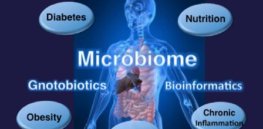
Gut microbiome could influence response to cancer treatment
When [cancer] drugs work, the immune system tramples tumors into oblivion. But they don’t always work—in fact, cancer drugs can ...
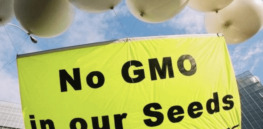
NGO opposition to GMO, gene-edited crops not rooted in emotion and dogma, research suggests
In 2016, 107 Nobel Laureates signed an open letter calling on Greenpeace to desist from campaigning against agricultural biotechnology and ...
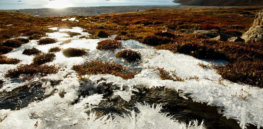
Deep freeze: Will climate change awaken long-frozen diseases?
I visited Greenland because, lately, the land here has gone soft, and disquieting things threaten to wake in it. … ...
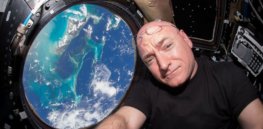
NASA Twins Study finds thousands of epigenetic changes in astronaut Scott Kelly
When astronaut Scott Kelly returned to Earth after a year floating about the International Space Station, he was noticeably different from his ...

Viewpoint: It’s time to stop drawing links between mercury and autism
[Editor's note: Emily Willingham is a science writer and co-author of The Informed Parent: A Science-Based Resource for Your Child's First Four ...

Buying local, organic food won’t shrink your carbon footprint—but here’s what can
If you're paying more for local and organic groceries because you care about the environment, here's some bad news: science ...

Will we learn anything from the brain of Las Vegas shooter Stephen Paddock?
The brain that sat in the skull of the Las Vegas shooter [Stephen Paddock] as he planned out his attack, ...

Epigenetics and addiction: Enzyme could help treat cocaine, alcohol and opioid dependence
Previously, it had been studied that an epigenetic drug could alter DNA methylation in the brain during drug withdrawal with hopes in ...
