The quest to make CRISPR gene editing as easy as a smartphone app

good JZ
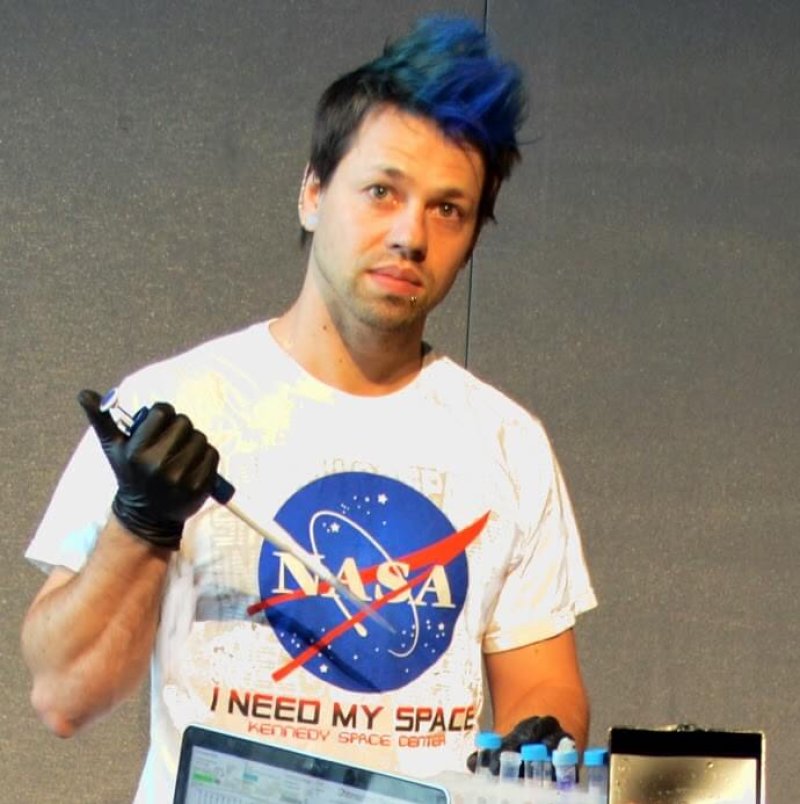
[Biohacker Josiah Zayner] lives and works in Oakland, California, where he’s converted a house into a scientific lab. Here, he runs a company that sells genetic engineering kits to the public. In the U.S., gene editing is technically not illegal, but federal funding is either prohibited or extremely difficult to obtain.

“What we are trying to do is make genetic engineering technology accessible to people. We want people to be able to use genetic engineering technology as easily as they could use an app on their smartphone.”

Josiah’s kits start at about $150, depending on the cell cultures and organisms included for experimentation. The business, and the biohacker movement it helps service, came to exist, largely because of one new tool, called CRISPR.

Josiah genetically modified himself with CRISPR. He used the system to edit a gene in his muscles, to make them grow faster, to be bigger and make him stronger. He did this as a proof of concept to show people how easy it is, even for biohackers operating out of small labs, to manipulate genes.

“I think we are in the midst of a genetic revolution. I think this is, like, literally, a new era of human beings,” [Zayner] said.

The GLP aggregated and excerpted this blog/article to reflect the diversity of news, opinion, and analysis. Read full, original post: Playing God: “We are in the midst of a genetic revolution”

{{ reviewsTotal }}{{ options.labels.singularReviewCountLabel }}
{{ reviewsTotal }}{{ options.labels.pluralReviewCountLabel }}
{{ options.labels.newReviewButton }}
{{ userData.canReview.message }}

Related Articles

Infographic: Global regulatory and health research agencies on whether glyphosate causes cancer

Infographic: Global regulatory and health research agencies on whether glyphosate causes cancer

Does glyphosate—the world's most heavily-used herbicide—pose serious harm to humans? Is it carcinogenic? Those issues are of both legal and ...

Most Popular

Screenshot-2026-03-13-at-12.14.04-PM
The FDA wants to make many popular prescription drugs OTC—a great idea. Here’s why it’s unlikely to happen
Screenshot-2026-05-04-at-12.54.32-PM
How Utah became the country’s supplement capital  — and a haven for unregulated, ineffective and fake products
Screenshot-2026-04-20-at-2.26.27-PM
Viewpoint — Food-fear world: The latest activist scientists campaign: Cancer-causing additives
Screenshot-PM-24
Viewpoint: The herbicide glyphosate isn’t perfect. Banning it would be far worse.
images
The never-ending GMO debate: Pros and cons
Screenshot-2026-05-01-at-11.56.24-AM
‘Science moves forward when people are willing to think differently’: Memories of DNA maverick Craig Venter
Screenshot-2026-04-30-at-2.19.37-PM
5 myths about summer dehydration that could damage your health — or even kill you
Screenshot-2026-04-03-at-11.15.51-AM
Paraben panic: How a flawed study, media hype, and chemophobia convinced the public of the danger of one of the safest classes of preservatives
bigstock opioids on chalkboard with rol
GLP podcast: 'Safe injection sites': enabling drug addiction or saving lives?
ChatGPT-Image-May-1-2026-02_20_13-PM
How RFK, Jr.’s false vaccine claims are holding up $600 million to fight diseases in poor countries
79d03212-2508-45d0-b427-8e9743ff6432
Viewpoint: The Casey Means hustle—Wellness woo opportunism dressed up as medical wisdom
glp menu logo outlined

Get news on human & agricultural genetics and biotechnology delivered to your inbox.