


New York Times

Discovering a ‘third kingdom’: How this scientist upended Darwin’s ‘tree of life’
On Nov. 3, 1977, a new scientific revolution was heralded to the world — but it came cryptically, in slightly ...

Pursuing alternatives: Honeybees may be helped by other pollinators
The honeybee, Apis mellifera, has been the dominant pollinator for decades but now is threatened by pesticides, pathogens, parasites and ...

Bringing us closer to ‘once-in-a-lifetime’ hemophilia treatment with experimental gene therapies
Scientists are edging closer to defeating a longtime enemy of human health: hemophilia, the inability to form blood clots. After ...

DNA links Nevada inmate to 34-year-old unsolved murders in Colorado
The murders were as inexplicable as they were gruesome: separate killings six days apart in 1984 near Denver that claimed ...

Genetic crystal ball? Forecasting 5 serious diseases with algorithm that checks 6.6 million DNA spots
Scientists have created a powerful new tool to calculate a person’s inherited risks for heart disease, breast cancer and three ...

Viewpoint: Here’s how to separate science from marketing hype on food labels
If your head starts spinning when trying to make healthy and budget-friendly food choices, you’re not alone. Take a look ...

Why you may need a second, or even third, opinion on your genetic test results
[Radiology resident Joshua Clayton] sent a sample of his saliva to 23andMe, the genetic testing company. His report was pretty ...
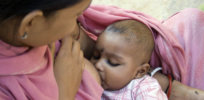
‘Astonished and appalled’: World Health officials shocked by US opposition to breast feeding resolution
A resolution to encourage breast-feeding was expected to be approved quickly and easily by the hundreds of government delegates who ...

Bumblebees do better in cities than on farms, study finds
Cities are filled with buildings, people and concrete — usually not seen as the ideal place for anything wild but ...

Precision medicine and cancer: More than just ‘mutant-hunting’
In many of our genome-obsessed minds, the problem of cancer had become reduced to a rather simple, scalable algorithm: find ...

Why don’t men have longer, healthier lives? Blame it on the Y chromosome
New evidence indicates that the Y chromosome participates in an array of essential, general-interest tasks in men, like stanching cancerous ...
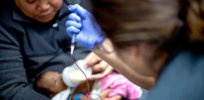
Treating alpha thalassemia major with prenatal blood transfusions, bone marrow transplant
In the three months before she was even born, Elianna Constantino received five blood transfusions and a bone-marrow transplant. All ...

Why can your DNA vary from cell to cell? Mosaicism is a ‘hidden mix of mutations’
James Priest couldn’t make sense of it. He was examining the DNA of a desperately ill baby, searching for a ...
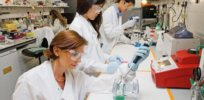
Bridging the ‘gulf between patients and researchers’ in cancer treatment
When my cancer support group visited a research lab, the discussion of proteomics, fibroblasts and microRNAs made about as much ...
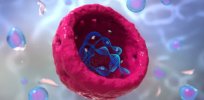
Is the nucleolus the key to stopping cellular aging?
Under a microscope, it’s hard to miss. Take just about any cell, find the nucleus, then look inside it for ...

The infamous life and death of biohacker Aaron Traywick
In the span of two years, Aaron Traywick, who was 28 when he died, went from a virtual unknown to ...
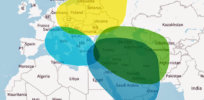
Consumer DNA tests: Answering questions ‘we didn’t even know we had’
23andMe is among a crop of new services that have arrived to help us mine our genetic material for answers ...

Which foods does the USDA’s proposed ‘bioengineered’ label cover?
The United States Department of Agriculture has proposed new guidelines for labeling foods that contain genetically modified ingredients. Food makers will ...
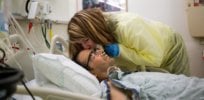
Immunotherapy as a last resort for terminal cancer patients
Dr. Oliver Sartor has a provocative question for patients who are running out of time. Most are dying of prostate ...

Close to home: Biologist was studying gene now linked to daughter’s rare illness
By the time her mother received the doctor’s email, Yuna Lee was already 2 years old, a child with a ...

Menopause may put women at greater risk for Alzheimer’s
[W]e are only beginning to understand is why women are more susceptible [to Alzheimer's]. What factors differentiate women from men, ...

Viewpoint: California’s coffee cancer label isn’t backed by evidence—and could do more harm than good
About two-thirds of smokers will die early from cigarette-based illnesses. Cigarettes are also very addictive. Because of this, it seems reasonable to place warnings ...
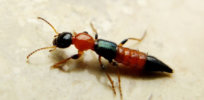
The rove beetle may help us ‘answer questions about evolution’ other insects can’t
It is rare that a new organism is introduced as a model for study in biology, but Dr. [Joseph] Parker ...
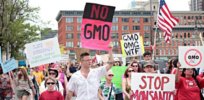
Viewpoint: Why consumers should reconsider ‘blanket opposition’ to GMO crops
It’s human nature, it seems, to resist change and fear the unknown. So it is no surprise that genetic engineering ...

Regenerative agriculture: Can ‘carbon farming’ help battle climate change by improving soil health?
[Regenerative agriculture's] guiding principle is not just to farm sustainably — that implies mere maintenance of what might, after all, ...

‘Natural traveler’? Humans may not be responsible for sweet potato’s migration from South America to Pacific
Of all the plants that humanity has turned into crops, none is more puzzling than the sweet potato. Indigenous people ...

Viewpoint: Time to reassess Nazi Hans Asperger’s role in study of autism
I have spent the past seven years researching the Nazi past of Dr. Hans Asperger. Asperger is credited with shaping ...

Viewpoint: ‘Race’ may be a social construct, but denying ancestral-based group genetic differences is ‘indefensible’
With the help of [advances in DNA sequencing], we are learning that while race may be a social construct, differences ...
