


New York Times
‘All of Us’: NIH biobank set to collect genomes of 1 million people to address chronic diseases
This spring, the National Institutes of Health will start recruiting participants for one of the most ambitious medical projects ever ...

Conservation steward challenge: Which endangered species should we intervene to save?
[O]ur role as stewards of the earth is becoming more and more like that of doctors in a global intensive-care ...
Unexplained ailments? Genetic mutations may be responsible
Gregor Mendel discovered fundamental rules of genetics by raising pea plants. He realized that hidden factors — we now know ...
World’s largest family tree could help explain why we stopped marrying our cousins
Before the Industrial Revolution in the United States, Canada and Europe, you might have ended up married to a fourth ...

Viewpoint: How ‘Big Food’ co-opted the organic movement
I was recently dispatched to a Target to buy some Goldfish, which was a more daunting task than you might ...

‘Natural’ food label heads to court
In recent years, one bright spot in an otherwise lackluster market for packaged foods, beverages and consumer products has been ...

Lost rice variety cultivated by US slaves rediscovered in Trinidad—and coming to your plates
Among the biologists, geneticists and historians who use food as a lens to study the African diaspora, rice is a ...
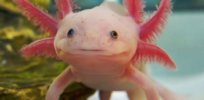
The regenerating axolotl: What can we learn from its giant genome?
Scientists have decoded the genome of the axolotl, the Mexican amphibian with a Mona Lisa smile. It has 32 billion ...

Why news of cloned monkeys doesn’t mean humans are next
Researchers in China reported on [January 24] that they have created two cloned monkeys, the first time that primates have ...

Can gene therapy reduce terminal cancers to minor chronic diseases that are ‘no different than high blood pressure’?
On Oct. 15 at 8 a.m., Andy Lindsay stood atop 21,247-foot Mera Peak in Nepal, a wildly improbable place for ...
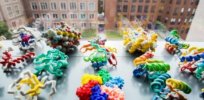
Designer proteins could help us fight flu, remove gluten from foods
[Researchers have] been stumped by one great mystery: how the building blocks in a protein take their final shape. David ...

First US baby born from living donor uterus transplant
For the first time in the United States, a woman who had a uterus transplant has given birth. The mother, ...
Gene therapy challenge: Overcoming shortage of key and expensive viruses
Eager to speed development of revolutionary treatments, the Food and Drug Administration recently announced that it would expedite approval of ...

French President Macron advocates glyphosate herbicide ban within 3 years
The European Union voted on Monday [Nov. 27] to extend its authorization for the world’s best-selling herbicide for an abbreviated ...
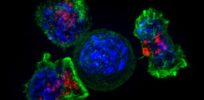
New T-cell treatment shows promise for treating leukemia
A new way of genetically altering a patient’s cells to fight cancer has helped desperately ill people with leukemia when ...

Gene therapy boost: FDA positions for faster reviews of new treatments
The Food and Drug Administration on [November 16] issued new guidelines to speed the introduction of treatments involving human cells ...

Are ‘gene drive’ trials too risky for field studies?
In 2013, scientists discovered a new way to precisely edit genes — technology called Crispr... One of the more intriguing ...

Food fears: How anti-science myths—like ‘clean eating’ and GMO health risks—make eaters anxious
We talk about food in the negative: What we shouldn’t eat, what we’ll regret later, what’s evil, dangerously tempting, unhealthy ...
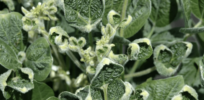
Dicamba herbicide drift damaged 3.6 million acres of soybean crops in 25 states
A weed killer called dicamba has damaged more than 3.6 million acres of soybean crops, or about 4 percent of ...
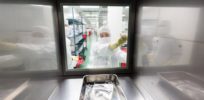
Gene therapy that reboots body’s immune cells to fight non-Hodgkin’s lymphoma approved by FDA
The Food and Drug Administration on [October 19] approved the second in a radically new class of treatments that genetically reboot ...
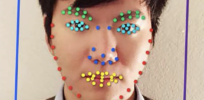
Is sexual orientation ‘gaydar’ detection machine sound or ethical?
[Michal Kosinski] decided to show that it was possible to use facial recognition analysis to detect something intimate, something “people ...

Pumpkins, cucumbers, and watermelons diverged from a single melon ancestor
About 100 million years ago, the genome of a single melon-like fruit copied itself. Over time, this one ancestor became ...

Viewpoint: Climate change, pesticides endanger monarch butterfly populations
The life cycle of the monarch hinges on the availability of milkweed, but the prevalence of the herbicide Roundup has ...
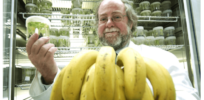
Gene identified for disease resistance in bananas, may stave off ‘bananapocalypse’
For decades, biotech researchers and conventional breeders were foiled in their efforts to bring disease resistance to the Cavendish [banana] ...

Viewpoint: Glyphosate herbicide’s ‘tough year’ could get much worse
Monsanto’s flagship weed killer, Roundup, has had a tough year. And it could get worse. With Roundup at the center ...

Why are thousands of bumblebees dying around the fragrant Linden trees of London?
Visitors in the Kew Royal Botanic Gardens near London have reported hundreds, if not thousands of bees, especially bumblebees, sick or ...

Sudden increase in Zika’s potency linked to small mutation
It remains one of the great mysteries of the Zika epidemic: Why did a virus that existed for decades elsewhere ...
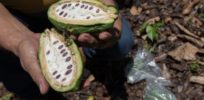
Saving chocolate: Scientists develop disease-resistant hybrid cacao clones that dramatically increase yields
[F]ew cacao varieties are widely cultivated, and that’s a problem: Like many other crops, cacao is under constant threat from ...
