


New York Times

3 women blinded after receiving stem cell therapy for macular degeneration
Three women suffered severe, permanent eye damage after stem cells were injected into their eyes, in an unproven treatment at ...

How the woolly mammoth met its end: DNA analysis reveals ‘genomic meltdown’
In an island north of the eastern tip of Siberia, a small group of woolly mammoths became the last survivors ...

Ignorance and the brain: Why people are so quick to believe falsehoods
How can so many people believe things that are demonstrably false? The question has taken on new urgency as the ...

How genetics can bring flavor back to tomatoes
Harry J. Klee, a professor of horticultural sciences at the University of Florida, thinks he can put [the taste] back ...

Gene-edited ants could shed light on human society, disease
[Daniel Kronauer of Rockefeller University and his colleagues] have manipulated the DNA of Cerapachys biroi ants, creating what Dr. Kronauer says are ...

How Neanderthal DNA shaped the human genome
[These excerpts were taken from a New York Times interview with John Anthony Capra, an evolutionary genomics professor.] Geneticists tell ...

Syndactyly: Family’s ‘fused fingers’ deformity sheds light on human genome
They said it was their family curse: a rare congenital deformity called syndactyly, in which the thumb and index finger ...
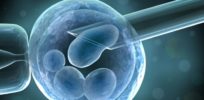
Stem cell revolution trudges forward
[Editor's note: The following is excerpts from an interview with Shinya Yamanaka, who won the 2012 Nobel Prize in Physiology ...

Will the public be more accepting of next-generation gene-edited crops than GMOs?
A new generation of crops known as gene-edited rather than genetically modified is coming to the market. Created through new ...

Advances in CRISPR, gene editing helping ‘clean tech’ get off ground after years of failure
A decade ago, a group of biologists, venture capitalists and computer whizzes...hoped to overturn polluting industries with microorganisms cheerily excreting ...

Ties to biotech corporations within Congress’s biotech panel could skew crucial policies
The National Academies of Sciences, Engineering and Medicine are assigned by Congress to provide policy guidance to the government...One of ...

Allergic to peanuts? Genetic engineering may provide a rescue
Allergic reactions to peanuts cause around 500 hospitalizations and even some deaths in the United States each year. ... Accidentally ...

Genetic engineering successfully reverses aging in mice, rejuvenating organs
At the Salk Institute in La Jolla, Calif., scientists are trying to get time to run backward. Biological time, that ...

Immunology drug drawback: Potential cancer cures may attack body’s organs
[I]mmunotherapy drugs have been hailed as a breakthrough in cancer treatment, attracting billions of research dollars and offering new hope ...

Smog in Beijing contains bacteria with antibiotic-resistant genes, sparking public fears
A report that Beijing’s already notorious smog contained bacteria with antibiotic-resistant genes spread through the city [in December] like pathogens ...

Personalized genetic tests might not help consumers make healthier choices
Would knowing you are at high genetic risk for developing a disease like diabetes motivate you to live a healthier ...

How a one-in-a-billion genetic disorder may lead to new ways to treat obesity and diabetes
Abby Solomon suffers from a one-in-a-billion genetic syndrome: After just about an hour without food, she begins to starve...[But as ...

Could genetic tinkering with plant photosynthesis increase global food supply?
A decade ago, agricultural scientists at the University of Illinois suggested a bold approach to improve the food supply: tinker ...

Is DNA destiny when it comes to heart disease?
A new analysis of data from more than 55,000 people provides an answer. It finds that by living right — ...

How did our ancestors colonize remote South Pacific islands?
Some 3,400 years ago,...people on the Solomon Islands left their white sandy shores for the cerulean seas of the South ...

Andrew Revkin on the spectacular rise of humans: Journey into the Anthropocene
It’s been only a few decades since science began building a picture of the backstory to [humankind's] spectacular ascent. It’s a story ...

Rethinking obesity: More about genes than willpower
[A] nationally representative survey of 1,509 adults...by NORC at the University of Chicago, an independent research institution...found that concerns about ...

New York Times reporter claims GMO crops have failed to live up to expectations
The promise of genetic modification was twofold: By making crops immune to the effects of weedkillers and inherently resistant to ...

Moral ‘slippery slope’: Neuroscience reveals how fibbing can spiral out of control
People who tell small, self-serving lies are likely to progress to bigger falsehoods, and over time, the brain appears to ...

Infamous HIV “Patient Zero” declared innocent after genetic analysis
In the tortuous mythology of the AIDS epidemic, one legend never seems to die: Patient Zero, aka Gaétan Dugas, a ...
Though few GMO crops in China, officials cultivating pro-biotech attitudes
For many in China, the term “genetically modified food” evokes nightmares: poisoned seeds, contaminated fields, apocryphal images of eight-legged chickens ...

Refrigerating tomatoes causes genetic changes that reduce flavor
The tomato hitching a ride home in your grocery bag today is not the tomato it used to be. ...[I]f ...

Michael Pollan claims ‘Big Food’ out-lobbies the ‘food movement’
Simply put, [Big Food] is the $1.5 trillion industry that grows, rears, slaughters, processes, imports, packages and retails most of the ...
