Downside to editing out ‘bad genes’: We might need them later

ac c f ac b a dc ebf
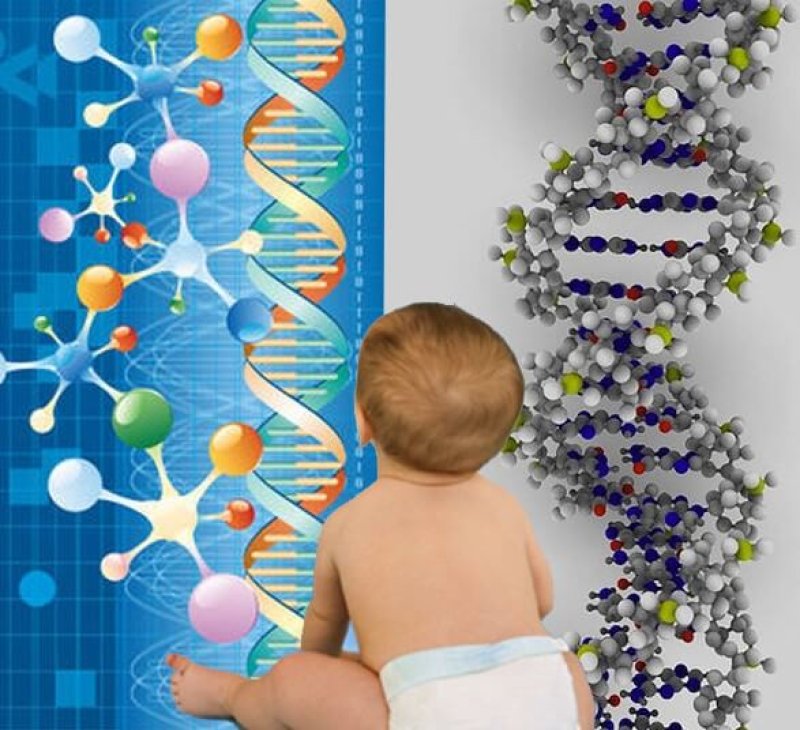
[With CRISPR, couples] may soon be able to edit [genes linked to genetic disorders] right out of their own sperm, eggs or embryos, erasing it from their bloodline forever.

[However, genes for sickle cell and cystic fibrosis] probably helped us survive in the past, so is it wise to remove them now?

[According to CRISPR pioneer Jennifer Doudna,] those “bad” gene variants might still come in handy…More broadly, genetically diverse populations tend to be more resilient, precisely because they have more genetic resources to draw on when unforeseen challenges arise.

To further complicate matters, some of the gene variants now linked with disease probably don’t cause as many problems in other environments.

[For instance, autoimmune disorders like celiac disease] have become worrisomely common in Finland in recent decades, but are between one-fifth and one-sixth as common on the Russian side, despite the fact that the Russians are just as genetically predisposed to developing them…Finnish scientists think that exposure to a particular community of microbes…prevents the diseases from emerging in Russia. That’s important because at least some of the gene variants associated with autoimmune disease are probably useful….

So instead of rewriting our genetic code, a better approach might be to change the interplay between our genes and environment — in this case by altering the microbes we encounter.

The GLP aggregated and excerpted this blog/article to reflect the diversity of news, opinion, and analysis. Read full, original post: The Upside of Bad Genes

{{ reviewsTotal }}{{ options.labels.singularReviewCountLabel }}
{{ reviewsTotal }}{{ options.labels.pluralReviewCountLabel }}
{{ options.labels.newReviewButton }}
{{ userData.canReview.message }}

Related Articles

Infographic: Global regulatory and health research agencies on whether glyphosate causes cancer

Infographic: Global regulatory and health research agencies on whether glyphosate causes cancer

Does glyphosate—the world's most heavily-used herbicide—pose serious harm to humans? Is it carcinogenic? Those issues are of both legal and ...

Most Popular

Screenshot 2025-08-25 203032
Mazzenga’s 20-year old muscles: How a still-going-strong 92-year old sprinter wins every race she enters
Screenshot-2026-06-08-at-10.19.30-AM
‘Natural’ wellness supplements linked to liver injury
global warming
‘Implausible’: Top climate scientists reject worst-case scenario—soaring temperatures and fast-rising sea levels
Screen Shot at AM
Facts & Fallacies Podcast: Right-wing politics bad for your health? Separating speculation from science
Screenshot-2026-06-05-at-1.44.09-PM
Viewpoint: Scientists have scrapped the worst-case climate scenario. Is that proof that climate change is a hoax, as Trump claims?
Screenshot-2026-06-05-at-2.12.30-PM
Some plants can poison you. So how did humans figure out what is safe to eat?
px extra strength tylenol and tylenol pm
Why ‘null-findings’ on Tylenol’s safety for pregnant women barely move the needle on countering misinformation
Screenshot-2026-06-08-at-1.35.30-PM
Viewpoint: Social media and fake natural health propaganda fuel surge in use of mostly useless supplements
ChatGPT-Image-Jun-9-2026-03_24_05-PM
Misinformed parents overdosing children with Vitamin A to fight measles
Credit: ACSH
Viewpoint: Who and what’s to blame for the surge in vaccine-preventable diseases?
Screenshot-2026-06-03-at-3.33.44-PM
Viewpoint: Vaccine deniers are attacking a life-saving Vitamin K shot for newborns that isn’t even a vaccine
Screenshot 2025-07-30 at 10.48
Can gene editing eliminate Down syndrome? Scientists have done it in lab-grown cells
ChatGPT-Image-Mar-10-2026-01_39_01-PM
Viewpoint—“Miracle molecule” debunked: Why acemannan supplements don’t work
glp menu logo outlined

Get news on human & agricultural genetics and biotechnology delivered to your inbox.