


Carl Zimmer
Evolution from water to land, bone by bone
Travel back far enough in your genealogy, and you will run into a fish. Before about 370 million years ago, ...
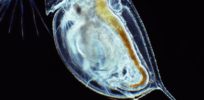
Resurrected 700 year-old water flea eggs show human impacts on evolution
DNA evidence says some tiny water fleas hatched from eggs at the bottom of a Minnesota lake, are 700 years ...
E. coli: still showing us new evolutionary tricks after a century
It’s hard to believe that Escherichia coli could have any secrets left. For over a century, scientists have picked the ...

When it comes to human brain, size isn’t everything
According to new research, expansion of the brain in our ancestors ripped apart tethered neurons, enabling new circuits to be ...
Idea of genetic mosaicism hits psychiatry
The title of my blog post is provocative, I know, but I’m actually just lifting it from the title of ...
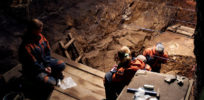
Toe fossil provides glimpse into the racy social lives of Neanderthals
A single Neanderthal toe bone has provided scientists with the most complete genome to date, offering a new glimpse into ...

Is same-sex coupling a matter of genetics or choice?
A new report has found that nearly a third of Laysan albatross pairs on Oahu are of the same gender, ...
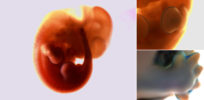
Old age is programmed in human embryos
Researchers found senescent cells--normally associated with old and damaged tissue--in embryos. Now, they suspect senescence plays a role in differentiating ...
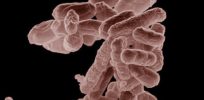
Scientists demonstrate creativity of natural selection with E. coli research
Biologists at Michigan State University have frozen 50,000 generations of E. coli over the past 25 years to demonstrate Darwin’s ...
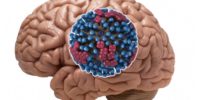
A virus hitched a ride in our ancestors genome, and changed human brains forever
Long ago, part of one virus's genome merged with the human genome. Now it's in each of us, helping to ...

Mutations in the brain
Not all genetic mutations are harmful. New research shows that mutations within neurons may be incredibly common, and even sometimes ...
Humans out-engineer evolution in the age of synthetic biology
We've been tweaking and tinkering with DNA for thousands of years, but we're just reaching a time when humans, more ...
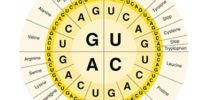
How to create alien life? Use human DNA, of course
Five decades after cracking the genetic code, scientists have discovered how to re-code DNA cells and build new proteins. The ...

Project BabySeq to test how knowing your genome from birth changes your life
Brigham and Women’s Hospital's Robert Green wants to know how having your complete genome sequenced at birth changes the course ...

Middle Eastern Respiratory Syndrome: a deadly virus drizzle
Researchers study the genetics of an emerging respiratory virus to see if has the potential to become a widespread scourge ...

You may be a patchwork of genomes
A single body, a single genome: that's the rule. Or it was. Researchers are finding that many perfectly healthy individuals ...
New “tiniest genome” identified
In August 2013, in the journal Genome Biology and Evolution, Gordon Bennett and Nancy Moran describe a new record holder, called Nasuia deltocephalinicola. It ...
The fall and rise of gene therapy
Rarely does a whole life’s work crumble in a single week, but James Wilson’s did. Wilson and his colleagues were ...

Can genome research on the palm tree help save endangered rainforests?
Scientists hope to use genomic knowledge to grow better trees that can yield more oil and reduce pressure on the ...
The surprising origins of life’s complexity
Conventional wisdom holds that complex structures evolve from simpler ones, step-by-step, through a gradual evolutionary process, with Darwinian selection favoring ...
How weeds evolve
Depending on your point of view, barnyardgrass is a nightmare or a marvel. That’s because it’s a supremely triumphant weed ...
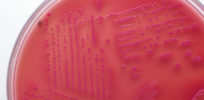
The smallest bacterial genome, in context
Researchers find that a bacteria's tiny genome size is made possible only because its host's genetic code does some of ...

Listening to the genome: music or noise?
How do we separate the signal from the noise in our "junk"-filled genomes? ...
Tracing breast cancer’s history
The following is an edited excerpt of a longer story. In today’s New York Times, the actress Angelina Jolie published a remarkably ...
The lurker: How a virus hid in our genome for six million years
The following is an excerpt of a longer story. In the mid-2000s, David Markovitz, a scientist at the University of ...

Charlemagne for everyone! Royal DNA all around
Everyone who lived a thousand years ago who has any descendants today is an ancestor of every European ...
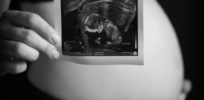
The evolution of prenatal disease
Scientists have begun to tease apart the interactions between evolution, genetics, disease, and pregnancy ...
Nobel Prize-winning biologist Francois Jacob has died
The following is an excerpt. One day in July 1958, François Jacob squirmed in a Paris movie theater. His wife, ...
