Tracing breast cancer’s history

The following is an edited excerpt of a longer story.

In today’s New York Times, the actress Angelina Jolie published a remarkably forthcoming op-ed about getting a double mastectomy. Jolie carries a variant of a gene called BRCA1 that makes women highly likely to develop breast and ovarian cancer.

The initials in BRCA1 stand for breast cancer. Its name reflects how it was discovered: scientists found it as they were searching for the cause of the disease. But such names are really misnomers. After all, genes don’t simply sit in our DNA so that they can mutate in some people and make them sick. Normally, they have a job to do. In the case of BRCA1, there are many jobs. For one thing, it protects DNA from harmful mutations that can arise as it’s getting replicated. And if DNA does get damaged, the BRCA1 protein helps fix it. It joins together with several teams of other proteins, and each team carries out a different part of the complex task of DNA repair.
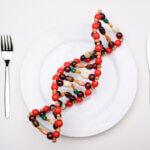

BRCA1, in other words, normally keeps our cells in good shape. If it mutates, though, it can’t do its jobs properly.

View the full story here: Tracing Breast Cancer’s History

Related Articles

Infographic: Global regulatory and health research agencies on whether glyphosate causes cancer

Infographic: Global regulatory and health research agencies on whether glyphosate causes cancer

Does glyphosate—the world's most heavily-used herbicide—pose serious harm to humans? Is it carcinogenic? Those issues are of both legal and ...

Most Popular

ChatGPT-Image-Mar-10-2026-01_39_01-PM
Viewpoint—“Miracle molecule” debunked: Why acemannan supplements don’t work
Screenshot-2026-09-28-at-11.26.17-AM
Viewpoint: Wellness movement activists reposition nicotine from a killer addictive drug into a cure-all for brain ills
strand of dna genetics
No, GMO foods do not “damage genes, natural disposition and hormones, or decrease physical health and intelligence”
Screenshot-2026-10-02-at-9.11.36-AM
The genetics of personality
Radioactive-Americana-Collage-2
The kooky logic behind the raft of spurious cancer claims from Harvard’s T.H. Chan School of Public Health
Screenshot-2026-10-01-at-10.52.08-AM
Non-browning CRISPR gene-edited bananas move one step closer to British markets
Screenshot-2026-10-02-at-8.56.38-AM
Trump finalizes Medicare drug price cuts, drawing Big Pharma’s fury and a legal challenge
Screenshot-2026-10-02-at-11.12.24-AM
‘Why do we keep falling for this stuff?’ America’s love affair with snake oil salesmen and scams
Screenshot-2026-09-22-at-10.54.12-AM
‘They misunderstand science’: Research attempting to tie autism to changes in the gut microbiome comes under fire
AI-Force-Leadership-Portrait
Jay Clayton controversy: The divisive history of Trump’s newly-appointed AI czar
ChatGPT-Image-Sep-21-2026-11_21_39-AM
Viewpoint: Food cults: Online ‘nutrition communities’ can pose unique dangers
glp menu logo outlined

Get news on human & agricultural genetics and biotechnology delivered to your inbox.