Human stem cells made using Dolly cloning technique

The following is an excerpt of a longer story.

Sixteen years after the amazing creation of Dolly the cloned sheep, researchers have realised the dream of producing human embryonic stem cells (hESCs) using a similar cloning technique.

And this time, it looks as if the cells are genuine, not faked as they were in 2005 when a South Korean team led by Woo Suk Hwang fraudulently claimed to have reached the same goal.

The landmark achievement revives the hope of being able to generate new tissues using a patient’s own cells, eliminating the risk of immune rejection.

View the original article here: Human stem cells made using Dolly cloning technique

Mosses make two different plants from the same genome

The following is an excerpt of a longer story.

One of the most astonishing secrets in biology is this: every plant you see makes two different plants from the same genome. And, scientists recently reported, a single gene from an ancient, powerful lineage can make the difference.

How can such a truth be so little known? In most land plants, including conifers and flowering plants, one of the plants is tiny, and frequently hidden inside its doppelganger. But that doesn’t mean you haven’t seen them. In fact, they may have made you suffer.

View the full story here: Mosses Make Two Different Plants From the Same Genome, and a Single Gene Can Make the Difference

Stem cell therapy deserves a dose of skepticism

WHY berezow rx c x

The following is an editorial summary of a longer story.

While the medical promise of stem cell therapy continues to build, there’s a flip-side: stem cells and other biotechnology used for cosmetic purposes. This is what led to a Californian woman growing bone fragments around her eye after a botched procedure.

USA Today delves into the bioethical concerns that surround these unproven — and potentially dangerous — uses of medical biotech and what it means for the state of our regulatory and medical systems. As author Alex Berezov puts it: “Until we understand them better, stem cells are the new snake oil peddled by 21st century charlatans.”

View the full story here: Beware of stem cell therapy claims: Column

Additional Resources:

Genetics continues to garner attention as conservation tool

px Ara macao Puntarenas Province Costa Rica

Genetics continues to be a buzzword in conservation. In the last week alone we’ve seen headlines touting the sequencing of the scarlet macaw genome, that efforts to breed New Zealand’s utterly unique kiwi have failed to improve genetic diversity in the species, and that the Indian tiger population may be doomed by a genetic bottleneck — the lingering effect of the British Raj’s penchant for hunting these largest of big cats.

One of the biggest risks to species on the brink of extinction is the loss of genetic diversity that comes with drastically reduced population sizes. Even if it were possible to easily and effectively clone endangered species like the tiger, the animals created would all share whatever strengths and flaws the original progenitor possessed: in other words, it would be extremely difficult to create a robust wild population able to endure the slings and arrows of real-world existence through simple cloning.

That said, the study of genetics continues to offer novel insight into just what sort of variation does exist within species of conservation interest, and may help guide conservation efforts without being a cure-all.

Additional Resources:


Voices come out in defense of Monsanto

px Hugh Grant Monsanto e

Everyone’s favorite company to hate, agribusiness giant Monsanto, has gotten a surprising amount of positive press this week.

We here at the GLP are fans of nuance, as a rule, so it’s no surprise that the first story of note is our own Jon Entine’s analysis of the Supreme Court ruling in Bowman v. Monsanto. He argues that Bowman, the Indiana farmer who tried to circumvent Monsanto’s patents, was rightfully ruled against: It’s not a case of being pro-Monsanto, but rather an argument in favor of the importance of our patent system and laws.

Ross Pomeroy at RealClearScience went as far as to write a piece titled “Monsanto: More Saint than Sinner.” Lest you think he’s guilty of ignoring the company’s spotty record, he acknowledges the company’s (serious) misconduct while shining a light on some of the real and massive positive impacts it has had, such as the development of nutritionally-enhanced “golden rice” which may help prevent blindness. As Pomeroy notes:

Monsanto’s noble efforts have garnered the adoration of numerous, notable do-gooders, including philanthropist Bill Gates and agricultural scientist Norman Borlaug, the Nobel Peace Prize winner whose dwarf wheat revolutionized agriculture, saving an estimated one billion lives from starvation. Before he died in 2009, Borlaug extolled Monsanto’s use of genetic modification, believing science to be the best hope for feeding a growing world population.

Finally, Monsanto tried to defend itself in a piece at Bloomberg. In the article, Monsanto’s chief executive officer laments the unnecessary and “sad” binary that’s come to dominate the public discussion of agricultural biotech. “So you get conventional agriculture or broad scale or however you define it, and organic. I think we’re going to look back on this period and say, ‘How on earth did that ever become the fight that it became?’”

It will be interesting to see whether any of these stories — all reasonable, none industry PR fluff — make a dent in Monsanto’s reputation or the shockwaves of distrust it has sent through the entire public discussion of agricultural biotech.

Vermont: Legislature wants Monsanto to label its GMOs

The following is an edited excerpt.

Monsanto, the often vilified agribusiness corporate giant, is back in the news. First, the Supreme Court upheld its ownership over its patented gene products, even as that product reproduces. But the Vermont legislature is trying another tact with a bill that would require Monsanto foods (exempting animal products) containing genetically modified organisms (GMOs) to be labeled as such.

Read the original article in its entirety here: Vermont wants Monsanto to label its GMOs

Monsanto: More Saint than Sinner

The following is an edited excerpt. 

Monsanto is the Devil Incarnate, a ruthless corporation hell bent upon forcing their unnatural food down our open gullets. The soy and corn they sow are more likely to transmogrify us into imps than sustain us.

At least that’s what a lot of people seem to believe these days.

Poring over Monsanto’s well documented past, the company’s haters might have a point. The company was instrumental in manufacturing the much maligned insecticide DDT as well as the herbicide Agent Orange.  Moreover, the company has been criminally complacent in many cases of environmental pollution, including a sinister occurrence in Alabama in which the company “drenched” a town in toxic industrial coolants for 40 years.

Yes, Monsanto has done some bad things, and unfortunately for them, their relentless dedication to being a successful company has stifled public forgiveness.

Read the original post in its entirety here:  Monsanto: More Saint than Sinner 

Viewpoint: Domestic eco-terrorism has deep pockets. And many enablers.

Burning books buffalo

This article originally ran at Forbes and has been republished here with permission of the author.

Fueled by a recent onslaught of disinformation and fear-mongering about plant biotechnology – or perhaps by its continuing successes — extremists engaged in acts of eco-terrorism are back after a ten year hiatus.

We are seeing a return to criminal acts of vandalism, which the FBI calls economic sabotage, against research field trials of genetically engineered (GE; also known as “genetically modified,” or GM) crop plants.  Over two nights in June, unknown criminals destroyed two separate research Oregon field trials of GE sugar beets that are resistant to the effects of the herbicide glyphosate.

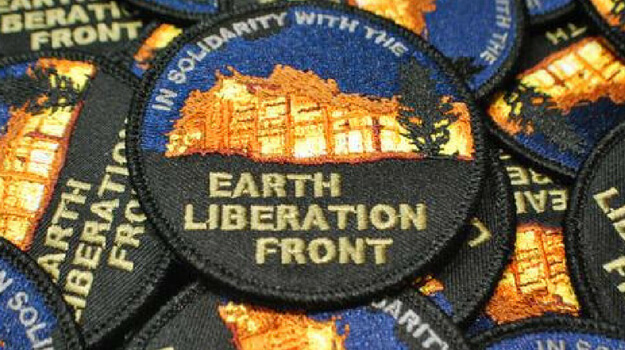
The term “economic sabotage,” which was first coined and is preferred by eco-terror groups, is too tepid.  This is not like a plumber puncturing the tires on a competitor’s van.  These violent acts are the kind of terrorism that historically has been linked to cells of extreme environmental and animal rights activists with names like Earth First!, Animal Liberation and Earth Liberation Front (ELF).

In 1995, Greenpeace announced that it had “intercepted a package containing rice seed genetically manipulated to produce a toxic insecticide, as it was being exported . . . [and] swapped the genetically manipulated seed with normal rice.”  The rice seeds stolen by Greenpeace had been genetically improved for insect resistance and were en route from the Swiss Federal Institute of Technology in Zurich to the International Rice Research Institute in the Philippines. The seeds were to be tested to confirm that they would grow well under field conditions and produce high yields of rice without requiring the usual levels of chemical pesticide.  In the Philippines and many developing countries in Asia where rice is a staple food, disease- and insect-resistant rice are desperately needed, but that has not dissuaded Greenpeace from its intractable opposition to GE crops – or from criminality.

The theft of the rice seeds was non-violent, but dating back to the mid-1990’s and through the time of the September 11, 2001 attacks, eco-terror acts targeting research on GE plants had become all too common.  The tactic was started by Greenpeace USA when it destroyed an Iowa research crop in 1996.  That was greeted at the time with such public revulsion that the activist group instead decided to focus its efforts on using propaganda and public relations to sow public mistrust of genetic engineering.  However, between 1999 and 2002 extremist groups calling themselves “elves” or “midnight gardeners” took credit for more than 100 “decontaminations” – destruction of GE trees, trashing of fields and greenhouses that contained GE crops (and often, inadvertently, conventional ones as well), and setting off explosive or incendiary devices to destroy crop scientists’ laboratories and offices.

On New Year’s Eve in 1999, for example, arson caused about $1 million in damage to Michigan State University’s architectural landmark Agriculture Hall, damaging offices involved in a project intended to enhance the use and commercialization of crop genetic engineering in developing countries. The Earth Liberation Front, which claimed responsibility for the attack, said that it was “in response to the work being done to force developing nations in Asia, Latin America and Africa to switch from natural crop plants to genetically altered sweet potatoes, corn, bananas, and pineapples.” (The research, under the direction of Professor Catherine Ives, actually was intended to enhance the nutritional value of African staple foods like sweet potatoes.)  A U.S. Attorney in Michigan condemned the act as domestic terrorism.

The combined damage in North America alone from eco-terrorism was estimated by the FBI to exceed $100 million.

These terrorists did not limit their actions to the destruction of property.  They planted pipe bombs, mailed packages booby-trapped with razor blades, and physically assaulted scientists at public events.  By 2001 the FBI had characterized them as the nation’s most active domestic terrorist group.  One ELF member remains at large and on the FBI’s Most Wanted list today.  Following the 9/11 terrorist attacks, these radical domestic acts of violence against agriculture slowed as public tolerance for these crimes wore thin, but the attacks continued overseas with the support of groups like Greenpeace.

In recent years, terrorists have attempted to gain sympathy and “justification” for their actions by means of disinformation campaigns that relentlessly smear the safety and utility of genetic engineering applied to agriculture.  This propaganda has been amplified by the mainstream media and by repeated mendacious claims from organic and “natural product” companies that benefit from these food scares.  “Frankenfood” headlines may sell newspapers and organic food, but this kind of “black marketing” — enhancing the perceived value of your products by disparaging those of your competitors – can also encourage serious criminal acts.

Sometimes, that encouragement is blatant: After the sugar beet vandalism in Oregon, NaturalNews.com trumpeted that “We The People have had enough of being forcibly poisoned by these genetic abominations” and lamented that “freedom fighters who intervene on behalf of humanity [have been] relegated to the ranks of terrorists.”

Activists continue to allege that GE foods are linked to cancer, autism, impotence, birth defects and other diseases, although there is not a shred of credible evidence to support such extravagant, absurd claims.  These specious charges are refuted by decades of peer-reviewed research and real-world experience that demonstrate that these foods are as safe, and in fact, oftensafer than their “conventional,” and especially, their organic counterparts.  In North America alone, we have consumed more than three trillion servings of ingredients from genetically engineered plants, without a single documented tummy ache or zit; and untold billions of pigs, cows and chickens have been fed genetically engineered soy and corn without any adverse effects.

As the Watergate scandal’s shadowy leaker, Deep Throat, advised, “Follow the money.  Always follow the money.”  There exists in this country a vast, well-established, highly professional, protest industry fueled by special interest groups seeking to line their own pockets, with wanton disregard for the public interest.  Anti-genetic engineering campaigns are openly funded and promoted by mainstream organic food marketers like Gary Hirshberg, the chairman of Stonyfield Organic, and alternative health and food-supplement hucksters Joe Mercola and Mike Adams — all cynical fear-profiteers who benefit from increased consumer mistrust in their competitors’ products. Adding fuel to this fire are mainstream media outlets that quickly and uncritically report these claims and stir the social media pot with links and photos on Twitter depicting lurid images of tumorous rats and the like.

The financiers of anti-biotechnology activism are hardly salt-of-the-earth owners of locally owned co-ops sourcing ingredients from small organically farmed plots.   Multi-millionaire Hirshberg’s Stonyfield Organic is owned by French conglomerate Groupe Danone, where he is a corporate officer.  (Groupe Danone had $28 billion in 2012 sales – more than twice that of Monsanto, the company Hirshberg often demonizes as a “mega-corporation”).   And the combined organic food, natural products and alternative health industry backing these GE bans and mandatory labeling campaigns boast annual sales in the hundreds of billions of dollars annually, dwarfing the revenues of the entire combined biotech seed business.

The concerted “eat ours because theirs will give you cancer” marketing campaigns and financial contributions to food fear-mongering activist groups in North America alone is in the billions of dollars per year.  And providing synergy with them are the practitioners of yellow journalism who can be relied on to be among the first to “tweet” or write about the latest spurious the-sky-is-falling claim from their activist and organic industry pals.  The ultimate objective, of course, is to sell more overpriced, overrated organic food.

The result of the widely disseminated disinformation effort is an environment that provides encouragement to extremists who commit criminal acts.  It comes from the Facebook and Twitter followers of the genetic engineering conspiracy theorists, organic marketers and “right to know” labeling activists.

Within hours of the FBI news release about the recent Oregon sugar beet vandalism, for example, activists and promoters of “natural” products and organic agriculture were posting images touting the terrorists’ eco-sabotage.  Many followers of these fear-mongering campaigns – including people who profess to be mainstream, reasonable supporters of a “right to know” which foods are genetically engineered (via mandatory labeling) — piled thousands of “likes” and supportive comments about the news that genetic engineering research had been destroyed.  One of the so-called “Moms against Monsanto” posted, “Great job.  I hope this turns into a trend.”

Against the backdrop of this fear-mongering, hate-speech and support for acts of terror toward legal, highly regulated, safe and societally valuable R&D, we should condemn not only the perpetrators themselves but also their corporate and media enablers.

Remind us again who the “socially responsible” businesses and reasonable voices are in this debate over sustainable food and agriculture and consumers’ freedom to choose.


Jay Byrne is president of v-Fluence Interactive Public Relations, Inc.; he was a senior official at the U.S. Agency for International Development and has worked in agriculture and biotechnology communications for numerous companies, universities and NGOs for more than 15 years.  Henry I. Miller, a physician and molecular biologist, is the Robert Wesson Fellow in Scientific Philosophy and Public Policy at Stanford University’s Hoover Institution and a fellow at the Competitive Enterprise Institute; he was the founding director of the FDA’s Office of Biotechnology.


Henry I. Miller, a physician, is the Robert Wesson Fellow in Scientific Philosophy & Public Policy at Stanford University’s Hoover Institution.  He was the founding director of the FDA’s Office of Biotechnology. Follow him on Twitter @henryimiller.

The work of a scientist on GM crops in Africa

The following is an edited excerpt.

She has addressed the world’s leaders at the UN. She has sat in the hot seat at the World Economic Forum in Davos persuading economists that genetically modified food is the answer to food security in Africa. She has faced vitriolic activists on television and explained the facts and fallacies of genetic engineering. And she has won the L’Oreal Women in Science in Africa award.

So how did someone who thought she would choose the career of a teacher end up as a microbiologist in a very male-dominated arena and become one of the world’s leading scientific advisors? In Food for Africa, Jennifer Thomson traces through anecdote and science the development of a hotly contended area of research, from the dawn of genetic engineering in the USA in 1974, through the early stages of its uptake in South Africa to the current situation in which approximately 80% of maize in South Africa is genetically modified for drought resistance.

Read the original article in its entirety here: Introducing Food for Africa: The life and work of a scientist in GM crops by Jennifer Thomson


Food activists claim pro-biotech forces promoting genocide

The following is an edited excerpt.

While it is true regarding Reagan’s apparent approval of genocide in Guatemala, the same can be said of those presidents following him. Whether they can be considered accessories or more is to be determined in a court of law.

The case holds that there has been a planned genocide targeting the less-affluent citizens within the United States of America through making healthcare too costly and/or not available due to “preexisting conditions” for millions, which has caused many premature deaths. The U.S. now ranks 45th in infant mortality. It is also noted that for those who do survive there is an increase in the number of infants born with heart defects that have no hereditary basis and the increase in the number of those born with autism has reached a ratio of 1 in 80.

Read the original article in its entirety here: Dennis Kaiser: Is Genocide the Agenda in the United States? 

Anti-biotech activist Jeffrey Smith peddles pseudo-science

The following is an edited excerpt.

When the definitive history of the GMO debate is written, Jeffrey Smith is going to figure prominently in the section on pseudoscience. He is the equivalent of an anti-vaccine leader, someone who is quite successful in spreading fear and false information. (As David Gorski at the Science-based Medicine blog has noted, the anti-vaccine and anti-GMO movements are two birds of the same feather.)

As Jon Entine wrote at Forbes, what galls scientists the most is that Smith has been presented as a GMO expert to millions of TV viewers. Liberals and environmentalists who put a premium on science should be equally galled that Smith is treated as a credible source.

Read the original article in its entirety here: Leaky Brains and GMOs


Farmers who try biotech seeds come back for more

The following is an edited excerpt.

Last year, too dry. This year, too wet. Spring planting is never perfect in America’s agricultural heartland. The past few growing seasons have been especially challenging. Yet crop yields have held up.

One reason: bioengineered seeds, a big improvement on the ones Grandpa planted: The corn and soybeans grown across Illinois today are nearly all genetically modified to resist insects or tolerate herbicides. By protecting against pests and weeds, this technology helps to ensure ample harvests even in lousy conditions. Combine bioengineering with much-improved crop genetics, and the bins overflow.

Read the original article in its entirety here. Biotech crops and Europe: A losing battle against progress


Sustainability bonus: Boll worm resistant cotton eliminates pesticide use

The following is an edited excerpt.

Thanks to the genetic trait in our cotton that makes it resistant to the boll worm, we did not spray one drop of insecticide on our fields this year.  Not one drop.

Because we don’t have to spray for the boll worm any longer, the beneficial insects are flourishing and naturally control the other minor pests.  Now, if we planted non-GMO cotton, like the farmers in Brazil that Daniel met last spring, we might have to spray our cotton up to 13 times with insecticide.  That’s what the Brazilian farmers told him they have to do in order to save their non-GMO cotton crop.  Once they start spraying for the boll worm, then they have to spray for other pests because the beneficials are gone. 13 applications verses 0 applications.

In my book, there is no comparison.

Read the original article in its entirety here: Kiss the Boll Worm Goodbye!


Tracing breast cancer’s history

The following is an edited excerpt of a longer story.

In today’s New York Times, the actress Angelina Jolie published a remarkably forthcoming op-ed about getting a double mastectomy. Jolie carries a variant of a gene called BRCA1 that makes women highly likely to develop breast and ovarian cancer.

The initials in BRCA1 stand for breast cancer. Its name reflects how it was discovered: scientists found it as they were searching for the cause of the disease. But such names are really misnomers. After all, genes don’t simply sit in our DNA so that they can mutate in some people and make them sick. Normally, they have a job to do. In the case of BRCA1, there are many jobs. For one thing, it protects DNA from harmful mutations that can arise as it’s getting replicated. And if DNA does get damaged, the BRCA1 protein helps fix it. It joins together with several teams of other proteins, and each team carries out a different part of the complex task of DNA repair.

BRCA1, in other words, normally keeps our cells in good shape. If it mutates, though, it can’t do its jobs properly.

View the full story here: Tracing Breast Cancer’s History

Deconstructing Nature’s “plant without junk DNA” story

The following is an edited excerpt of a longer story.

A paper released in Nature this week had all the elements of a good science story. An odd little plant called a carnivorous bladderwort was found to have almost none of the so-called junk DNA that makes up the bulk of other organisms’ genomes.

Here’s what Tia Ghose at LiveScience says:

The findings suggest junk DNA really isn’t needed for healthy plants — and that may also hold for other organisms, such as humans.

It’s an extrapolation that’s not justified by anything the scientists actually found. And so the LiveScience story caused a few scientists to become apoplectic.The problem was with the way the results were being interpreted to imply that because this plant doesn’t need much non-coding DNA, we don’t either.

View the full story here: A Weird Little Plant is Nearly Free of Junk DNA. Big Contentions Underlie Seemingly Cute Story

Huh? Anti-biotech group confirms salt is definitely not a GMO

The following is an edited excerpt.

Here’s how we know that science is dead in the anti-GMO movement.

The Non-GMO Project and their crack scientific team has verified, beyond a shadow of a doubt, that salt is not a transgenic plant.

Read the original story in its entirety here: Monsalto: Here’s how we know that science is dead in the anti-GMO movement.


Genetic genealogy sleuthing: A guide

The following is an excerpt of a longer story.

Personal genomics companies that type SNPs genome-wide can identify blocks of shared genetic material between people in their databases, offering the chance to identify distant relatives. Finding a connection to someone else who is an unknown relative is exciting, whether you do this through your family tree or through personal genomics (we’ve both pored over our 23&me results a bunch). However, given the fact that nearly everyone in Europe is related to nearly everyone else over the past 1000 years (see our recent paper and FAQs), and likely everyone in the world is related over the past ~3000 years, how should you interpret that genetic connection?

View the full story here: Identification of genomic regions shared between distant relatives

Synthetic biology could speed flu vaccine production

The following is an excerpt of a longer story.

Synthetic biology is breathing new life into the old-fashioned world of vaccine production, raising hopes that manufacturers could release vaccines much more quickly when outbreaks occur.

At a meeting on synthetic biology held at MIT, the drug company Novartis said it has synthesized hybrid flu genomes in a process that could shave weeks off the time required to produce vaccines. When new flu strain emerges, government agencies normally send samples to vaccine manufacturers, who grow large numbers of the pathogen in chicken eggs as starting material for vaccines, saysPhilip Dormitzer, leader of viral vaccine research for Novartis. This process can take months and can miss the peak of an outbreak. But Novartis, working with synthetic biologists, has developed a way of chemically synthesizing virus genomes and growing them in tissue culture cells. That saves time and may produce more effective vaccines.

View the full story here: Synthetic Biology Could Speed Flu Vaccine Production

Editor’s Note: The GLP touched on this topic in our newsletter feature about the use of modern genetics and synthetic bio to fight the H5N7 bird flu emerging in China.


Angelina Jolie: Should women be worried by genetics?

The following is a summary of a video.

Angelina Jolie’s decision to have a preventative double mastectomy is expected to raise awareness of breast cancer and the dangers posed by genetic mutations.

But the vast majority of breast cancers are not caused by genetic factors, and are instead linked to behaviours such as smoking and conditions like obesity.

BBC News online health editor Michelle Roberts – herself a qualified doctor – looks at what Angelina Jolie’s decision to choose surgery means for other women.

View the full summary and video here: Angelina Jolie: Should women be worried by genetics?