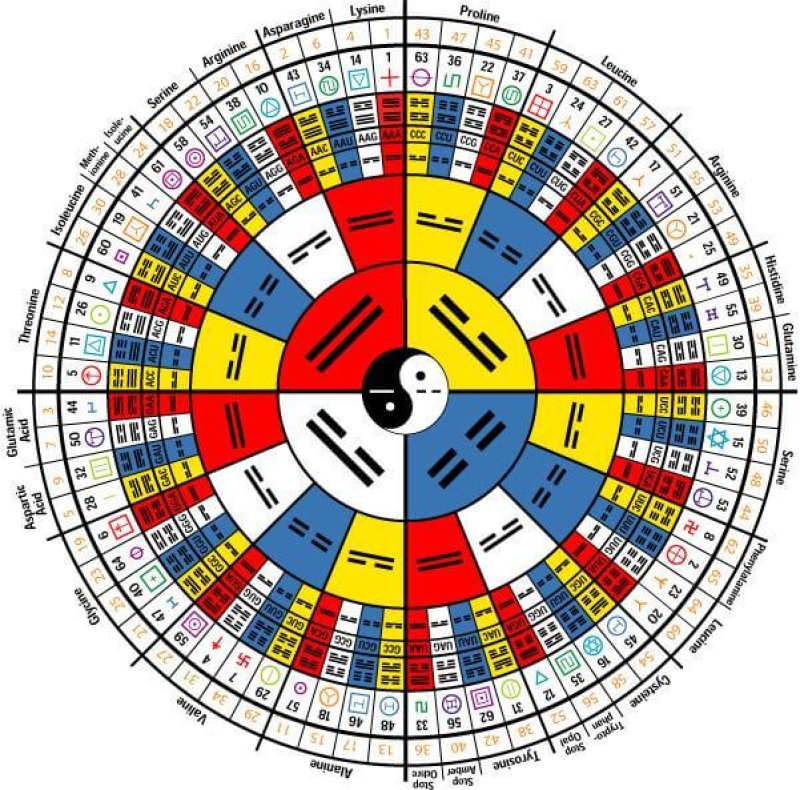
In the language of DNA, three base pairs (the A, T, C and Gs) make a word. That word tells a cell what amino acid to add next in the long protein chains that make up all the molecules, tissues, structures and organs of our body. The meanings of those three nucleotide chunks, called codons, were thought to be universal. A codon that means ‘add a lysine to the chain’ in a human, also codes for lysine in the viruses that infect us, the pigs we raise and the corn they eat. There are three codons that were universally thought to mean ‘stop.’ These tell the protein building lysosomes in cells that they’ve reached the end of the amino acid chain. But scientists at the Department of Energy’s Joint Genome Institute started looking a little more in depth at these codons. Natalia Ivanova became suspicious because some microorganisms like the viruses that infect bacteria have genes with stop codons at 200 base pairs—three times shorter than the average bacteriophage gene. She found that instead of ‘stop’ these codons signified that the cell should stick another amino acid in the chain and keep building. Jeffrey Marlow at Wired reported on the story:
In other words, “the same word means different things in different organisms,” says Eddy Rubin, JGI’s Director. The microbial world is multilingual.
The finding flies in the face of canonical biology. It’s as if the English word ‘red’ actually meant ‘green’ in Canada. And it will likely have some profound effects on how we predict organisms’ behavior and physiology from their genomes and the care and detail we will need to take as we further explore synthetic biology. Ivanova and the research team found the highest rate of this stop/go codon reassignment in the microorganisms that live in ground water where 10 percent of organisms reassign a new meaning to the stop codon. And a great deal of the reassignments were found in bacteriophages, the viruses that specifically infect bacteria, and in patterns that indicate the reassignment might be a viral attack tool, according to Genetic Engineering and Biotechnology News:
“Phage apparently don’t really ‘care’ about the codon usage of the host. They have ways to get around that, and in fact they use differences to attack the host.” The phage use certain molecular tricks, just those slight changes in the codon table, to suppress the host cell’s protective mechanisms to conduct a ‘hostile takeover’ of the cell. “We call this strategy ‘codon warfare’,” Dr. Eddy Rubin said.
Interestingly these phages could still infect their hosts, and hijack their cellular process to make more copies of themselves, even though they were using a different vocabulary:
The genetic code has traditionally been viewed as a universal set of instructions, exquisitely tuned to maintain robust stability and allow evolution-sustaining mutations. But the pervasive occurrence of recoded stop codons, and the backchannel crosstalk between microbes and viruses, paints a more intricate picture of multilingual genetic instructions.
The scientists didn’t discuss how the codon reassignment could have occurred, or whether these microorganisms were always using the non-standard (to us) vocabulary. But, they did indicate that synthetic biologists, who alter the genetic code of one-celled organisms to produce new or improved organisms may need to pay special attention to the finding:


Additional food for thought, Dr. Rubin noted, is whether adequate controls can effectively be established for those emergent organisms developed through synthetic biology. Some of these organisms have been engineered with an intentionally altered genetic code, designed as a “firewall” to prevent the exchange of genetic information between laboratory-engineered microbes and their cousins in the wild.
Additional Resources:
- We can read your DNA … but how well can we understand it?, Kenrick Vezina, Genetic Literacy Project
- Scientists add new letters to genetic alphabet: What does it mean?, Kenrick Vezina, Genetic Literacy Project