GMOs could save honeybees by eliminating virus and mites

bees x

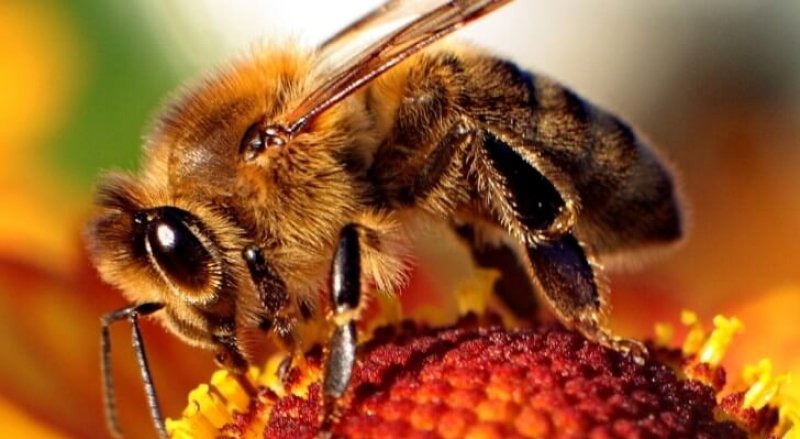
President Obama has made saving pollinators a top priority, announcing the assembly of a task force designated to saving the honeybees. The bees have decreased in numbers by more than 50 percent over the past 70 years, a trend researchers attribute to pesticides, mite infestations, and loss of genetic diversity. This phenomenon is known as Colony Collapse Disorder (CCD).

The Organic Consumers Association blames the modified organisms (GMOs) in crop production, arguing that the pesticides used by Monsanto have contributed to the CCD. However, the OCA’s claims are untrue. In fact, GMOs hold the potential to save the honeybee species.

The OCA claims that Monsanto has killed the bees through the use of neonicotinoid, a class of pesticides that are thought to have contributed to the collapse of the bee population. Neonicotinoids were linked to the decline of the honeybee in a Harvard study, published in the Bulletin of Insectology. The study found that colonies exposed to the pesticide treatment were less adept at recovering from harsh winters, leading to decreased numbers in the spring. However, this study has been criticized for a number of reasons. First, the team changed their protocol halfway through their experiment when their results did not what they had expected, raising the pesticides to mortally and arguably unrealistically high levels. Secondly, the bees’ deaths did not match the typical symptoms of CCD, according to a member of Scientific Beekeeping.

However, genetic engineering offers the potential to solve these very problems. Monsanto is currently pursuing a project through the acquired company Beeologics that would use RNA interference. The project claims it will protect bees by “silencing” the Israeli acute paralysis virus and parasitic mites that infect the bees. The technology holds the potential to save the bees because it eliminates two problems attributed to their collapse: mites and the need for potentially harmful pesticides.
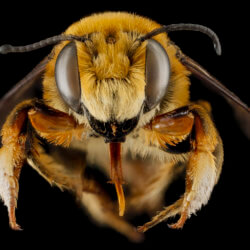
While there is likely not one perfect answer for saving our buzzing friends, it is clear that we must do something before it is too late. Previous methods, including the removal of suspect chemicals, have had no effect thus far. It’s time to look to new methods, and biotechnological researchers just might have the answer.

Read the full, original article: GMOs just might save the bees

{{ reviewsTotal }}{{ options.labels.singularReviewCountLabel }}
{{ reviewsTotal }}{{ options.labels.pluralReviewCountLabel }}
{{ options.labels.newReviewButton }}
{{ userData.canReview.message }}

Related Articles

Infographic: Global regulatory and health research agencies on whether glyphosate causes cancer

Infographic: Global regulatory and health research agencies on whether glyphosate causes cancer

Does glyphosate—the world's most heavily-used herbicide—pose serious harm to humans? Is it carcinogenic? Those issues are of both legal and ...

Most Popular

ChatGPT Image May 10, 2026, 08_16_59 PM 2
Overmedicalization? RFK Jr.’s antidepressant crackdown raises conflict questions over his fee stake in Wisner Baum, the tort firm built on suing drug makers
Picture1-5
Science Disinformation Gap: The transatlantic battle over social media and censorship
Screenshot-2026-05-08-at-3.40.33-PM
Seeds of power: China turns to genetic engineering to become global superpower
Picture1-14
When superbugs threaten vulnerable children: Can AI help solve antibiotic resistance?
S
As vaccine rejectionism spreads, measles may be taking a more dangerous turn
ChatGPT-Image-Apr-13-2026-02_20_22-PM
Viewpoint: Misinformation infodemic? Why assessing evidence is so challenging 
Screenshot-2026-05-01-at-1.29.41-PM
Viewpoint: What happens when whole grains meet modern food manufacturing? Labels don’t tell the whole story.
Screenshot 2026-05-08 at 3.01
Transforming farming and nutrition with AI and robotics? Larry Ellison’s half-billion-dollar Hawaii greenhouse dream goes bust
Farmers can talk to plants
Farmers are a major source of misinformation—about farming
ChatGPT-Image-May-8-2026-01_41_33-PM-3
Viewpoint: Surge of climate misinformation traced to right wing and anti-wind activists 
Screenshot-2026-04-20-at-2.26.27-PM
Viewpoint — Food-fear world: The latest activist scientists campaign: Cancer-causing additives
ChatGPT-Image-Mar-27-2026-11_47_30-AM-2
FDA’s expedited drug reviews are hailed in some quarters but other approval practices are problematic
Screenshot-2026-03-13-at-12.14.04-PM
The FDA wants to make many popular prescription drugs OTC—a great idea. Here’s why it’s unlikely to happen
bigstock opioids on chalkboard with rol
GLP podcast: 'Safe injection sites': enabling drug addiction or saving lives?
glp menu logo outlined

Get news on human & agricultural genetics and biotechnology delivered to your inbox.