Female athlete teaches herself genetics, cracks her own rare disease

r PxOaA

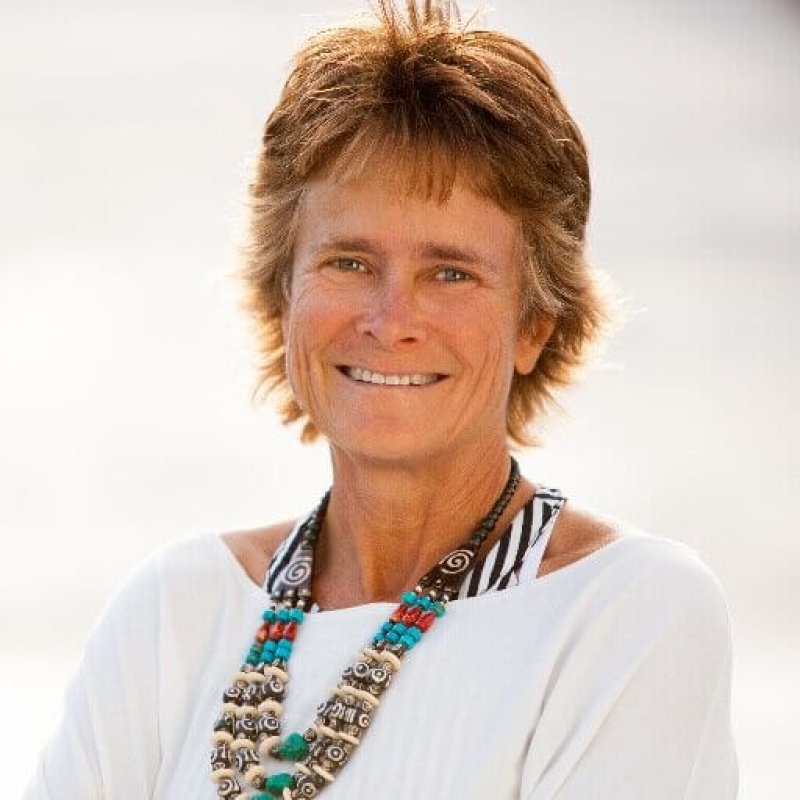
Kim Goodsell was running along a mountain trail when her left ankle began turning inward, unbidden. A few weeks later she started having trouble lifting her feet properly near the end of her runs, and her toes would scuff the ground. Her back started to ache, and then her joints too.

This was in 2002, and Kim, then 44 years old, was already an accomplished endurance athlete. She cycled, ran, climbed and skied through the Rockies for hours every day, and was a veteran of Ironman triathlons. She’d always been the strong one in her family. When she was four, she would let her teenage uncles stand on her stomach as a party trick. In high school, she was an accomplished gymnast and an ardent cyclist. By college, she was running the equivalent of a half marathon on most days. It wasn’t that she was much of a competitor, exactly—passing someone in a race felt more deflating than energizing. Mostly Kim just wanted to be moving.

So when her limbs started glitching, she did what high-level athletes do, what she had always done: She pushed through. But in the summer of 2010, years of gradually worsening symptoms gave way to weeks of spectacular collapse. Kim was about to head to Lake Superior with her husband, CB. They planned to camp, kayak, and disappear from the world for as long as they could catch enough fish to eat. But in the days before their scheduled departure, she could not grip a pen or a fork, much less a paddle. Kim, a woman for whom extreme sports were everyday pursuits, could no longer cope with everyday pursuits. Instead of a lakeside tent, she found herself at the Mayo Clinic in Rochester, Minnesota.

Read the full, original story: How one woman deciphered her own genetic mutation


{{ reviewsTotal }}{{ options.labels.singularReviewCountLabel }}
{{ reviewsTotal }}{{ options.labels.pluralReviewCountLabel }}
{{ options.labels.newReviewButton }}
{{ userData.canReview.message }}

Related Articles

Infographic: Global regulatory and health research agencies on whether glyphosate causes cancer

Infographic: Global regulatory and health research agencies on whether glyphosate causes cancer

Does glyphosate—the world's most heavily-used herbicide—pose serious harm to humans? Is it carcinogenic? Those issues are of both legal and ...

Most Popular

Screenshot 2025-07-30 at 10.48
Can gene editing eliminate Down syndrome? Scientists have done it in lab-grown cells
ChatGPT Image May 26, 2026, 08_42_17 AM (1)
Viewpoint: Greenpeace and poison: How environmental advocacy groups rely on compliant (and often ignorant) journalists to spread disinformation and spark litigation

Screenshot-2026-05-28-at-1.36.28-PM
Viewpoint: Can mRNA research survive the Trump administration?
ChatGPT-Image-May-26-2026-07_51_21-AM-2
Viewpoint: There are more than 1,000 chemicals in a cup of coffee—including many substances that can cause cancer. Why isn’t it banned?
Screenshot 2025-11-18 at 3.45
Viewpoint—GMOs and sustainability: Why buying organic foods is the least environmentally-sensitive food choice—without offering any health benefits
ChatGPT-Image-Jun-2-2026-11_39_58-AM
Viewpoint: Who is RFK, Jr.’s newly-appointed CDC senior counselor, Sara Brenner — Vaccine skeptic and self-proclaimed “MAHA mom”
Picture1
Sounds we can’t hear — the hidden planetary signals behind science, fear, and misinformation
Screenshot-2026-06-02-at-11.59.11-AM
Magnifica Humanitas: Pope’s encyclical broadside against AI naivete and overreach
ChatGPT Image May 28, 2026, 08_16_38 PM
Viewpoint: Why the EPA mismeasures cancer risk of chemicals and what should be done to fix it
tick-DNA
GLP podcast: Spread meat allergy with gene-edited ticks? Bioethicists pose vile ‘thought experiment’
Screenshot-2026-04-14-at-11.11.06-AM
‘Turbo cancer’ or mRNA cancer cure? Strategies to counter misinformation
ChatGPT-Image-Mar-10-2026-01_39_01-PM
Viewpoint—“Miracle molecule” debunked: Why acemannan supplements don’t work
glp menu logo outlined

Get news on human & agricultural genetics and biotechnology delivered to your inbox.