Re-enacting history of evolution in the laboratory

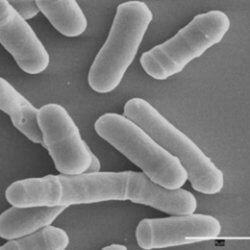
In his fourth-floor lab at Harvard University, Michael Desai has created hundreds of identical worlds in order to watch evolution at work. Each of his meticulously controlled environments is home to a separate strain of baker’s yeast. Every 12 hours, Desai’s robot assistants pluck out the fastest-growing yeast in each world — selecting the fittest to live on — and discard the rest. Desai then monitors the strains as they evolve over the course of 500 generations. His experiment, which other scientists say is unprecedented in scale, seeks to gain insight into a question that has long bedeviled biologists: If we could start the world over again, would life evolve the same way?

Many biologists argue that it would not, that chance mutations early in the evolutionary journey of a species will profoundly influence its fate. “If you replay the tape of life, you might have one initial mutation that takes you in a totally different direction,” Desai said, paraphrasing an idea first put forth by the biologist Stephen Jay Gould in the 1980s.

Desai’s yeast cells call this belief into question. According to results published
in Science in June, all of Desai’s yeast varieties arrived at roughly the same evolutionary endpoint (as measured by their ability to grow under specific lab conditions) regardless of which precise genetic path each strain took. It’s as if 100 New York City taxis agreed to take separate highways in a race to the Pacific Ocean, and 50 hours later they all converged at the Santa Monica pier.

Read full, original article: If the World Started Over, Would Life Evolve the Same Way?

{{ reviewsTotal }}{{ options.labels.singularReviewCountLabel }}
{{ reviewsTotal }}{{ options.labels.pluralReviewCountLabel }}
{{ options.labels.newReviewButton }}
{{ userData.canReview.message }}

Related Articles

Infographic: Global regulatory and health research agencies on whether glyphosate causes cancer

Infographic: Global regulatory and health research agencies on whether glyphosate causes cancer

Does glyphosate—the world's most heavily-used herbicide—pose serious harm to humans? Is it carcinogenic? Those issues are of both legal and ...

Most Popular

Screenshot-2026-04-20-at-2.26.27-PM
Viewpoint — Food-fear world: The latest activist scientists campaign: Cancer-causing additives
Screenshot-2026-03-13-at-12.14.04-PM
The FDA wants to make many popular prescription drugs OTC—a great idea. Here’s why it’s unlikely to happen
Screenshot-2026-05-04-at-12.54.32-PM
How Utah became the country’s supplement capital  — and a haven for unregulated, ineffective and fake products
Screenshot-2026-05-01-at-11.56.24-AM
‘Science moves forward when people are willing to think differently’: Memories of DNA maverick Craig Venter
Screenshot-2026-04-03-at-11.15.51-AM
Paraben panic: How a flawed study, media hype, and chemophobia convinced the public of the danger of one of the safest classes of preservatives
Screenshot-2026-04-30-at-2.19.37-PM
5 myths about summer dehydration that could damage your health — or even kill you
ChatGPT-Image-May-1-2026-02_20_13-PM
How RFK, Jr.’s false vaccine claims are holding up $600 million to fight diseases in poor countries
ChatGPT-Image-Mar-27-2026-11_27_05-AM
The myths of “process”: What science says about the “dangers’ of synthetic products and ultra-processed foods
viva-la-vida-watermelons
Misinformation and climate change are endangering summer watermelons
ChatGPT-Image-Mar-10-2026-01_39_01-PM
Viewpoint—“Miracle molecule” debunked: Why acemannan supplements don’t work
Drinking lots of water can help reduce the effects of aging
Nanoplastics in drinking water: MAHA activists forge science-based bipartisan coalition 
circular-bioeconomy-should-focus-on-sustainable-wellbeing
GLP podcast: What's wrong with 'doomsday' environmentalism? It's false.
glp menu logo outlined

Get news on human & agricultural genetics and biotechnology delivered to your inbox.