What brain science has and has not revealed, so far

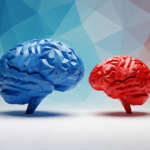
Research on the brain is surging. The United States and the European Union have launched new programs to better understand the brain. Scientists are mapping parts of mouse, fly and human brains at different levels of magnification. Technology for recording brain activity has been improving at a revolutionary pace.

The National Institutes of Health, which already spends $4.5 billion a year on brain research, consulted the top neuroscientists in the country to frame its role in an initiative announced by President Obama last year to concentrate on developing a fundamental understanding of the brain.

Scientists have puzzled out profoundly important insights about how the brain works, like the way the mammalian brain navigates and remembers places, work that won the 2014 Nobel Prize in Physiology or Medicine for a British-American and two Norwegians.

Yet the growing body of data — maps, atlases and so-called connectomes that show linkages between cells and regions of the brain — represents a paradox of progress, with the advances also highlighting great gaps in understanding.

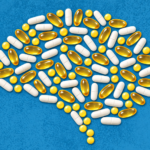
So many large and small questions remain unanswered. How is information encoded and transferred from cell to cell or from network to network of cells? Science found a genetic code but there is no brain-wide neural code; no electrical or chemical alphabet exists that can be recombined to say “red” or “fear” or “wink” or “run.” And no one knows whether information is encoded differently in various parts of the brain.

Read full, original article: Learning How Little We Know About the Brain

 

Related Articles

Infographic: Global regulatory and health research agencies on whether glyphosate causes cancer

Infographic: Global regulatory and health research agencies on whether glyphosate causes cancer

Does glyphosate—the world's most heavily-used herbicide—pose serious harm to humans? Is it carcinogenic? Those issues are of both legal and ...

Most Popular

ChatGPT-Image-Sep-17-2026-12_28_43-PM
Vitamin D, omega-3 fish oil and glucosamine supplements could cause brain damage 
ChatGPT-Image-Mar-10-2026-01_39_01-PM
Viewpoint—“Miracle molecule” debunked: Why acemannan supplements don’t work
ChatGPT-Image-Sep-17-2026-10_17_15-AM
Viewpoint: Why are the less intelligent more likely to be conservative—and smarter people more socially liberal?
Screenshot-2026-08-12-at-11.31.46-AM
AI is helping develop new vaccines
Screenshot-2026-09-10-at-12.20.19-PM
'Jet fuel didn't melt the steel': 9/11 conspiracy theories debunked
Screenshot-2026-09-16-at-12.07.47-PM
The heated debate over trans athletes in the WNBA
Screenshot-2026-09-17-at-10.24.54-AM
Viewpoint: Dubious environmental fears: Why the AI buildout is critical to America’s ecological future
ChatGPT-Image-Sep-9-2026-02_48_24-PM
Viewpoint: Trump-RFK Jr. report on “Gender Ideology & Left-wing Ideology’ targets LGBTQ community—and science
Screenshot 2026-09-11 at 12.39
Child-monitoring apps: When the cure is worse than the harm—and how the technology could be tweaked
Screenshot-2026-09-10-at-11.50.46-AM
Did COVID vaccines kill 2,500 service members? RFK Jr. hires an investigator who compares vaccine promoters to Nazi doctors
glp menu logo outlined

Get news on human & agricultural genetics and biotechnology delivered to your inbox.