UK advisor holds up GMO crops as more environmentally friendly than organic

Organic farming could be worse for the climate than conventional farming methods, one of the government’s scientific advisers has said, because of the greater land use required and the methods used.

Lord Krebs, who advises ministers on how to adapt to climate change, told the Oxford Farming Conference that organic farming did not necessarily mean more environmentally friendly farming.

Instead, he suggested, agricultural methods known as “no-till” – which usually involves the use of genetically modified crops or biotechnology, with herbicides to kill the weeds that tilling normally prevents – were better for the climate as they reduce the turnover of soils, a process that releases carbon dioxide into the atmosphere.

Helen Browning, the chief executive of the Soil Association, which promotes organic farming and produce, said she was “bemused by the hostility” of Krebs towards organic methods.
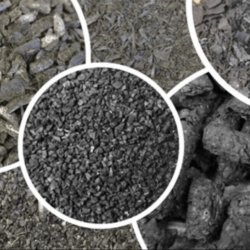
With regard to soils, she added: “Organic techniques have a great deal to offer in building organic matter in soils and improving efficiency of fertiliser use. When the increasing use of non-renewable inputs [in the form of fertilisers, such as phosphates] is considered, non-organic farming is significantly less productive than organic, and the productivity of non-organic [farming] is falling because conventional farming is using more and more fertiliser inputs simply to keep yields level.”

The world’s soils are a major source of atmospheric carbon. So, too, is nitrous oxide, a greenhouse gas that is the byproduct of adding artificial nitrogen fertilisers to soils.

Read full, original article: Organic farming not always best for environment, says government adviser

{{ reviewsTotal }}{{ options.labels.singularReviewCountLabel }}
{{ reviewsTotal }}{{ options.labels.pluralReviewCountLabel }}
{{ options.labels.newReviewButton }}
{{ userData.canReview.message }}

Related Articles

Infographic: Global regulatory and health research agencies on whether glyphosate causes cancer

Infographic: Global regulatory and health research agencies on whether glyphosate causes cancer

Does glyphosate—the world's most heavily-used herbicide—pose serious harm to humans? Is it carcinogenic? Those issues are of both legal and ...

Most Popular

ChatGPT-Image-Jun-16-2026-10_29_11-AM
What’s behind Anthropic’s warning about the accelerating development of AI
ChatGPT-Image-Jun-16-2026-10_01_45-AM-2
Viewpoint—Recursive self-improvement: AI leader Anthropic calls for AI slowdown
Screenshot-2026-06-16-at-10.02.22-PM
Viewpoint: ‘Industrial food’ primer—Challenging the dangerous delusions of the alternative food movement
Screenshot-2026-06-17-at-11.57.12-AM
Viewpoint: Raw milk and the myth of safety—ProPublica exposes the growing anti-homogenization movement
ChatGPT-Image-Jun-9-2026-01_11_37-PM
Turmeric supplements: More risks than benefits
ChatGPT-Image-Jun-15-2026-02_31_28-PM-2
Trump-appointed cancer panel head backed by supplement and anti-vaccine companies promotes discredited support for ivermectin as a potential cure
ChatGPT-Image-Jun-4-2026-03_07_27-PM
AAP v. Kennedy: While a court challenge grinds on, RFK Jr. quietly advances his anti-vaccine conspiracy agenda
ChatGPT-Image-Mar-10-2026-01_39_01-PM
Viewpoint—“Miracle molecule” debunked: Why acemannan supplements don’t work
Screenshot-2026-06-16-at-11.23.32-AM
In a rebuke to RFK, Jr.’s anti-vax crusade, journal retracts study claiming hepatitis B vaccine–autism link
ChatGPT Image Jun 16, 2026, 12_03_37 PM
Kennedy accused of trying to ‘bully’ science journal that retracted study linking vaccines to infant deaths
newborn infant baby mother
Facts & Fallacies Podcast: The truth about vitamin K shots
Screenshot 2025-07-30 at 10.48
Can gene editing eliminate Down syndrome? Scientists have done it in lab-grown cells
glp menu logo outlined

Get news on human & agricultural genetics and biotechnology delivered to your inbox.