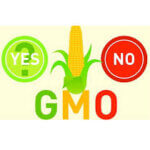
New York Times’ writer addresses GMO labeling issue, leaves out the science

There are few industry debates as heated these days as the one about labeling foods that contain genetically modified ingredients.

And while interest groups and advocates wage war in state legislatures, on ballots and in Congress over what should be disclosed on product labels, products certified as not containing genetically modified organisms are proliferating on grocery shelves without any nationwide mandatory regulations.

Moreover, many manufacturers are nodding to the public debate, adding the phrase “non-G.M.O.” to their packaging without a verification process.

So if more companies elect to stick labels on their products stating that they are G.M.O.-free, whether verified or not, does that make the fierce policy debate increasingly moot? “It’s an interesting question,” said Jean Halloran, director of food policy initiatives at Consumers Union, which lobbies for mandatory labeling.

The shift toward voluntary labeling has also led to a lot of consumer confusion, as different labels, organizations and agencies issue seals or stamps that attest to compliance with few, if any, uniform standards. In addition, food companies are tacking the words non-G.M.O. on items that would never be considered in need of such labeling.

Read full, original article: G.M.O. Labels for Food Proliferate Even as a Battle Over Them Rages

{{ reviewsTotal }}{{ options.labels.singularReviewCountLabel }}
{{ reviewsTotal }}{{ options.labels.pluralReviewCountLabel }}
{{ options.labels.newReviewButton }}
{{ userData.canReview.message }}

Related Articles

Infographic: Global regulatory and health research agencies on whether glyphosate causes cancer

Infographic: Global regulatory and health research agencies on whether glyphosate causes cancer

Does glyphosate—the world's most heavily-used herbicide—pose serious harm to humans? Is it carcinogenic? Those issues are of both legal and ...

Most Popular

Screenshot-2026-03-13-at-12.14.04-PM
The FDA wants to make many popular prescription drugs OTC—a great idea. Here’s why it’s unlikely to happen
Screenshot-2026-05-04-at-12.54.32-PM
How Utah became the country’s supplement capital  — and a haven for unregulated, ineffective and fake products
Screenshot-2026-04-20-at-2.26.27-PM
Viewpoint — Food-fear world: The latest activist scientists campaign: Cancer-causing additives
Screenshot-PM-24
Viewpoint: The herbicide glyphosate isn’t perfect. Banning it would be far worse.
images
The never-ending GMO debate: Pros and cons
Screenshot-2026-05-01-at-11.56.24-AM
‘Science moves forward when people are willing to think differently’: Memories of DNA maverick Craig Venter
Screenshot-2026-04-30-at-2.19.37-PM
5 myths about summer dehydration that could damage your health — or even kill you
Screenshot-2026-04-03-at-11.15.51-AM
Paraben panic: How a flawed study, media hype, and chemophobia convinced the public of the danger of one of the safest classes of preservatives
bigstock opioids on chalkboard with rol
GLP podcast: 'Safe injection sites': enabling drug addiction or saving lives?
ChatGPT-Image-May-1-2026-02_20_13-PM
How RFK, Jr.’s false vaccine claims are holding up $600 million to fight diseases in poor countries
glp menu logo outlined

Get news on human & agricultural genetics and biotechnology delivered to your inbox.