Milo Marinkovic used to find it difficult to put toothpaste on his brush. He couldn’t tie his shoelaces and couldn’t open a bottle or a packet of crisps. He couldn’t do anything that required two hands, in fact, because his right hand was useless. It hung limply from his arm, unable to move after a motorcycle accident damaged the nerves in his shoulder more than 16 years ago and left the lower part of his arm immobile. Years of surgery to reconstruct the nerves and repair damage had not helped and the limb caused him intense pain whenever anything knocked into it.
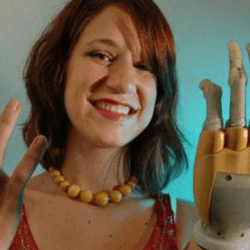
That began to change five years ago, after he met Professor Oskar Aszmann at the Medical University of Vienna. Marinkovic now has one of the most advanced bionic hands in the world in the place of his paralysed hand, a mechanical device that he controls by thought alone.
Marinkovic is one of three men who have had bionic hands grafted onto their arms, under the supervision of Aszmann.
All three patients had suffered what is known as a “brachial plexus avulsion” injury, in which the bundle of nerves going through the shoulder is damaged and, effectively, cuts off the hand from the rest of their nervous system.
For each of the patients, Aszmann’s team started by identifying the remnants of the nerves at the ends of their injured arms. The muscles had already started to atrophy there because they had hardly been used for years but there were still tiny flickers of nerve activity.




To amplify the electrical signals in the nerves, the doctors implanted muscle and nerve tissue, taken from elsewhere in the body, into the arms. That allowed the remnant nerves in the arms to grow stronger.
The patients then had to imagine opening and closing their hands using the muscles in their arms while sensors on the skin recorded the electrical signals in their nerves. A computer turned those electrical signals into action.
Read full, original article: The bionic hand that is controlled by thought alone