Henry Miller: UN glyphosate finding glosses over data to support ideological conclusion

For the first time since 1991, the focus of this International Agency for Research on Cancer (IARC) review was on pesticides. At this meeting, five pesticides were evaluated and three of them were classified as “probably carcinogenic.” But neither the U.S. EPA nor the European Chemical Agency (ECHA) had previously classified the three active ingredients as being carcinogenic.  Why the discrepancy?

The data (and a selected set of data, at that) were reviewed to determine whether glyphosate is capable of causing cancer. As with common chemicals like sugar, salt and water, and foods like nutmeg and licorice, glyphosate at very high doses is capable of causing harm to humans. That’s what the IARC “2A” designation—“probably carcinogenic to humans”–essentially means. But one of the seminal tenets of toxicology is that “the dose makes the poison,” and the reality is that glyphosate is not a human health risk even at levels of exposure that are more than 100 times higher than the human exposures that occur under conditions consistent with the product’s labeling.

Thus, IARC publishes qualitative assessments, not quantitative assessments of risk. That is left to regulatory agencies.

Regulatory agencies typically review more data and in much more depth than the IARC. For glyphosate, seven companies have submitted data from multiple types of studies, which are evaluated by the U.S. EPA, the German Risk Agency (BfR) and other global regulatory agencies.
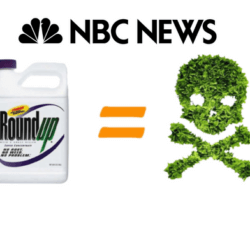
What does IARC’s decision mean to consumers and farmers? Nothing. They should feel confident that global regulatory agencies will continue to do their risk assessments with the proper amount of scientific rigor and to make the critical distinction between hazard and risk.

Read full, original article: March Madness From The United Nations

Related Articles

Infographic: Global regulatory and health research agencies on whether glyphosate causes cancer

Infographic: Global regulatory and health research agencies on whether glyphosate causes cancer

Does glyphosate—the world's most heavily-used herbicide—pose serious harm to humans? Is it carcinogenic? Those issues are of both legal and ...

Most Popular

PFAS Molecules and Hazard Icons
Viewpoint: $$$ Billions of reasons why environmental activists are trying to slap a ‘killer PFAS’ label on many safe and essential ‘forever chemicals’
Screenshot 2026-11-23 at 11.51
Calley Means’ demonization of glyphosate is ‘just craziness’. Farmers are responding with science.
ChatGPT-Image-Mar-10-2026-01_39_01-PM
Viewpoint—“Miracle molecule” debunked: Why acemannan supplements don’t work
Facebook Icons with No Syringe and Thumbs-Up
RFK Jr.’s science-twisting anti-vaccine group Children’s Health Defense is back on Facebook and Instagram after Meta inexplicably lifts its ban
Pastel Breakfast Pedestals with Yogurt Bowl
RFK Jr. is about to issue an edict defining ultra-processed foods. What could go wrong?
Screenshot-2026-11-17-at-12.18.09-PM
Challenging glyphosate fear-mongering: Statewide Nebraska study finds no link between weedkiller use and non-Hodgkin lymphoma
Wholewheat Bread and Yogurt Ingredients
Viewpoint: RFK Jr.’s reckless good intentions: Do we really want to ban whole-wheat bread and yogurt?
Digital Code Doctor Holding Medicine Bottle
Did you know you’re storing years’ worth of poop in your intestines? Beware: That’s the kind of junk science AI “doctors” are peddling 
Screenshot 2026-11-23 at 11.11
Sweat lodges and canoe journeys: Native American healing gains Medicaid coverage as Trump cuts funding and restricts eligibility nationwide
Grayscale Collage of Protest and Choice
Viewpoint: Medical Freedom movement? A sobering look at RFK Jr.’s disastrous two years as our health and food czar 
Screenshot-2026-11-18-at-12.42.18-PM
Viewpoint: MAHA/MAGA/RFK Jr. health disinformation crackup is coming. Beware as Bhattacharya, Makary, Prasad, and Oz seek lucrative second acts
Screenshot-2026-11-16-at-2.37.32-PM
30 years of GMO farming: Is the boom in glyphosate and glufosinate use harming the environment? Data show they’re the most sustainable choice
glp menu logo outlined

Get news on human & agricultural genetics and biotechnology delivered to your inbox.