Human evolution ‘now in our hands,’ some scientists say

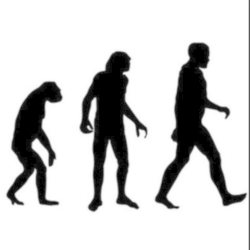
After my public lectures on evolution, someone in the audience invariably asks, “Are we still evolving?” People want to know if humans are getting taller, smarter, better looking or more athletic. My answer is truthful but disappointing: We’re almost certainly evolving, but we don’t know in what direction or how fast. While some studies show that natural selection is acting on traits such as age of menopause (increasing), age at which first child is produced and blood cholesterol (both decreasing), this is hardly the stuff that excites futurists. And, regardless, there’s a critical difference here: Selection isn’t the same as evolution. Even if selection culls people with high cholesterol, unless those people are on average genetically different from those with lower cholesterol, we won’t see the genetic change over time that constitutes evolution. Evidence suggests that human generations are long, evolution is slow, and so all we can say is that there’s the potential for evolution.

The authors of “Evolving Ourselves” disagree. Not only, they claim, are we evolving faster than ever, but we’re doing it to ourselves. Juan Enriquez and Steve Gullans, venture capitalists who fund biotechnology companies (Gullens was once a professor at Harvard Medical School), argue that Homo sapienshas hijacked evolution — not just in our own species but in virtually all species: “For better or worse, we are increasingly in charge. We are the primary drivers of change. We will directly and indirectly determine what lives, what dies, where, and when. We are in a different phase of evolution; the future of life is now in our hands.”

Read full, original article: Are humans the main driver of human evolution?

{{ reviewsTotal }}{{ options.labels.singularReviewCountLabel }}
{{ reviewsTotal }}{{ options.labels.pluralReviewCountLabel }}
{{ options.labels.newReviewButton }}
{{ userData.canReview.message }}

Related Articles

Infographic: Global regulatory and health research agencies on whether glyphosate causes cancer

Infographic: Global regulatory and health research agencies on whether glyphosate causes cancer

Does glyphosate—the world's most heavily-used herbicide—pose serious harm to humans? Is it carcinogenic? Those issues are of both legal and ...

Most Popular

ChatGPT-Image-May-26-2026-07_51_21-AM-2
Viewpoint: There are more than 1,000 chemicals in a cup of coffee—including many substances that can cause cancer. Why isn’t it banned?
Screenshot-2026-04-30-at-11.33.46-AM
Anti-seed-oil to anti-vax pipeline: MAHA movement spreads to teen influencers
ChatGPT-Image-May-28-2026-02_12_17-PM
Can ‘Social Stress Indicators’ help contain social media misfluencers?
Screenshot 2025-07-30 at 10.48
Can gene editing eliminate Down syndrome? Scientists have done it in lab-grown cells
Screenshot-2026-05-29-at-1.23.52-PM
Viewpoint: Scientists recently revised downward the likelihood of catastrophic global warming. Reassured? You shouldn't be.
the magic of mRNA
Viewpoint: Anti-vax fake ‘turbo cancer’ claims threaten cancer treatment breakthroughs
ChatGPT Image May 28, 2026, 08_16_38 PM
Viewpoint: Why the EPA mismeasures cancer risk of chemicals and what should be done to fix it
ChatGPT-Image-May-22-2026-10_56_42-AM-2
‘It’s not super useful’: As wariness about AI grows, Trump proposes rollback of healthcare safeguards
Screenshot 2026-05-29 at 2.47
Psychological inoculation: With a vaccine to prevent HIV on the horizon, misinformation is soaring. What can be done.
Screenshot-2026-04-14-at-11.11.06-AM
‘Turbo cancer’ or mRNA cancer cure? Strategies to counter misinformation
downsyndrome_compilation_MID_1
CRISPR breakthrough that can remove the chromosome responsible for Down syndrome raises ethical questions
ChatGPT-Image-Mar-10-2026-01_39_01-PM
Viewpoint—“Miracle molecule” debunked: Why acemannan supplements don’t work
Screenshot-2026-05-27-at-10.51.25-AM
Viewpoint: ‘Monsanto’ blues—Planned Netflix movie promises yet another round of anti-glyphosate disinformation
glp menu logo outlined

Get news on human & agricultural genetics and biotechnology delivered to your inbox.