America is experiencing its worst bird flu outbreak ever: Why aren’t we more concerned?

CNP

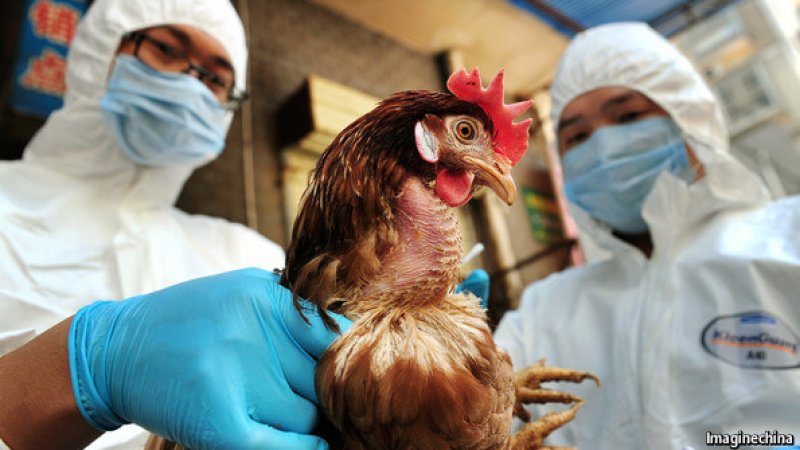
Which epidemic has caused Americans greater anxiety: the Ebola outbreak, which began last year in Africa and has killed thousands of people there, or the strain of influenza that has now infected poultry in twenty-one states? The answer is obvious. Ebola, which was responsible for two deaths in the United States, caused a level of unfettered hysteria hardly seen here since Senator Joseph McCarthy accused half the country’s creative class of holding membership in the Communist Party. The bird flu, although it has now caused the deaths of more than forty-five million chickens, devastated the American poultry industry, doubled the price of most eggs, and is by far the worst such outbreak in U.S. history, somehow doesn’t seem as menacing to people in this country. No doubt that is in part because the virus has not killed a single person. It doesn’t even infect humans. We can only hope that those facts remain unchanged. But we shouldn’t bet millions of lives on it.

The 2009 H1N1 outbreak started in animals, then mutated and became infectious to humans. But vigorous responses by public-health officials, as well as plain luck, limited its impact. “If H1N1 had been more virulent, it would have killed millions of people,”the Stanford biologist Nathan Wolfe told me at the time. “Maybe tens of millions. Once it got out there, that thing burned right through the forest. We caught an amazingly lucky break, but let’s not kid ourselves. Luck like that doesn’t last.”

The GLP aggregated and excerpted this blog/article to reflect the diversity of news, opinion and analysis. Read full, original post: Why aren’t we more scared of the bird flu?


{{ reviewsTotal }}{{ options.labels.singularReviewCountLabel }}
{{ reviewsTotal }}{{ options.labels.pluralReviewCountLabel }}
{{ options.labels.newReviewButton }}
{{ userData.canReview.message }}

Related Articles

Infographic: Global regulatory and health research agencies on whether glyphosate causes cancer

Infographic: Global regulatory and health research agencies on whether glyphosate causes cancer

Does glyphosate—the world's most heavily-used herbicide—pose serious harm to humans? Is it carcinogenic? Those issues are of both legal and ...

Most Popular

ChatGPT Image May 10, 2026, 08_16_59 PM 2
Overmedicalization? RFK Jr.’s antidepressant crackdown raises conflict questions over his fee stake in Wisner Baum, the tort firm built on suing drug makers
Picture1-5
Science Disinformation Gap: The transatlantic battle over social media and censorship
Picture1-14
When superbugs threaten vulnerable children: Can AI help solve antibiotic resistance?
Screenshot-2026-05-08-at-3.40.33-PM
Seeds of power: China turns to genetic engineering to become global superpower
ChatGPT-Image-Apr-13-2026-02_20_22-PM
Viewpoint: Misinformation infodemic? Why assessing evidence is so challenging 
S
As vaccine rejectionism spreads, measles may be taking a more dangerous turn
Screenshot-2026-05-01-at-1.29.41-PM
Viewpoint: What happens when whole grains meet modern food manufacturing? Labels don’t tell the whole story.
Farmers can talk to plants
Farmers are a major source of misinformation—about farming
Screenshot 2026-05-08 at 3.01
Transforming farming and nutrition with AI and robotics? Larry Ellison’s half-billion-dollar Hawaii greenhouse dream goes bust
ChatGPT-Image-May-8-2026-01_41_33-PM-3
Viewpoint: Surge of climate misinformation traced to right wing and anti-wind activists 
Screenshot-2026-04-20-at-2.26.27-PM
Viewpoint — Food-fear world: The latest activist scientists campaign: Cancer-causing additives
Screenshot-2026-04-12-135256
Bixonimania: The fake disease scam that AI swallowed whole
Screenshot-2026-03-13-at-12.14.04-PM
The FDA wants to make many popular prescription drugs OTC—a great idea. Here’s why it’s unlikely to happen
glp menu logo outlined

Get news on human & agricultural genetics and biotechnology delivered to your inbox.