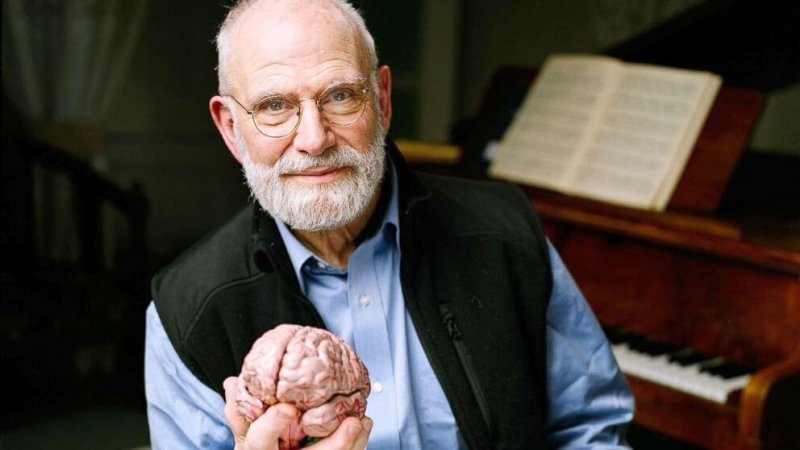
Acclaimed neurologist and writer Oliver Sacks dies at 82

AP oliver sacks jef x

The GLP aggregated and excerpted this blog/article to reflect the diversity of news, opinion and analysis. 

Oliver Sacks, the neurologist and acclaimed author who explored some of the brain’s strangest pathways in best-selling case histories like “The Man Who Mistook His Wife for a Hat,” using his patients’ disorders as starting points for eloquent meditations on consciousness and the human condition, died on August 30 at his home in Manhattan. He was 82.

The cause was cancer, said Kate Edgar, his longtime personal assistant.

Dr. Sacks announced in February 2015, in an Op-Ed essay in The New York Times, that an earlier melanoma in his eye had spread to his liver and that he was in the late stages of terminal cancer.

Dr. Sacks variously described his books and essays as case histories, pathographies, clinical tales or “neurological novels.” His subjects included Madeleine J., a blind woman who perceived her hands only as useless “lumps of dough”; Jimmie G., a submarine radio operator whose amnesia stranded him for more than three decades in 1945; and Dr. P. — the man who mistook his wife for a hat — whose brain lost the ability to decipher what his eyes were seeing.
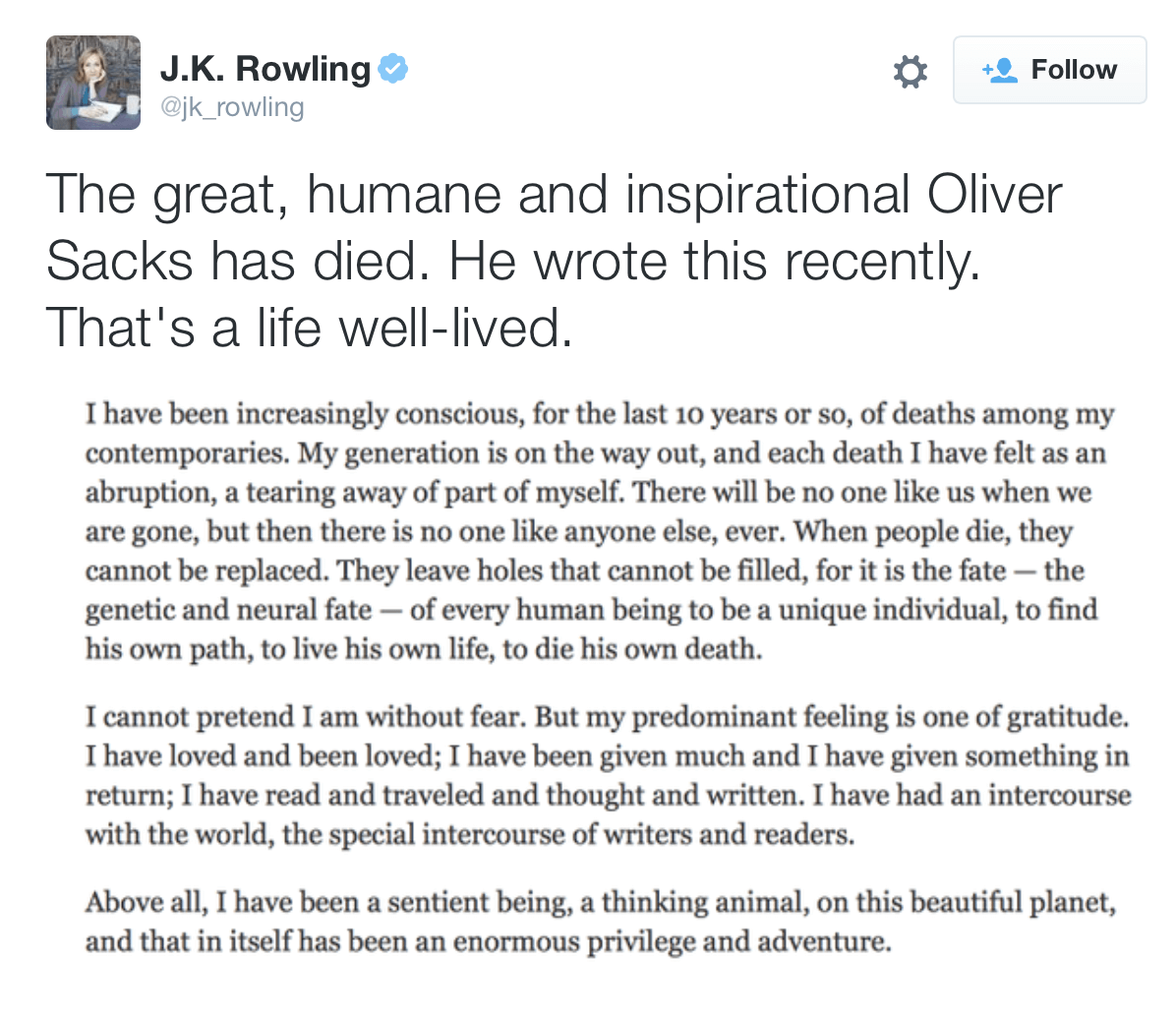
Screen Shot 2015-08-30 at 9.03.28 PM
Click image for larger version.

Describing his patients’ struggles and sometimes uncanny gifts, Dr. Sacks helped introduce syndromes like Tourette’s or Asperger’s to a general audience. But he illuminated their characters as much as their conditions; he humanized and demystified them.

Read full, original post: Oliver Sacks, Neurologist Who Wrote About the Brain’s Quirks, Dies at 82


{{ reviewsTotal }}{{ options.labels.singularReviewCountLabel }}
{{ reviewsTotal }}{{ options.labels.pluralReviewCountLabel }}
{{ options.labels.newReviewButton }}
{{ userData.canReview.message }}

Related Articles

Infographic: Global regulatory and health research agencies on whether glyphosate causes cancer

Infographic: Global regulatory and health research agencies on whether glyphosate causes cancer

Does glyphosate—the world's most heavily-used herbicide—pose serious harm to humans? Is it carcinogenic? Those issues are of both legal and ...

Most Popular

Screenshot-2026-03-13-at-12.14.04-PM
The FDA wants to make many popular prescription drugs OTC—a great idea. Here’s why it’s unlikely to happen
Screenshot-2026-05-04-at-12.54.32-PM
How Utah became the country’s supplement capital  — and a haven for unregulated, ineffective and fake products
Screenshot-2026-04-20-at-2.26.27-PM
Viewpoint — Food-fear world: The latest activist scientists campaign: Cancer-causing additives
Screenshot-PM-24
Viewpoint: The herbicide glyphosate isn’t perfect. Banning it would be far worse.
images
The never-ending GMO debate: Pros and cons
Screenshot-2026-05-01-at-11.56.24-AM
‘Science moves forward when people are willing to think differently’: Memories of DNA maverick Craig Venter
Screenshot-2026-04-03-at-11.15.51-AM
Paraben panic: How a flawed study, media hype, and chemophobia convinced the public of the danger of one of the safest classes of preservatives
Screenshot-2026-04-30-at-2.19.37-PM
5 myths about summer dehydration that could damage your health — or even kill you
ChatGPT-Image-May-1-2026-02_20_13-PM
How RFK, Jr.’s false vaccine claims are holding up $600 million to fight diseases in poor countries
bigstock opioids on chalkboard with rol
GLP podcast: 'Safe injection sites': enabling drug addiction or saving lives?
glp menu logo outlined

Get news on human & agricultural genetics and biotechnology delivered to your inbox.