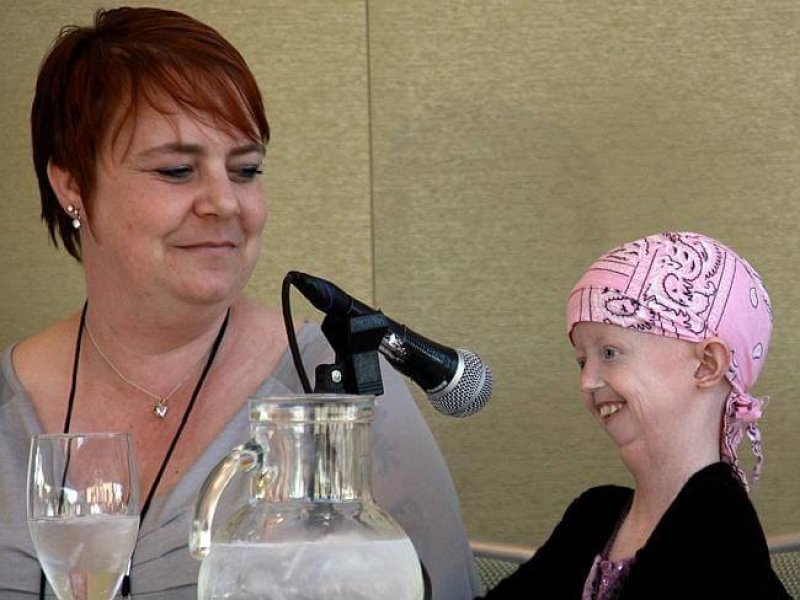
In Columbia, South Carolina, a couple created their own foundation and used a series of fundraisers to collect $2.2 million to development treatments of their 5-year-old daughter’s rare disease, San Filippo Disorder. In Southern California, an emergency room physician changed her practice to treating rare diseases, and started a foundation to find cures for a rare form of congenital muscular dystrophy that her daughter has.
These are not isolated stories. In the United States and Europe, a familiar narrative is emerging—a wealthy family takes a child in for a checkup, concerned about her development. Upon hearing a diagnosis of a rare disease (or, as in many cases, several visits to clinics with no answers), the family flexes its financial resources to try to direct research to cure the disorder, either by directly raising funds or by setting up a foundation or using connections to get a pharmaceutical firms attention.
How common is this? Is this any way to deliver healthcare? Should-or can-pharmaceutical development be influenced by the wealthy? Is this the only way drugs for rare diseases are developed? Do these cases divert resources away from treatments for common disorders like heart disease or lung cancer? And what’s a rare disease, anyway?
All together now—adding up rarities
Different countries differ in their definitions of rare disease, but they are unusual disorders. In the United States, this means a disease that affects fewer than 200,000 people (out of a population of 350 million). In Europe, it’s counted as any disease affecting less than five out of every 10,000. Added up, however, this means that 30 million Europeans and the same number of Americans suffer from a rare disease. It’s estimated that there are about 7,000 rare diseases worldwide. And they vary a lot, in terms of severity, symptoms, and prognosis. But in one way, they don’t vary—more than 80 percent of them are genetic, and the majority occurs in infants and children.
Currently, interest from families, governments and — reluctantly at first by drug makers — is spurring research and development for cures for these diseases. So, it’s probably no surprise that the people garnering headlines are indeed wealthier. But genetic mutations don’t follow socioeconomic guidelines. Australian geneticist Alan Bittles wrote recently that most rare diseases might actually plague more people in poor countries and regions.
In India, for example, mutations for the rare blood disorder beta-thalassemia are officially estimated to be carried by 3-4 percent of the population. However, that estimate is based only on three of India’s 35 states; more accurate counts show a range, from nearly nothing to almost 10 percent. Until we have better data from less developed countries, we won’t know how prevalent rare disorders really are, in the developing world or more affluent countries.
Another issue that might thwart even the wealthiest parent is the cost of some drugs for genetic disorders. At first, drug companies were very reluctant to devote resources to developing treatments — after all, developing a drug from lab to market is estimated to take 10 years and $1 billion. Enter the Orphan Drug Act in the United States, and the European Community Regulation EC Number 141/2000, which has numerous incentives for companies to make these drugs. These incentives include market exclusivity for 10 years, and a waiver of “user fees” usually charged by the FDA and other regulators.
The incentives appear to be working. In 2014, 37 percent of drug approvals were for treatments of so-called “orphan drugs,” (drugs to treat rare disorders). In Europe, similar approvals are happening. The U.S. FDA has so far approved more than 400 such orphan drugs.
And quite often, they’re not cheap. One drug, Soliris, used to treat paroxysmal nocturnal hemoglobinuria, is one of the world’s most expensive drugs. A year of doses cost nearly $400,000.

The market for orphan drugs is estimated at $50 billion, growing at 6 percent every year.
There are ethical problems with designing these drugs. David Wendler, a bioethicist at the National Institutes of Health, has warned about involving clinical trials of children and of very small participant pools. These stumbling blocks coming from the very nature of rare diseases make statistically significant findings nearly impossible, and confront a wealth of issues of trying to get informed consent from a 3-year-old. This could very well mean that drugs for rare disorders may not face the same scrutiny as a drug for breast cancer.
“Drugs for rare diseases need to be as safe as drugs for heart disease,” said Marlene Haffner, former director of the FDA’s orphan drug office. She and Wendler are calling for different models that can somehow collect more data on orphan drugs and make their development more secu
Rare power of research
There are valuable lessons to be gained from at least researching rare diseases that extend beyond the disease itself. “The edge of research is where the most profound discoveries are made,” said Paul Schindler, executive director and CEO of the Rare Genomics Institute, a nonprofit established to sequence the genomes of children who are suspected of having a rare disease. Research on the gene PCSK9, which is behind rare cholesterol disorders, for example, has led to the development of drugs that can reduce cholesterol in everyone.
The Rare Genomics Institute may have come upon a way to make increase access to at least the testing and diagnosis part of handling rare diseases. The institute sequences anybody’s genome, regardless of income. But an average sequence costs about $7,500, so the institute turned to crowdfunding, using the internet to raise the necessary funds. “To date, 100 percent of our patients have met their goal.”
So, why address rare disorders? “With each discovery, each identification of a rare disease means we come to a more comprehensive understanding of the cause and effect,” Schindler said. This isn’t just about rare diseases, but diseases and genetic interactions in general.
For the patients? It provides hope. For society? Perhaps some answers on diseases in general. Now, about those drug prices….
Andrew Porterfield is a writer, editor and communications consultant for academic institutions, companies and non-profits in the life sciences. He is based in Camarillo, California. Follow @AMPorterfield on Twitter.