How plants can help us address climate change

Screen Shot at PM

The GLP aggregated and excerpted this blog/article to reflect the diversity of news, opinion and analysis.

In a hole in the wall on the north edge of Seattle is a lab where plants go to get superpowers. And by superpowers, I mean a fungal infection.

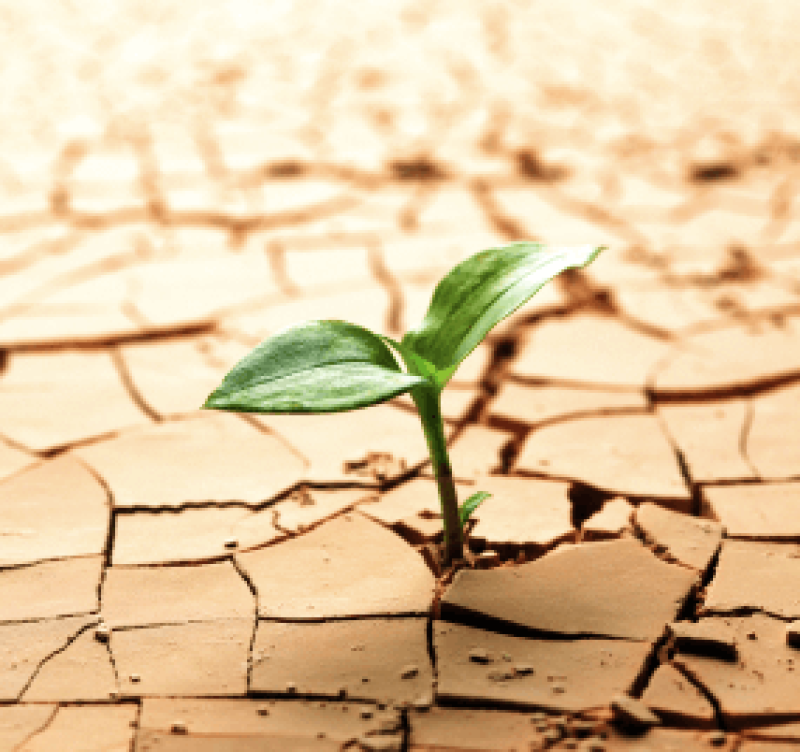
More than 15 years ago Rusty Rodriguez and Regina Redman, went to Yellowstone National Park to study the microbes living in hot geothermal soils. They wanted to understand how living things could survive such extreme temperatures. But also they found plants thriving in the very same geothermal soil, which geologists had always described as barren, Rodriguez says.

Curious, the couple took samples and discovered  a nature-made technology that could replace — or at least supplement — genetic modification in protecting crops from climate change.

There’s a type of fungus that actually grows inside the bodies of most, if not all, plants. These fungi are known as endophytes, and they’re what Rodriguez and Redman found were the key to those plants surviving in Yellowstone.

Alone, neither the fungus nor the plants could survive temperatures higher than about 100 degrees F. But with their powers combined, they could tolerate the extreme heat of geothermal soils. What’s more, the plants infected with these fungi seemed to require less water and nutrients.

When Rodriguez and Redman tried infecting tomato and watermelon plants with the fungus, they found that both developed the same extreme heat tolerance within just 24 hours.

The fungi are somehow dramatically altering the gene expression of their host plant. How or which genes they alter is unclear, Rodriguez says, but he and his collaborators are currently trying to tease out the details.

Read full, original post: Climate change will stress plants out. These scientists think they have a solution

{{ reviewsTotal }}{{ options.labels.singularReviewCountLabel }}
{{ reviewsTotal }}{{ options.labels.pluralReviewCountLabel }}
{{ options.labels.newReviewButton }}
{{ userData.canReview.message }}

Related Articles

Infographic: Global regulatory and health research agencies on whether glyphosate causes cancer

Infographic: Global regulatory and health research agencies on whether glyphosate causes cancer

Does glyphosate—the world's most heavily-used herbicide—pose serious harm to humans? Is it carcinogenic? Those issues are of both legal and ...

Most Popular

ChatGPT-Image-Mar-10-2026-01_39_01-PM
Viewpoint—“Miracle molecule” debunked: Why acemannan supplements don’t work
d a ca e c c beb x
Facts & Fallacies podcast: The 'woke' crusade against anthropology? Dr. Elizabeth Weiss
DtAieAIkCZy-uchn-oqg
Viewpoint: In the science misinformed grifter game plan, the organic-food-is-healthier myth might be the worst.
ChatGPT-Image-Jun-15-2026-03_00_23-PM
World’s first AI-designed vaccine explained
ChatGPT-Image-Jun-15-2026-01_04_14-PM
Viewpoint: How politicized science became a political religion 
Screenshot-2026-07-07-at-10.48.33-AM
700,000-person study reaffirms that getting a flu and Covid shot on the same day is safe
ChatGPT-Image-Jun-25-2026-12_23_17-PM
No, Bill Gates did not secretly engineer ticks to promote veganism
ChatGPT-Image-Jul-7-2026-03_07_17-PM
Kennedy blocks preventive health care panel that reviews treatments for HIV, diabetes, and cancer from meeting — for fourth time
GMOprotest
Viewpoint: CRISPR-hating activists air their grievances about gene editing farming innovation
eu-farming-policy
EU bureaucrats are finally catching up to the gene editing revolution in food and agriculture
Picture1
Viewpoint: The Lackland flu outbreak is fading but Hegseth’s military anti-vaccine fiasco is not
Screenshot-2026-07-06-at-11.30.08-AM
AI is making even its founders uneasy: ‘We find evidence of introspection, joy, satisfaction, fear, grief and unease.’
Screenshot-2026-07-06-at-12.58.18-PM
Viewpoint: Oxygen chambers? Pulsed electromagnetic field therapy? The only thing biohacking improves is the bottom line of preventative medicine hucksters
glp menu logo outlined

Get news on human & agricultural genetics and biotechnology delivered to your inbox.