Changing climate may have pushed early human evolution in Africa

palaeolithic age
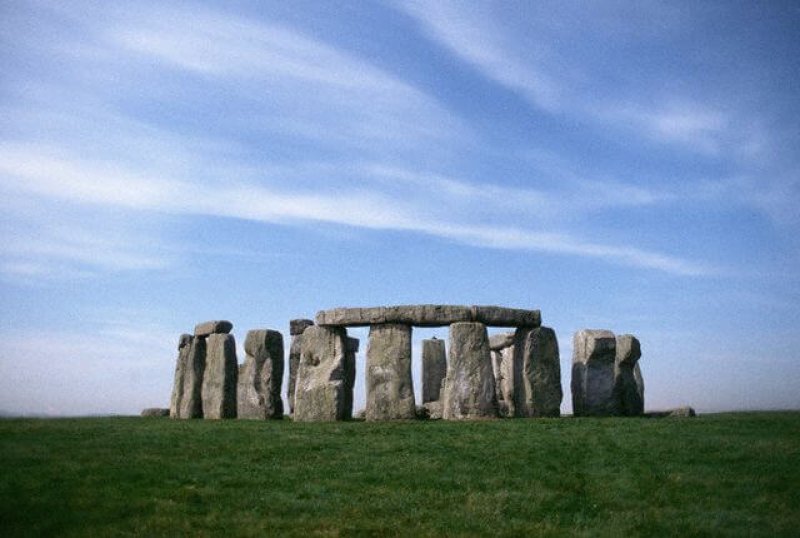
ca. 2800-1500 B.C., Wiltshire, England, UK --- Stonehenge by Moonlight --- Image by © Roger Ressmeyer/CORBIS

The GLP aggregated and excerpted this blog/article to reflect the diversity of news, opinion and analysis. 

It’s been called the cradle of humanity, but the significance of East Africa’s Turkana basin in human history is still unclear. Now some ancient herbivore teeth are revealing the region’s special climate around the time our genus Homo first appeared.

Turkana, part of the Great Rift Valley straddling Kenya and Ethiopia, has been a hallowed site for the study of human evolution ever since Maeve and Richard Leakey began uncovering fossils there in the 1960s. Ranging from Australopithecus to our own species, Homo sapiens, the most striking finds include Turkana boy, a Homo erectus fossil that is the most complete early human skeleton ever found.

By studying fossil teeth from across the region, Mikael Fortelius at the University of Helsinki, Finland, and his team have pieced together a record of the region’s temperature and rainfall that goes back 8 million years – well before early humans first appeared.

Their data show that East Africa as a whole became drier between 3 million and 2 million years ago – the period when our genus Homo first emerged. But the Turkana basin began to dry out earlier.

Fortelius thinks the basin’s early shift meant it could have acted as a “species factory”. Since it was ahead of the trend, new species that evolved there were adapted for the drier environment that later became widespread.

Read full, original post: Did climate change jump-start human evolution in East Africa?

{{ reviewsTotal }}{{ options.labels.singularReviewCountLabel }}
{{ reviewsTotal }}{{ options.labels.pluralReviewCountLabel }}
{{ options.labels.noReviewsLabel }}
{{ options.labels.newReviewButton }}
{{ userData.canReview.message }}

Related Articles

Infographic: Global regulatory and health research agencies on whether glyphosate causes cancer

Infographic: Global regulatory and health research agencies on whether glyphosate causes cancer

Does glyphosate—the world's most heavily-used herbicide—pose serious harm to humans? Is it carcinogenic? Those issues are of both legal and ...

Most Popular

Picture1
Hiroshima at 81: America’s new nuclear bomb, a buried Iranian target, and a question no one wants to ask
ChatGPT-Image-Mar-10-2026-01_39_01-PM
Viewpoint—“Miracle molecule” debunked: Why acemannan supplements don’t work
ChatGPT Image Jul 29, 2026, 06_26_01 PM 2
Facts & Fallacies podcast: Organic food myths make a comeback on Instagram, with Dr. Kevin Folta
ChatGPT-Image-Jul-10-2026-12_21_03-PM
Viewpoint: Is there new evidence that the animal deworming drug ivermectin decreases the risk of Covid and cancer? Don’t waste your money.
ChatGPT-Image-Jul-10-2026-09_42_12-AM-1
Peptides, patient autonomy, and the limits of medical freedom
Screenshot-2026-07-09-at-1.09.25-PM
Anti-vaccine myths rattle health care
ChatGPT-Image-Jul-22-2026-09_13_07-AM
Viewpoint—The Strategic Litigation boom: Understanding the tightening coalition among NGOs, foundations, journalists, and tort lawyers
ChatGPT-Image-Jun-25-2026-12_23_17-PM
No, Bill Gates did not secretly engineer ticks to promote veganism
Screenshot 2026-07-22 at 1.38
Viewpoint: Are the U.S. and Europe headed towards a repudiation of agricultural biotechnology red tape?
organic scaled
Facts & Fallacies podcast: Organic food cuts pesticide exposure? A response to Dr. Rhonda Patrick

Sorry. No data so far.

glp menu logo outlined

Get news on human & agricultural genetics and biotechnology delivered to your inbox.