US patent office to settle CRISPR ownership dispute

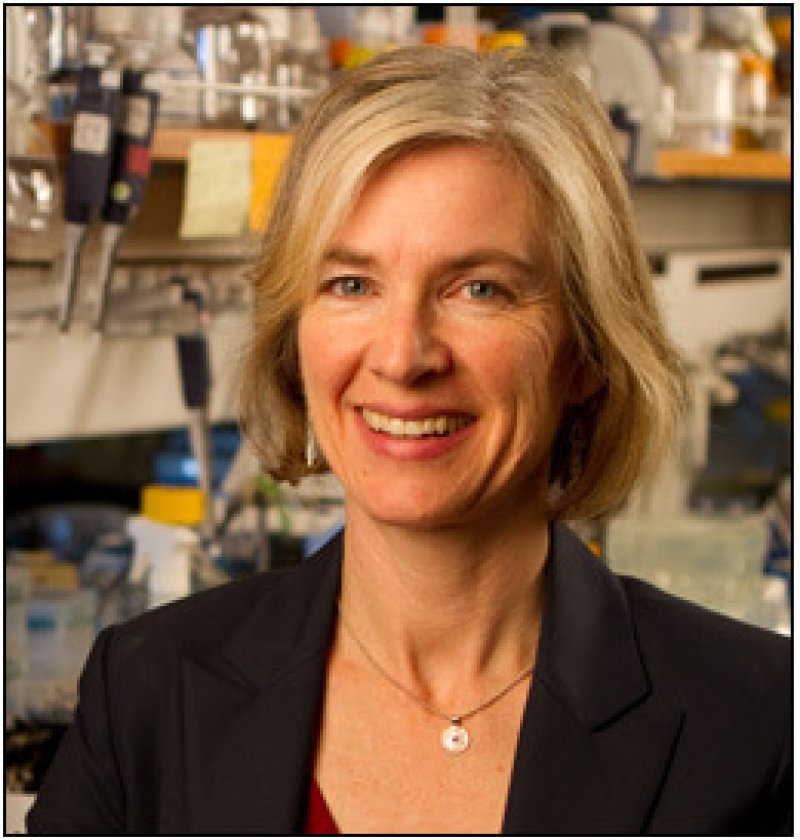
Jennifer Doudna

The GLP aggregated and excerpted this blog/article to reflect the diversity of news, opinion and analysis.

As this magazine and others have detailed, CRISPR-Cas9 — the powerful gene-editing technology being hailed as molecular biology’s “holy grail”—is the subject of a contentious dispute between the widely celebrated Jennifer Doudna at the University of California, Berkeley, and wunderkind Feng Zhang at the Broad Institute and MIT.

The central question: who invented it first?

That dispute became official in the eyes of the U.S. Patent and Trademark Office when an administrative patent judge officially declared an “interference” between Doudna’s pending patent application and a dozen of Zhang’s already issued patents. The interference proceeding sets up a legal showdown that may strip Zhang of his patents and see the two scientists deposed under oath.

Even among patent attorneys — generally, friends of the arcane and hypertechnical — interference proceedings are famous for their complexity. The U.S. patent office now grants patents on a “first to file” basis. But before 2013 this was not the case. Historically, U.S. patent law instead recognized that patent rights should go to whoever could prove they were “first to invent” an idea. Because there is a lag between when patent applications are filed and when they are issued — roughly, three years — this gave rise to the possibility that a later inventor could be awarded a patent before the patent office had time to process an earlier inventor’s application. In that circumstance, the later inventor’s patent “interferes” with the earlier inventor’s ability to rightfully obtain theirs.

Read full, original post: CRISPR Dispute to Be Decided by Patent Office

Related Articles

Infographic: Global regulatory and health research agencies on whether glyphosate causes cancer

Infographic: Global regulatory and health research agencies on whether glyphosate causes cancer

Does glyphosate—the world's most heavily-used herbicide—pose serious harm to humans? Is it carcinogenic? Those issues are of both legal and ...

Most Popular

ChatGPT-Image-Mar-10-2026-01_39_01-PM
Viewpoint—“Miracle molecule” debunked: Why acemannan supplements don’t work
Screenshot-2026-09-22-at-12.26.15-PM
‘Forever chemical’ concerns: Separating hysteria from reasonable concern in the debate over PFAS danger
Screenshot-2026-10-06-at-2.36.47-PM
Is organic farming really more sustainable? 100 recent studies say ‘no’
Screenshot-2026-10-06-at-11.13.59-AM
RFK Jr.’s plan to curb America’s appetite for ultra-processed foods and artificial dyes blocked by the White House
Screenshot-2026-10-07-at-10.15.18-AM
Hooked on kratom: The unregulated, natural, alcohol-free “social tonic” that is destroying lives 
Radioactive-Americana-Collage-2
The kooky logic behind the raft of spurious cancer claims from Harvard’s T.H. Chan School of Public Health
Screenshot-2026-09-28-at-11.26.17-AM
Viewpoint: Wellness movement activists reposition nicotine from a killer addictive drug into a cure-all for brain ills
Screenshot-2026-09-22-at-10.54.12-AM
‘They misunderstand science’: Research attempting to tie autism to changes in the gut microbiome comes under fire
Resolute-Portrait-with-Injured-Teddy-Bear
Anti-vax Texas Senate candidate Ken Paxton alleges conspiracy by doctors, drugmakers, and insurers to push childhood vaccination for profit
Supreme-Court-Amid-Climate-Crisis
Should fossil fuel companies be shielded from lawsuits over climate change damage? The Supreme Court takes up the question
Childrens-Health-Defense-Press-Briefing
Court links patient’s death to anti-vaccine doctor promoted by Kennedy’s Children’s Health Defense
strand of dna genetics
No, GMO foods do not “damage genes, natural disposition and hormones, or decrease physical health and intelligence”
glp menu logo outlined

Get news on human & agricultural genetics and biotechnology delivered to your inbox.