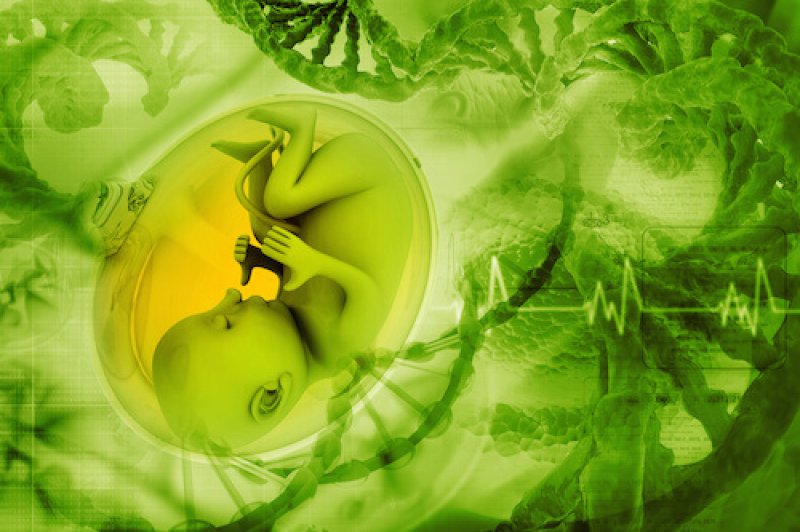
What role does gene editing have to play in abortion debate?

Dollarphotoclub
Human fetus

The GLP aggregated and excerpted this blog/article to reflect the diversity of news, opinion and analysis.

Activists on both sides of the abortion debate now have a common enemy — the use of a powerful new gene editing technology to tinker with the human race.

That may seem like an idea from a sci-fi flick, but it’s already here. The gene-editing technique is already used in research and has the potential to modify human DNA with unprecedented ease in the not-too-distant future. British regulators recently approved limited experiments in human embryos.

The technology holds promise to cure diseases like cystic fibrosis or sickle cell and even revive extinct species. But critics fear it could also be harnessed to craft “designer babies,” who are more intelligent, beautiful or athletic and to “edit” embryonic cells to change an inherited trait forever.

Those dystopian prospects have aligned U.S. groups long at odds: The anti-abortion Susan B. Anthony List, Family Research Council and the Center for Bioethics and Culture oppose gene editing in embryos. So do abortion rights groups like Our Bodies Ourselves and the leadership of the Pro Choice Alliance for Responsible Research, albeit for very different reasons.

They’re not alone in raising concerns. Scientists and policymakers around the world were drawn up short last April after Chinese researchers reported they had used the technology, called CRISPR-Cas9, to edit the genes of human embryos for the first time. The Obama administration issued a statement a short time later opposing such research. The National Academy of Sciences convened experts earlier this year to begin looking at the ethical, legal and social questions of editing the genes of human embryos.

Read full, original post: Gene editing: The next frontier in America’s abortion wars

{{ reviewsTotal }}{{ options.labels.singularReviewCountLabel }}
{{ reviewsTotal }}{{ options.labels.pluralReviewCountLabel }}
{{ options.labels.newReviewButton }}
{{ userData.canReview.message }}

Related Articles

Infographic: Global regulatory and health research agencies on whether glyphosate causes cancer

Infographic: Global regulatory and health research agencies on whether glyphosate causes cancer

Does glyphosate—the world's most heavily-used herbicide—pose serious harm to humans? Is it carcinogenic? Those issues are of both legal and ...

Most Popular

Screenshot 2026-05-26 at 10.15
Viewpoint: Double standard—Why does the wellness industry get a free pass while Big Healthcare is treated as morally suspect?
Screenshot-2026-06-03-at-3.33.44-PM
Viewpoint: Vaccine deniers are attacking a life-saving Vitamin K shot for newborns that isn’t even a vaccine
Screenshot-2026-06-05-at-1.44.09-PM
Viewpoint: Scientists have scrapped the worst-case climate scenario. Is that proof that climate change is a hoax, as Trump claims?
Screenshot-2026-06-08-at-1.35.30-PM
Viewpoint: Social media and fake natural health propaganda fuel surge in use of mostly useless supplements
px extra strength tylenol and tylenol pm
Why ‘null-findings’ on Tylenol’s safety for pregnant women barely move the needle on countering misinformation
Screenshot-2026-06-08-at-10.19.30-AM
‘Natural’ wellness supplements linked to liver injury
ChatGPT-Image-Jun-10-2026-12_57_24-PM
Viewpoint: Why gene-editing babies is moral and certain to happen
Credit: ACSH
Viewpoint: Who and what’s to blame for the surge in vaccine-preventable diseases?
Screenshot 2025-08-25 203032
Mazzenga’s 20-year old muscles: How a still-going-strong 92-year old sprinter wins every race she enters
ChatGPT-Image-May-28-2026-12_56_54-PM
Viewpoint: Vaccines' non-specific effects? The ‘shoddy’ Danish couple whose 'research’ inspires RFK, Jr.’s health delusion
Screenshot-2026-06-05-at-2.12.30-PM
Some plants can poison you. So how did humans figure out what is safe to eat?
Screen Shot at AM
Facts & Fallacies Podcast: Right-wing politics bad for your health? Separating speculation from science
glp menu logo outlined

Get news on human & agricultural genetics and biotechnology delivered to your inbox.