The GLP aggregated and excerpted this blog/article to reflect the diversity of news, opinion and analysis.
It’s an evolutionary mystery that’s literally as plain as the nose on your face. Why did our ancestors develop a prominent protruding nose when most primates have flat nasal openings?
A new study suggests that our unusual nose may have gained its shape simply as a by-product of other, more important changes in the structure of our face – although other researchers insist that some human noses have been directly shaped by natural selection.
One of the many functions of the nose and nasal cavity is to act as an “air conditioner”. Together, they make sure that the air an animal breathes in is made warm and humid enough to avoid damaging the delicate lining of the lungs.
But Takeshi Nishimura at Kyoto University, Japan, and his colleagues argue that the human nose performs this job poorly.
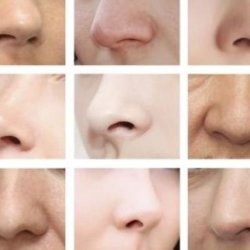




But Todd Rae at the University of Roehampton, UK, says we shouldn’t write off the idea that noses adapted to the climate that their owners inhabited.
“There is a general trend for people in the tropics to have a wide nasal aperture,” he says. “Europeans, on the other hand, have a narrower aperture, which has been assumed to be an adaptation for living in colder climates.”
Narrow nostrils, the thinking goes, create more turbulence in the inhaled air, which increases the level of heat and moisture exchange between the air and the tissue covering the wall of the nasal cavity.
Read full, original post: The evolution of the nose: why is the human hooter so big?