Zika virus’s rapid 70-year evolution may have given rise to current outbreak

The GLP aggregated and excerpted this blog/article to reflect the diversity of news, opinion and analysis.

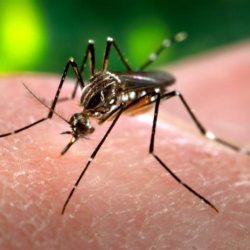
Comparing the sequences of 30 strains of Zika virus isolated from humans, 10 from mosquitoes, and one from monkeys has revealed significant evolutionary change over the past 70 years, according to a study published in Cell Host & Microbe. Specifically, the sequences of the viral strains showed notable divergence between the Asian and African lineages and suggest that modern Zika virus strains derived from the Asian lineage, as they are more similar to the Malaysian/1966 strain than the Nigerian/1968 strain. Additionally, the gene for the pre-membrane precursor protein has very high variability among the Zika strains examined, which modeling work suggests may affect the protein’s structure.

“We believe these changes may, at least partially, explain why the virus has demonstrated the capacity to spread exponentially in the human population in the Americas,” study coauthor Genhong Cheng of the University of California, Los Angeles, said in a press release. “These changes could enable the virus to replicate more efficiently, invade new tissues that provide protective niches for viral propagation, or evade the immune system, leading to viral persistence.”

Read full, original post: Tracking Zika’s Evolution

{{ reviewsTotal }}{{ options.labels.singularReviewCountLabel }}
{{ reviewsTotal }}{{ options.labels.pluralReviewCountLabel }}
{{ options.labels.newReviewButton }}
{{ userData.canReview.message }}

Related Articles

Infographic: Global regulatory and health research agencies on whether glyphosate causes cancer

Infographic: Global regulatory and health research agencies on whether glyphosate causes cancer

Does glyphosate—the world's most heavily-used herbicide—pose serious harm to humans? Is it carcinogenic? Those issues are of both legal and ...

Most Popular

Screenshot-2026-03-13-at-12.14.04-PM
The FDA wants to make many popular prescription drugs OTC—a great idea. Here’s why it’s unlikely to happen
Screenshot-2026-05-04-at-12.54.32-PM
How Utah became the country’s supplement capital  — and a haven for unregulated, ineffective and fake products
Screenshot-2026-04-20-at-2.26.27-PM
Viewpoint — Food-fear world: The latest activist scientists campaign: Cancer-causing additives
Screenshot-PM-24
Viewpoint: The herbicide glyphosate isn’t perfect. Banning it would be far worse.
images
The never-ending GMO debate: Pros and cons
Screenshot-2026-05-01-at-11.56.24-AM
‘Science moves forward when people are willing to think differently’: Memories of DNA maverick Craig Venter
Screenshot-2026-04-03-at-11.15.51-AM
Paraben panic: How a flawed study, media hype, and chemophobia convinced the public of the danger of one of the safest classes of preservatives
Screenshot-2026-04-30-at-2.19.37-PM
5 myths about summer dehydration that could damage your health — or even kill you
bigstock opioids on chalkboard with rol
GLP podcast: 'Safe injection sites': enabling drug addiction or saving lives?
ChatGPT-Image-May-1-2026-02_20_13-PM
How RFK, Jr.’s false vaccine claims are holding up $600 million to fight diseases in poor countries
glp menu logo outlined

Get news on human & agricultural genetics and biotechnology delivered to your inbox.