Marijuana scientists look at genetics to understand weed

Marijuana
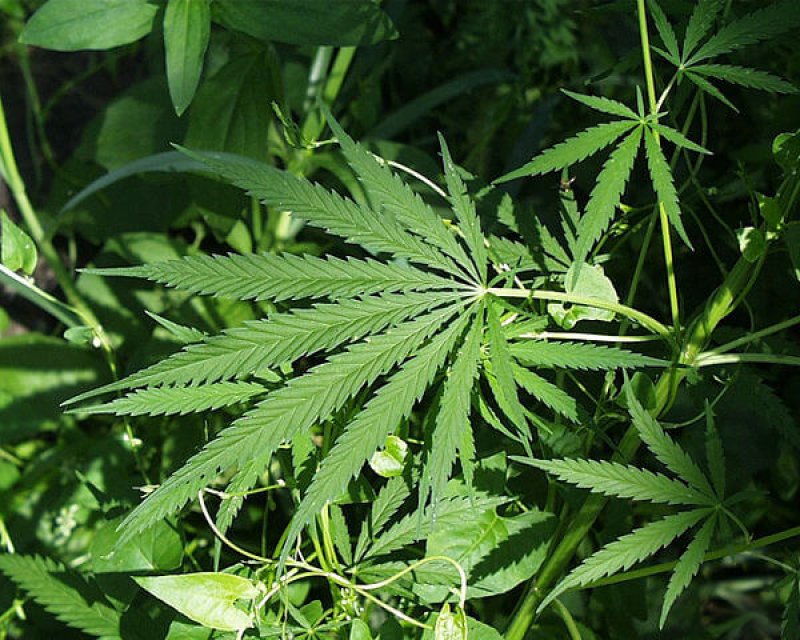
(Credit: United States Fish and Wildlife Service, via Wikimedia Commons.)

The GLP aggregated and excerpted this blog/article to reflect the diversity of news, opinion and analysis.

The marijuana analytics company Steep Hill doesn’t smell dank, or skunky, or “loud”—unless you happen to arrive when a client is dropping off a sample. No seven-pointed-leaf logos ornament the walls; no Tibetan prayer flags flutter from the doorframe. Inside, a half-dozen young scientists work in a glass-walled lab to the sounds of whirring ventilation and soft jazz. The effect is one of professionalism and scientific objectivity. Still, this place is all about weed. And Reggie Gaudino, Steep Hill’s burly and dreadlocked 53-year-old vice president of scientific operations, does look the part.

In 1993, the average THC content in weed was about 3 percent by weight. Over the next 15 years, breeders tripled the potency. Today, not even a decade later, levels top out at a whopping 37 percent. Thank the war on drugs: As growers moved indoors and out of sight, they drove up THC levels. Then they could charge more to pay for the costs of climate control and artificial lighting. Smokers have gotten savvier, too. Increasing THC gets you higher but lessens the plant’s ability to make other, arguably more interesting, cannabinoids and terpenoids.

When Gaudino joined Steep Hill in 2014, he looked at the company’s vast trove of data and asked CEO David Lampach what kind of research their competitors were doing. Lampach’s response: “What do you mean, what are people doing? There are only three testing labs worth anything in the entire US.” Gaudino was shocked. “I asked, ‘Have you guys ever considered genetic analysis?’”

Read full, original post: A new crop of marijuana geneticists sets out to build better weed

Related Articles

Infographic: Global regulatory and health research agencies on whether glyphosate causes cancer

Infographic: Global regulatory and health research agencies on whether glyphosate causes cancer

Does glyphosate—the world's most heavily-used herbicide—pose serious harm to humans? Is it carcinogenic? Those issues are of both legal and ...

Most Popular

ChatGPT-Image-Aug-4-2026-10_15_14-AM
Viewpoint—A hard look at the Fauci diaries: Do they change what we know about COVID’s origins?
ChatGPT-Image-Mar-10-2026-01_39_01-PM
Viewpoint—“Miracle molecule” debunked: Why acemannan supplements don’t work
ChatGPT-Image-Aug-4-2026-12_42_58-PM
Viewpoint: Fact-checking CNN interview with RFK, Jr. underscores the depth of his disinformation delusions
Picture1
Hiroshima at 81: America’s new nuclear bomb, a buried Iranian target, and a question no one wants to ask
ChatGPT-Image-Jul-17-2026-09_50_27-AM
Viewpoint: How disease tracking and prevention has cratered under the Kennedy-Trump administration
Screenshot-2026-07-17-at-1.34.59-PM
Poll: Vaccine hesitancy soars when patients distrust health providers and turn to social media
ChatGPT-Image-Aug-4-2026-07_52_00-PM
No liability for scientific due diligence: California Supreme Court rejects bizarre lawsuit faulting Gilead for fully evaluating HIV drug before release
png livestock cow cattle a
Consumer skepticism about gene-edited milk is neither fixed nor particularly high—and falls even more if it’s priced lower
ChatGPT-Image-Aug-4-2026-09_31_50-AM-2
Viewpoint: Could the U.S. become dependent on China to develop critical new genetic and drug therapies?
ChatGPT-Image-Aug-4-2026-02_05_46-PM
Does Congress have the guts to successfully challenge Trump’s politicization of science funding?
ChatGPT Image Jul 29, 2026, 06_26_01 PM 2
Facts & Fallacies podcast: Organic food myths make a comeback on Instagram, with Dr. Kevin Folta
ChatGPT Image Jul 29, 2026, 09_08_15 AM 2
The retreat of environmental extremism: Why activist NGOs are losing favor
glp menu logo outlined

Get news on human & agricultural genetics and biotechnology delivered to your inbox.