German institute deploys transgenics to fight harmful insects without toxins

newstrategie
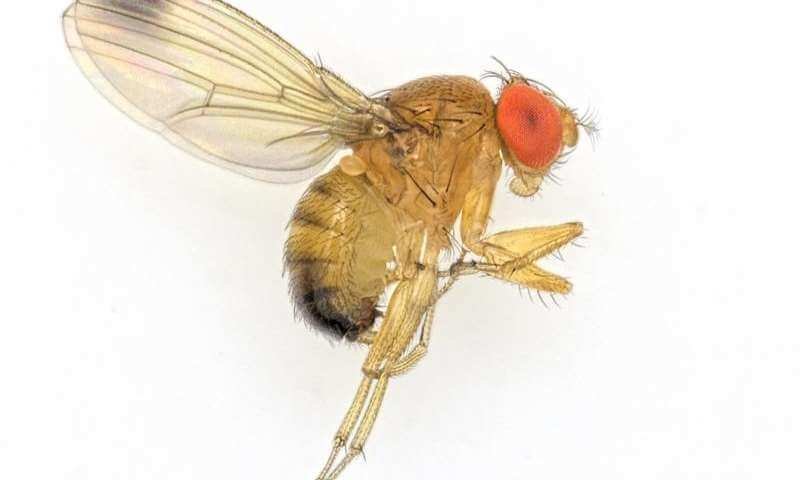
In 2014, the spotted-wing drosophila vinegar fly, Drosophila suzukii, caused massive crop failures to cherries, raspberries, plums and grapes in many parts of Central Europe. Credit: Marc F. Schetelig

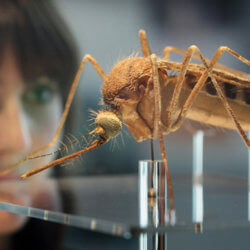
South America is fighting a battle against tiger mosquitoes that transmit yellow fever, dengue fever and the Zika virus. In Central Europe, wine and fruit growers fear another year of massive crop failures due to a type of vinegar fly known as the spotted-wing drosophila. Since the success rate of conventional methods continues to fall, Fraunhofer researchers in Gießen are developing new species-specific strategies that keep pests under control without resorting to environmental toxins.

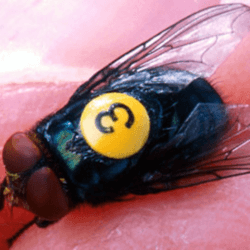
Prof. Marc F. Schetelig at the Fraunhofer Institute for Molecular Biology and Applied Ecology IME in Gießen has designed a genetic system that causes the flies’ offspring to not survive beyond the embryonic stage. If male flies carrying this system mate with naturally occurring females, the fertilized eggs will not produce larvae. But the genetic system also includes a switch that can be used to turn the program off. This switch can be activated by feeding the flies the antibiotic tetracycline: the tetracycline containing diet allows the flies to be successfully rearing in the laboratory. “The new method doesn’t require antibiotics for larval rearing and only a little amount of antibiotics is needed for the adult flies. So no antibiotics are transferred to the environment,” says Schetelig.
The GLP aggregated and excerpted this blog/article to reflect the diversity of news, opinion and analysis. Read full, original post: New strategies against mosquitoes and other pest

Related Articles

Infographic: Global regulatory and health research agencies on whether glyphosate causes cancer

Infographic: Global regulatory and health research agencies on whether glyphosate causes cancer

Does glyphosate—the world's most heavily-used herbicide—pose serious harm to humans? Is it carcinogenic? Those issues are of both legal and ...

Most Popular

ChatGPT-Image-Mar-10-2026-01_39_01-PM
Viewpoint—“Miracle molecule” debunked: Why acemannan supplements don’t work
ChatGPT-Image-Sep-30-2026-01_11_07-PM
How U.S. teamed with Russia to block global human AI weapons oversight
ChatGPT-Image-Sep-21-2026-03_15_09-PM
Viewpoint: Chipotle-inspired lesson: 10,000 sick customers suggest that processed foods can be safer than fresh ones
ChatGPT-Image-Sep-29-2026-12_16_42-PM
Social media influencers are driving food misinformation across Europe
Screenshot-2026-09-29-at-11.06.43-AM
Astrology, homeopathy, vaccine rejectionism, creationism: Why pseudoscience thrives as science advances
generated-1790707585414
Facts & Fallacies podcast: America's health care system is broken. A doctor explains how to fix it
ChatGPT-Image-Sep-23-2026-02_36_39-PM
Viewpoint: After firing the entire National Science Board, Trump reshapes funding initiatives. Here’s the good and the bad.
Screenshot-2026-09-28-at-1.16.38-PM
Defying public perceptions, U.S. cancer deaths plunged 35% since 1991
ChatGPT-Image-Jun-18-2026-04_15_29-PM
Viewpoint: Kennedy’s ‘bad science’: MAGA embrace bolsters HHS secretary’s influence and popularity
ChatGPT-Image-Sep-2-2026-02_03_32-PM
How much of a problem is AI’s water use?
glp menu logo outlined

Get news on human & agricultural genetics and biotechnology delivered to your inbox.