WHO: GMO cows that produce human antibodies could revolutionize how we fight Ebola, flu

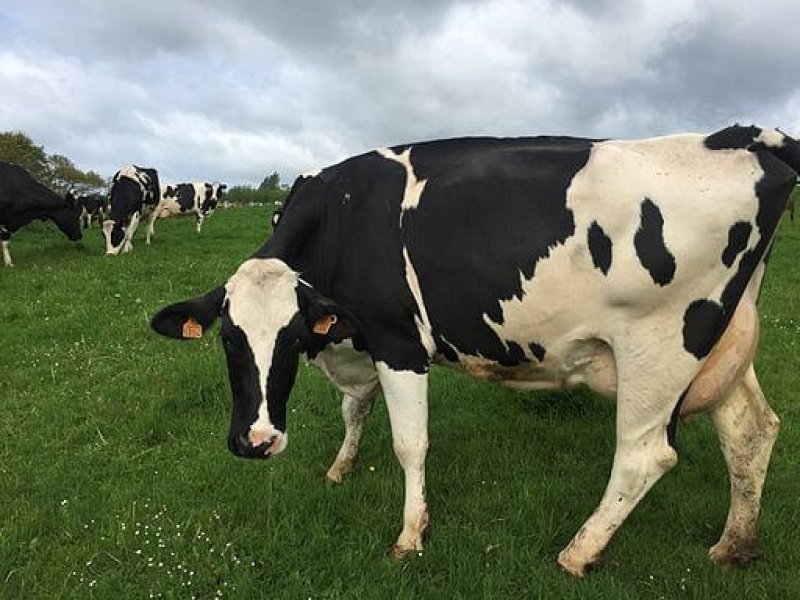
Dairy cow in Normandy
Image: Julietvbarbara CC 4.0

SAB Biotherapeutics of South Dakota has genetically engineered cattle to produce large quantities of human antibodies—proteins that help remove harmful foreign pathogens from the body—in a rapid fashion that could be used to treat patients suffering from infectious diseases like Middle East respiratory syndrome (MERS), Ebola, and influenza. The World Health Organization recently recognized the company’s approach among six promising new technology platforms that could help respond to disease outbreaks worldwide.

[President and CEO of SAB Biotherapeutics Eddie Sullivan] and his colleagues engineered the cows by knocking out a section of genes in the animals and replacing it with a human artificial chromosome containing the genetic information to generate human antibodies. They then vaccinated the cows with a target disease antigen….

Scientists have previously tried using antibodies derived from animals in an attempt to treat disease. But animal-based antibodies can produce severe side effects in people. Sullivan thinks this is less likely to happen with SAB’s antibodies since the cows are producing antibodies that appear to be fully human.

The GLP aggregated and excerpted this blog/article to reflect the diversity of news, opinion, and analysis. Read full, original post: Cows Engineered with Human Genes Could Stop Our Next Disease Outbreak

{{ reviewsTotal }}{{ options.labels.singularReviewCountLabel }}
{{ reviewsTotal }}{{ options.labels.pluralReviewCountLabel }}
{{ options.labels.newReviewButton }}
{{ userData.canReview.message }}

Related Articles

Infographic: Global regulatory and health research agencies on whether glyphosate causes cancer

Infographic: Global regulatory and health research agencies on whether glyphosate causes cancer

Does glyphosate—the world's most heavily-used herbicide—pose serious harm to humans? Is it carcinogenic? Those issues are of both legal and ...

Most Popular

Screenshot-2026-05-01-at-11.56.24-AM
‘Science moves forward when people are willing to think differently’: Memories of DNA maverick Craig Venter
Screenshot-2026-04-03-at-11.15.51-AM
Paraben panic: How a flawed study, media hype, and chemophobia convinced the public of the danger of one of the safest classes of preservatives
Screenshot-2026-04-20-at-2.26.27-PM
Viewpoint — Food-fear world: The latest activist scientists campaign: Cancer-causing additives
ChatGPT-Image-May-1-2026-02_20_13-PM
How RFK, Jr.’s false vaccine claims are holding up $600 million to fight diseases in poor countries
Screenshot-2026-03-13-at-12.14.04-PM
The FDA wants to make many popular prescription drugs OTC—a great idea. Here’s why it’s unlikely to happen
viva-la-vida-watermelons
Misinformation and climate change are endangering summer watermelons
79d03212-2508-45d0-b427-8e9743ff6432
Viewpoint: The Casey Means hustle—Wellness woo opportunism dressed up as medical wisdom
Drinking lots of water can help reduce the effects of aging
Nanoplastics in drinking water: MAHA activists forge science-based bipartisan coalition 
ChatGPT-Image-Mar-27-2026-11_27_05-AM
The myths of “process”: What science says about the “dangers’ of synthetic products and ultra-processed foods
ChatGPT-Image-Apr-30-2026-12_21_05-PM-2
The tech billionaires behind the immortality movement
ChatGPT-Image-Mar-10-2026-01_39_01-PM
Viewpoint—“Miracle molecule” debunked: Why acemannan supplements don’t work
Screenshot-PM-24
Viewpoint: The herbicide glyphosate isn’t perfect. Banning it would be far worse.
ChatGPT-Image-May-1-2026-03_16_32-PM
Viewpoint: How ‘health care guru’ Joe Rogan circumvented the FDA’s skepticism on psychedelics
glp menu logo outlined

Get news on human & agricultural genetics and biotechnology delivered to your inbox.