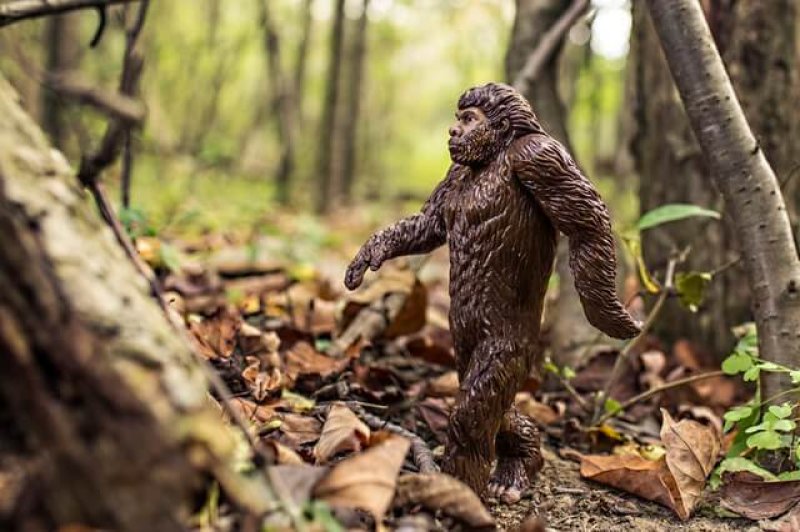
Were Neanderthals smarter than we originally thought?

nature walking animal strong

Neanderthals modified their survival strategies even without external influences like environmental or climate changes, according to an analysis using carbonate isotopy in fossilized teeth that 250,000 years ago, the ancestors of modern man were more advanced in their development than previously thought.

The fossils were from the excavation site at Payre in southeastern France. Carbonate is an essential mineral component of the hard tissue in bones and teeth. Among other things, the isotope composition in the carbonate reflects an organism’s drinking and feeding habits.

If the climate becomes cooler or warmer, species are forced to adapt their survival strategies – this also holds true for our ancestors, the extinct Neanderthals.
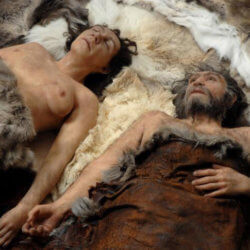
In order to gain insights into the environment these young Neanderthals inhabited, Professor Hervé Bocherens of the Senckenberg Center for Human Evolution and Palaeoenvironment at the University of Tübingen and colleagues also examined the isotope composition in the carbonate from herbivorous and carnivorous large mammals…

The GLP aggregated and excerpted this blog/article to reflect the diversity of news, opinion, and analysis. Read full, original post: Neanderthals: Not So Dumb


Related Articles

Infographic: Global regulatory and health research agencies on whether glyphosate causes cancer

Infographic: Global regulatory and health research agencies on whether glyphosate causes cancer

Does glyphosate—the world's most heavily-used herbicide—pose serious harm to humans? Is it carcinogenic? Those issues are of both legal and ...

Most Popular

ChatGPT-Image-Sep-23-2026-02_36_39-PM
Viewpoint: After firing the entire National Science Board, Trump reshapes funding initiatives. Here’s the good and the bad.
ChatGPT-Image-Sep-10-2026-10_36_07-AM
Viewpoint: Even lousy scientific articles can shield authors when they hype dubious health claims and products
ChatGPT-Image-Mar-10-2026-01_39_01-PM
Viewpoint—“Miracle molecule” debunked: Why acemannan supplements don’t work
sorghum farmers in kenya FARMERS TREND
Here are all the ways CRISPR gene editing is transforming Africa’s staple crops—and there’s a lot more innovation to come
Screenshot-2026-10-01-at-11.21.27-AM
Vaccine hesitancy, like malaria, surges globally, topping 35% in some countries
ChatGPT-Image-Sep-30-2026-01_25_34-PM
Blood tests for Alzheimer’s? The latest grifter, social media scam.
ChatGPT-Image-Sep-30-2026-01_38_36-PM
Viewpoint: Died “with measles” vs. died “from measles”: RFK, Jr.’s dangerously subversive word games
ChatGPT-Image-Sep-30-2026-01_11_07-PM
How U.S. teamed with Russia to block global human AI weapons oversight
ChatGPT-Image-Sep-21-2026-03_15_09-PM
Viewpoint: Chipotle-inspired lesson: 10,000 sick customers suggest that processed foods can be safer than fresh ones
ChatGPT-Image-Sep-2-2026-02_03_32-PM
How much of a problem is AI’s water use?
glp menu logo outlined

Get news on human & agricultural genetics and biotechnology delivered to your inbox.