Nitrogen-efficient GMO rice uses less fertilizer, improves yields

Screen Shot at PM
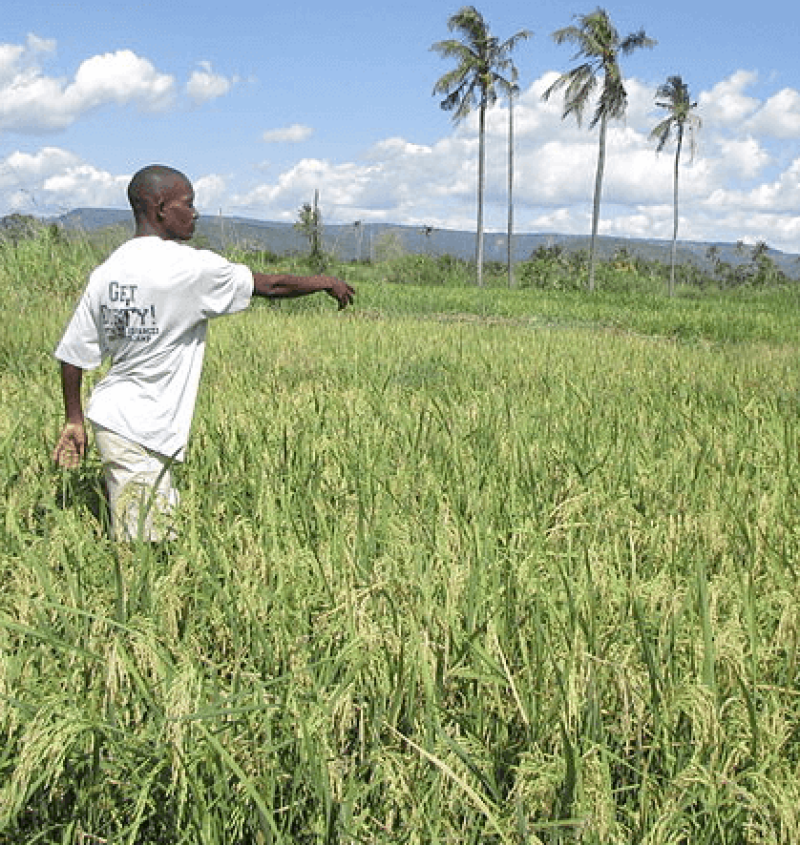
Rice farmer in Tanzania. Photo by Felicity Feinman/Wikimedia

According to FAO projections, by 2035, a 26% increase in rice production will be necessary to feed the growing population (Cassman et al., 2003; Seck et al., 2012). Farmers in Sub- Saharan Africa (SSA) produce about 12 million metric tons of rice annually, while importing another 12 million metric tons…. Most of the rice in SSA is produced and consumed by small-scale farmers who are often constrained by input costs, mainly fertilizer, and access to new technologies that could help them increase food production.

…N fertilizer costs comprise an important fraction of total production costs in crops (Tirol-Padre et al., 1996). Yet, estimates of the world nitrogen use efficiency (NUE) have been calculated to be as low as 33% for cereals (Raun and Johnson, 1999)…. The negative environmental effects of excess N are well documented…. Therefore there is an urgent need to increase NUE to mitigate the economic and environmental costs of rice production.

. . . .

In this study, we report the production of marker-free HvAlaAT transgenic lines …ย and present the results of confined field trials in two locations. Our results clearly showed that pOsAnt1:HvAlaAT overexpression significantly increased plant biomass and grain yield through an increased number of productive tillers compared to controls under limited N supply. …

The GLP aggregated and excerpted this blog/article to reflect the diversity of news, opinion and analysis. Read full, original post:ย Development and field performance of nitrogen use efficient rice lines for Africa

{{ reviewsTotal }}{{ options.labels.singularReviewCountLabel }}
{{ reviewsTotal }}{{ options.labels.pluralReviewCountLabel }}
{{ options.labels.newReviewButton }}
{{ userData.canReview.message }}

Related Articles

Infographic: Global regulatory and health research agencies on whether glyphosate causes cancer

Infographic: Global regulatory and health research agencies on whether glyphosate causes cancer

Does glyphosateโ€”the world's most heavily-used herbicideโ€”pose serious harm to humans? Is it carcinogenic? Those issues are of both legal and ...

Most Popular

Screenshot-2026-04-20-at-2.26.27-PM
Viewpoint โ€” Food-fear world: The latest activist scientists campaign: Cancer-causing additives
Screenshot-2026-05-04-at-12.54.32-PM
How Utah became the countryโ€™s supplement capitalย  โ€” and a haven for unregulated, ineffective and fake products
Screenshot-2026-03-13-at-12.14.04-PM
The FDA wants to make many popular prescription drugs OTCโ€”a great idea. Hereโ€™s why itโ€™s unlikely to happen
Screenshot-PM-24
Viewpoint: The herbicide glyphosate isnโ€™t perfect. Banning it would be far worse.
Screenshot-2026-05-01-at-11.56.24-AM
โ€˜Science moves forward when people are willing to think differentlyโ€™: Memories of DNA maverick Craig Venter
images
The never-ending GMO debate: Pros and cons
Screenshot-2026-04-12-135256
Bixonimania: The fake disease scam that AI swallowed whole
ChatGPT-Image-May-1-2026-02_20_13-PM
How RFK, Jr.โ€™s false vaccine claims are holding up $600 million to fight diseases in poor countries
Screenshot-2026-04-03-at-11.15.51-AM
Paraben panic: How a flawed study, media hype, and chemophobia convinced the public of the danger of one of the safest classes of preservatives
bigstock opioids on chalkboard with rol
GLP podcast: 'Safe injection sites': enabling drug addiction or saving lives?
glp menu logo outlined

Get news on human & agricultural genetics and biotechnology delivered to your inbox.