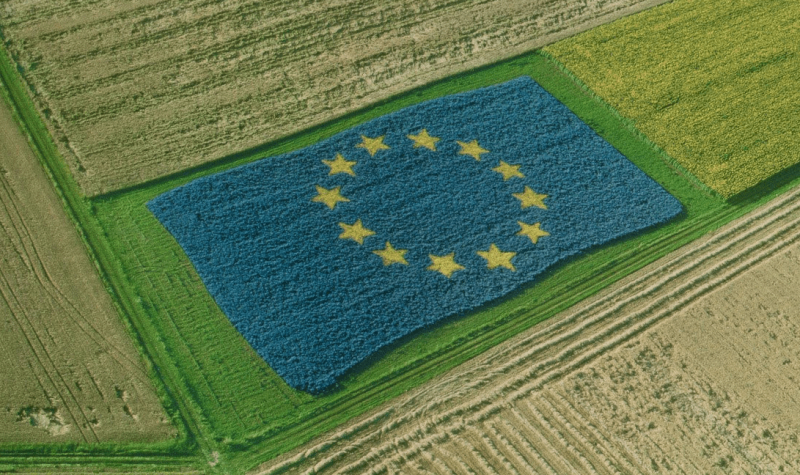
European Union’s process-based GMO regulations ‘defy scientific, economic, and common sense’

Screen Shot at PM

[Editor’s note: John Davison, now retired, was the research director at the Institut National de la Recherche Agronomique (INRA) in France. Klaus Ammann is the former director of the University of Bern’s botanical garden in Switzerland.]

[T]he present GMO regulations stem from the early days of recombinant DNA and are not adapted to current scientific understanding on this subject. Scientific understanding of GMOs has changed and these regulations are now, not only unfit for their original purpose, but, the purpose itself is now no longer scientifically valid. Indeed, they defy scientific, economic, and even common, sense. … We advise that the [European Commission] re-writes its outdated regulations and moves toward such a product based approach.

[O]ver the last few years new genomic editing techniques (sometimes called New Breeding Techniques) have evolved. These techniques are basically mutagenesis techniques that can generate genomic diversity and have vast potential for crop improvement. They are not GMO based techniques (any more than mutagenesis is a GMO technique), since in many cases no new DNA is introduced. Thus they cannot simply be lumped together with GMOs (as many anti-GMO NGOs would prefer). The EU currently has no regulations to cover these new techniques….


The EU is at a turning point where the wrong decision could destroy European agricultural competitively for decades to come.

The GLP aggregated and excerpted this blog/article to reflect the diversity of news, opinion, and analysis. Read full, original post: New GMO regulations for old: Determining a new future for EU crop biotechnology (behind paywall)

For more background on the Genetic Literacy Project, read GLP on Wikipedia

Related Articles

Infographic: Global regulatory and health research agencies on whether glyphosate causes cancer

Infographic: Global regulatory and health research agencies on whether glyphosate causes cancer

Does glyphosate—the world's most heavily-used herbicide—pose serious harm to humans? Is it carcinogenic? Those issues are of both legal and ...

Most Popular

Screenshot-2026-09-16-at-2.26.42-PM
Viewpoint: How to ecologically damage America’s forests: Ban glyphosate
Screenshot-2026-09-20-at-9.03.54-AM
From Malaysia to the world: A pioneering science communicator reimagines global science communication for a digital age
Screenshot-2026-09-20-at-4.31.28-PM
White House drafting executive order to control what OMB Director Vought claims are “woke” NIH science grants
ChatGPT-Image-Mar-10-2026-01_39_01-PM
Viewpoint—“Miracle molecule” debunked: Why acemannan supplements don’t work
ChatGPT-Image-Sep-17-2026-12_28_43-PM
Vitamin D, omega-3 fish oil and glucosamine supplements could cause brain damage 
ChatGPT-Image-Sep-20-2026-04_22_32-PM
What’s Trump’s ‘AI Force’? Administration rushes to announce ill-defined watchdog agency and czar amid criticism of its resistance to curb AI acceleration
ChatGPT-Image-Sep-18-2026-10_49_24-AM
‘Symptom borrowing’: Young people are copying health problems they see on TikTok
ChatGPT-Image-Sep-11-2026-01_53_42-PM
Should doctors engage in social media to counter misinformation?
Screenshot-2026-08-12-at-11.31.46-AM
AI is helping develop new vaccines
Screenshot-2026-09-14-at-4.31.14-PM
Viewpoint: What’s the likely impact when the EPA loosens rules limiting methane pollution from oil and gas wells?
Screenshot-2026-08-19-at-6.19.42-PM
Facts & Fallacies podcast: 'Regenerative farming'? RFK Jr.’s federal push romanticizes the past and risks food security
Screenshot-2026-09-10-at-12.20.19-PM
'Jet fuel didn't melt the steel': 9/11 conspiracy theories debunked
Screenshot-2026-09-17-at-10.24.54-AM
Viewpoint: Dubious environmental fears: Why the AI buildout is critical to America’s ecological future
glp menu logo outlined

Get news on human & agricultural genetics and biotechnology delivered to your inbox.