Dementia, Alzheimer’s linked to soda — and why you shouldn’t worry about it

soda

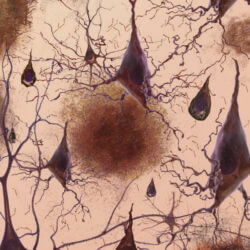
If you didn’t know better, you’d think Alzheimer’s disease is the plot of a bad horror movie: A creeping silent killer steals your memories, distorts your experiences of the present, and transforms your family’s love into dutiful pity.

…

Two  studies recently implicated diet and regular soda, suggesting that people who regularly consumed it had higher risk of dementia and Alzheimer’s.

Given that personal genetics tests like 23andMe let people determine whether they carry this maybe-you-have-it mutation, findings of things like the soda study can lead to self-diagnostic panic. But don’t drive yourself crazy worrying about this. Like most diseases, Alzheimer’s is the things you can and cannot control.

…

Studies that warn of things like that describe environmental risks, not genetic ones. But those risks only suggest a probable statistical association between two things that have already happened: getting Alzheimer’s and something else. The studies linking soda consumption to Alzheimer’s used retrospective analyses: Researchers examined data collected over a long period of time. Such analyses are notoriously difficult to interpret.

…

Functionally, those studies don’t really tell you anything at all about whether or not you will get Alzheimer’s. The combination of causes is too obtuse for any one lifestyle change to make a difference.

The GLP aggregated and excerpted this blog/article to reflect the diversity of news, opinion, and analysis. Read full, original post: When Is It Worth Worrying About Dementia?

For more background on the Genetic Literacy Project, read GLP on Wikipedia

Related Articles

Infographic: Global regulatory and health research agencies on whether glyphosate causes cancer

Infographic: Global regulatory and health research agencies on whether glyphosate causes cancer

Does glyphosate—the world's most heavily-used herbicide—pose serious harm to humans? Is it carcinogenic? Those issues are of both legal and ...

Most Popular

ChatGPT-Image-Mar-10-2026-01_39_01-PM
Viewpoint—“Miracle molecule” debunked: Why acemannan supplements don’t work
Screenshot-2026-10-01-at-10.52.08-AM
Non-browning CRISPR gene-edited bananas move one step closer to British markets
Screenshot-2026-09-22-at-10.54.12-AM
‘They misunderstand science’: Research attempting to tie autism to changes in the gut microbiome comes under fire
AI-Force-Leadership-Portrait
Jay Clayton controversy: The divisive history of Trump’s newly-appointed AI czar
Screenshot-2026-09-28-at-11.26.17-AM
Viewpoint: Wellness movement activists reposition nicotine from a killer addictive drug into a cure-all for brain ills
ChatGPT-Image-Sep-21-2026-11_21_39-AM
Viewpoint: Food cults: Online ‘nutrition communities’ can pose unique dangers
Radioactive-Americana-Collage-2
The kooky logic behind the raft of spurious cancer claims from Harvard’s T.H. Chan School of Public Health
Elderly-Speaker-at-MAHA-Institute
At anti-vaccine MAHA conference, RFK Jr. pledges to unify federal health information and combat vaccine safety ‘misinformation’
Screenshot-2026-10-02-at-8.56.38-AM
Trump finalizes Medicare drug price cuts, drawing Big Pharma’s fury and a legal challenge
strand of dna genetics
No, GMO foods do not “damage genes, natural disposition and hormones, or decrease physical health and intelligence”
Screenshot 2026-10-01 at 12.30
Combating ‘narrative distortion’: Will pharma companies step up to challenge health misinformation?
glp menu logo outlined

Get news on human & agricultural genetics and biotechnology delivered to your inbox.