UK government advisors: Farmers’ emergency application for neonicotinoid insecticide use should be refused

f a c k x e

The National Farming Union’s (NFU) application for an emergency authorisation for neonicotinoid seed treatments is not looking hopeful as Government advisors think it should be refused.

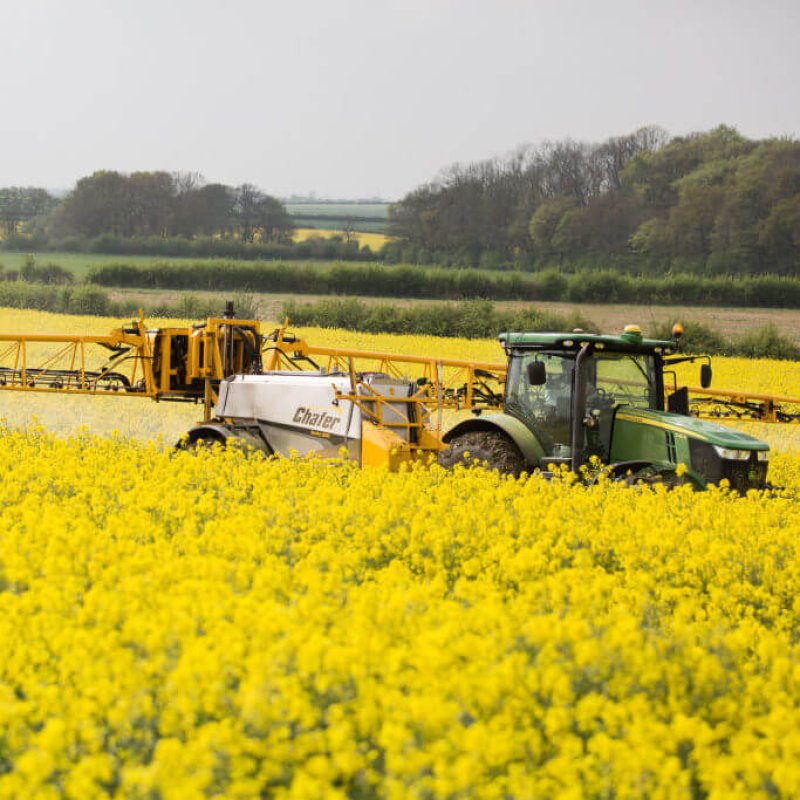
Two applications for the use of Cruiser OSR and Modesto as neonicotinoid seed dressings on oilseed rape were considered by the UK Expert Committee on Pesticides (ECP).

The applications were created to control cabbage stem flea beetle (CSFB), which UK growers say has devastated rape crops since neonicotinoids were banned in 2013.

A recent survey of 400 arable farmers who all grow winter oilseed rape (OSR) reports that 8.3 percent of the crop this year has failed, mainly because of CSFB.

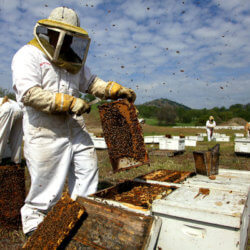
Because of the risks and dangers to pollinators, the committee appeared to side with refusal of the application rather than acceptance.

They also said no data had been submitted to indicate that a “moderate” threshold constituted an emergency.

However, the committee noted that CSFB could cause economic damage.

[April 2017], a study showed that the full cost to farmers of the neonicotinoid ban in 2016 was £18.4 million ($23.7 million) and resulted in almost 28,800 [hectares] (71,166 acres) of lost crop.

Defra ministers will announce their final decision on the application [May 2017.]

The GLP aggregated and excerpted this blog/article to reflect the diversity of news, opinion, and analysis. Read full, original post: Application for emergency use of neonics should be ‘refused’, says Government

For more background on the Genetic Literacy Project, read GLP on Wikipedia

{{ reviewsTotal }}{{ options.labels.singularReviewCountLabel }}
{{ reviewsTotal }}{{ options.labels.pluralReviewCountLabel }}
{{ options.labels.noReviewsLabel }}
{{ options.labels.newReviewButton }}
{{ userData.canReview.message }}

Related Articles

Infographic: Global regulatory and health research agencies on whether glyphosate causes cancer

Infographic: Global regulatory and health research agencies on whether glyphosate causes cancer

Does glyphosate—the world's most heavily-used herbicide—pose serious harm to humans? Is it carcinogenic? Those issues are of both legal and ...

Most Popular

ChatGPT-Image-Mar-10-2026-01_39_01-PM
Viewpoint—“Miracle molecule” debunked: Why acemannan supplements don’t work
organic scaled
Facts & Fallacies podcast: Organic food cuts pesticide exposure? A response to Dr. Rhonda Patrick
close up arabica coffee farmer s hands picking beans plant his farm colombia
Viewpoint: Why do so many ‘mainstream’ and ‘respected’ media outlets exaggerate climate change threats?
How to Include More Strawberries in Your Diet
Strawberries are berries—and 35 other surprising food and drink myths
kratom
Viewpoint: Kratom ‘supplement’ crisis: DEA sits on its hands while patient addictions to this ineffective drug  rise
Screenshot 2026-07-22 at 10.25
Science brain drain escalates as Trump purge extends to USDA
ChatGPT-Image-Jul-22-2026-09_13_07-AM
Viewpoint—The Strategic Litigation boom: Understanding the tightening coalition among NGOs, foundations, journalists, and tort lawyers
diversity
We are entering a new era of personalized medicine—if you’re white
Screenshot-2026-07-01-at-2.49.48-PM
Dr. TikTok and male fertility: Viral claims tout GLP-1 drugs as fertility boosters. What does the science say?
Screenshot-2026-07-07-at-12.55.44-PM
Viewpoint: Yes, we can adapt to a changing climate without devastating the environment and the economy
ChatGPT-Image-May-22-2026-10_26_09-AM
Trump-RFK, Jr. National Science Board firings: Accountability vs. partisan meddling
using genetics to reverse aging
Is the longevity obsession a new form of ageism?
ChatGPT-Image-Jun-25-2026-02_53_56-PM
Embryo gene editing is on the horizon, stirring mixed emotions
glp menu logo outlined

Get news on human & agricultural genetics and biotechnology delivered to your inbox.