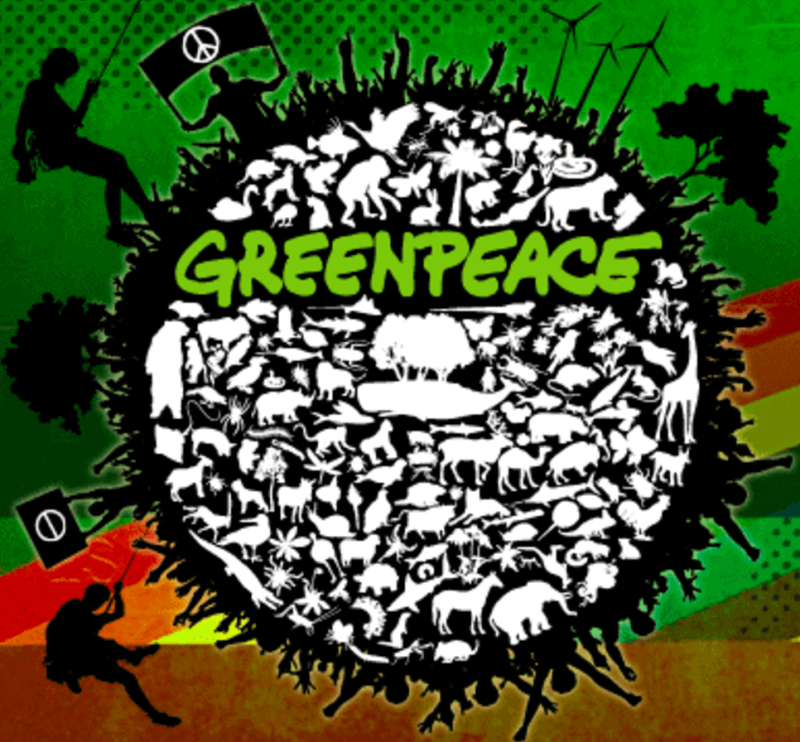
Opinion: Greenpeace’s ‘fearmongering’ gives environmental advocacy a bad name

Screen Shot at PM

The little town of Saint-Félicien, in Quebec’s lovely Saguenay region, is under siege.

“Greenpeace wants our total death!” mayor Gilles Potvin complained back in 2013. “If we listen to them, we can’t cut wood anymore.”

Greenpeace has been waging a relentless campaign against Resolute Forest Products, the largest forest company in the region and in Canada.

The region’s mayors, union leaders, mill workers, and Indigenous leaders are fed up with Greenpeace. They’re angry at being portrayed by outsiders as forest destroyers.

“Greenpeace, in our view, is a group that goes to the extreme, that doesn’t seek a balance between conservation and forest management,” Jack Picard, a band council member of the Innu Nation of Pessamit in Quebec, says in a video. He adds: “We don’t accept anyone else speaking for us. We are fully capable of speaking for ourselves.”

Greenpeace’s fearmongering gives environmental activism a bad name. Last year more than 100 Nobel laureates signed a letter urging them to drop their campaign against genetically modified foods and golden rice, which increase crop yields and provide crucial nutrients that prevent disease and death. Greenpeace is a menace to the world, and especially to the world’s most vulnerable. It is also enormously powerful.

“I used to respect Greenpeace, but they are not aware of the reality of the forest industry,” [Potvin said]. “Young people believe them. Students believe them. They spread a lot of falsehoods, and they do a lot of damage.”

The GLP aggregated and excerpted this blog/article to reflect the diversity of news, opinion, and analysis. Read full, original post: Greenpeace is a menace to the world

{{ reviewsTotal }}{{ options.labels.singularReviewCountLabel }}
{{ reviewsTotal }}{{ options.labels.pluralReviewCountLabel }}
{{ options.labels.newReviewButton }}
{{ userData.canReview.message }}

Related Articles

Infographic: Global regulatory and health research agencies on whether glyphosate causes cancer

Infographic: Global regulatory and health research agencies on whether glyphosate causes cancer

Does glyphosate—the world's most heavily-used herbicide—pose serious harm to humans? Is it carcinogenic? Those issues are of both legal and ...

Most Popular

Screenshot-2026-04-13-at-3.54.04-PM
AI disinformation stress test: Challenges and response strategies
ChatGPT-Image-Feb-16-2026-01_04_32-PM
Raw milk myth wake-up call
ChatGPT-Image-Apr-23-2026-09_20_20-PM
Kennedy’s CDC blocks publication of study that shows vaccines reduce hospitalizations by 50%, then misrepresents why
ChatGPT-Image-Apr-20-2026-11_17_18-AM-2
10,000 scientists gone: Trump’s cuts create an unprecedented brain drain
Screenshot-2026-04-21-at-12.05.38-PM
MAHA’s special protein-focused formula for skin care: Beef tallow and salmon sperm. How could they be wrong?
Rod Curtis

In Zimbabwe, an almost-deadly collision between fake news and a real virus
Screenshot-2026-04-12-135256
Bixonimania: The fake disease scam that AI swallowed whole
Screenshot-2026-04-22-at-1.14.34-PM
Latest fevered, right-wing conspiracy: Fox, New York Post, and kooky GOP legislators push ‘Dead Scientists’ scare
ChatGPT-Image-Apr-23-2026-10_27_42-AM
Viewpoint: ‘Make America Pregnant Again’ — Trump guts support for birth control to placate the right’s birth obsession
images
The never-ending GMO debate: Pros and cons
glp menu logo outlined

Get news on human & agricultural genetics and biotechnology delivered to your inbox.