Fully sequenced rice genome could accelerate biofuel research

Screen Shot at PM

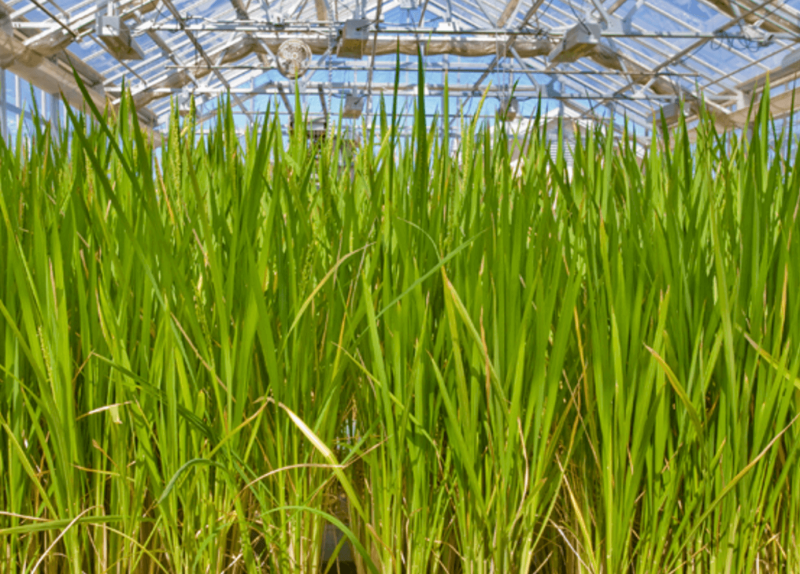
Rice is a staple food for over half of the world’s population and a model for studies of candidate bioenergy grasses such as sorghum, switchgrass, and Miscanthus. To optimize crops for biofuel production, scientists are seeking to identify genes that control key traits such as yield, resistance to disease, and water use efficiency.

In a paper published in The Plant Cell, a team led by Pamela Ronald, a professor in the Genome Center and the Department of Plant Pathology at UC Davis … reported the first whole-genome-sequenced, fast-neutron-induced mutant population of Kitaake, a model rice variety with a short life cycle.

This novel collection will accelerate functional genetic research in rice and other monocots, a type of flowering plant species that includes grasses.

[Read the full study (behind paywall)]
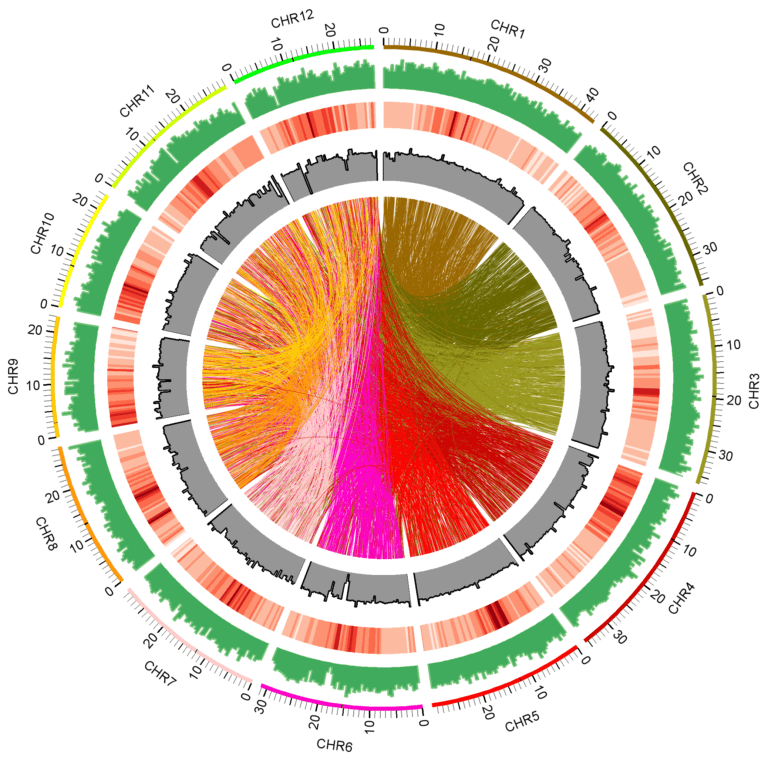
fast neutron induced mutations in the Kitaake rice Icon circos courtesy Guotian Li x
Genome-wide distribution of fast-neutron-induced mutations in the Kitaake rice mutant population (green). The genome-wide distribution of mutations indicates a non-biased saturation of the genome. Colored lines (center) represent translocations of DNA fragments from one chromosome to another. (Credit: Guotian Li and Rashmi Jain/Berkeley Lab)

The GLP aggregated and excerpted this blog/article to reflect the diversity of news, opinion, and analysis. Read full, original post: A whole-genome sequenced rice mutant resource for the study of biofuel feedstocks

{{ reviewsTotal }}{{ options.labels.singularReviewCountLabel }}
{{ reviewsTotal }}{{ options.labels.pluralReviewCountLabel }}
{{ options.labels.noReviewsLabel }}
{{ options.labels.newReviewButton }}
{{ userData.canReview.message }}

Related Articles

Infographic: Global regulatory and health research agencies on whether glyphosate causes cancer

Infographic: Global regulatory and health research agencies on whether glyphosate causes cancer

Does glyphosate—the world's most heavily-used herbicide—pose serious harm to humans? Is it carcinogenic? Those issues are of both legal and ...

Most Popular

ChatGPT-Image-Mar-10-2026-01_39_01-PM
Viewpoint—“Miracle molecule” debunked: Why acemannan supplements don’t work
ChatGPT-Image-Jul-22-2026-09_13_07-AM
Viewpoint—The Strategic Litigation boom: Understanding the tightening coalition among NGOs, foundations, journalists, and tort lawyers
organic scaled
Facts & Fallacies podcast: Organic food cuts pesticide exposure? A response to Dr. Rhonda Patrick
close up arabica coffee farmer s hands picking beans plant his farm colombia
Viewpoint: Why do so many ‘mainstream’ and ‘respected’ media outlets exaggerate climate change threats?
How to Include More Strawberries in Your Diet
Strawberries are berries—and 35 other surprising food and drink myths
diversity
We are entering a new era of personalized medicine—if you’re white
Screenshot-2026-07-07-at-12.55.44-PM
Viewpoint: Yes, we can adapt to a changing climate without devastating the environment and the economy
ChatGPT-Image-May-22-2026-10_26_09-AM
Trump-RFK, Jr. National Science Board firings: Accountability vs. partisan meddling
kratom
Viewpoint: Kratom ‘supplement’ crisis: DEA sits on its hands while patient addictions to this ineffective drug  rise
Screenshot 2026-07-22 at 10.25
Science brain drain escalates as Trump purge extends to USDA
using genetics to reverse aging
Is the longevity obsession a new form of ageism?
Screenshot-2026-07-01-at-2.49.48-PM
Dr. TikTok and male fertility: Viral claims tout GLP-1 drugs as fertility boosters. What does the science say?
ChatGPT-Image-Jun-25-2026-02_53_56-PM
Embryo gene editing is on the horizon, stirring mixed emotions
glp menu logo outlined

Get news on human & agricultural genetics and biotechnology delivered to your inbox.